Dutch West India Company Quotes
Whoever shall settle any Colonie out of the limits of the Manhattes Island, shall be obliged to satisfy the Indians for the land they shall settle upon
Dutch West India Company, Charter of Freedoms and Exemptions to Patroons, June 7, 1629
Sourced by: Eigen's Political and Historical Quotations


While the economics of land is described accurately, immigrants from most of the world would never in their home country ever be able to earn enough in a few years to acquire that much land. So the prospect of land ownership was a fundamental selling point and was a major spur to immigration to America where land was and is plentiful.


Published 100 years after it was written. This is the first known written statement of what became a de facto policy regarding the American Indian.

Note that there was still a serious attempt to coexist with the Indians and to pay for lands that whites moved into. This would change radically in the administration of Andrew Jackson who would replace Adams.

In the midst of the French & Indian Wars, the Board of Trade drafted the royal proclamation of October 7, 1763, forbidding the granting of lands in the vast interior, which was specifically reserved to the Indians. Washington had earlier reservations about the attempt to protect Indian lands for the Indians. See {612772} Washington after the American Revolution did grant and protect Indian lands to the minority of the Indians who had allied with the Americans against the British and the majority of the other Indian tribes.

This is an important quotations for two reasons. First, one of the white Europan myths in the colonial era was that the Native America had not concept of land ownership and title. This quotation clearly refutes that/ Second, this shows that some Europeans coming to the new world opposed the view that the white Christians and a moral right to the Native American “heathen” land. A few like Williams did not.

Clinton was a founder of the society.

Jackson’s policies regarding Indians set back all the work of the earlier Presidents and created facts on the ground and attitudes that vex us to this day. In this occasion he said very forthrightly that it was his intention to deny Indians title to ANY land in the then United States. His idea was to send all the Indians to the Oklahoma Indian Territory and establish reservations for them there. Of course, as the Western states joined the Union, the Whites wanted those Indian Lands as well. See {643150} for other Jackson views on Indian policy.

This is one of the first Policy Statements of the new Republic about the Indians. Essentially, although the government policy was reasonable and fair, public opinion was totally different and the leadership could not persuade the people on this point. One complicating factor was the fact that most of the Indian tribes had overtly or covertly sided with the British in the Civil War. Many Indians were exiled to Canada. Even the Indians who were American allies, had their lands encroached upon however.
The intentions of the Founding Fathers towards the Indians was decent, respectful, and well intentioned. However, there was not enough of a system of enforcement or the will to enforce when the greed of the average whites grew too great. Many settlers saw these vast lands and could not see any harm in using a few acres for their farm. And if there had been only a few, there would have been little trouble. However, the settlers kept coming and coming and soon the Indians began to push back. In a sense, it was a class problem. The members of the Continental Congress who wrote the Northwest Ordinance were educated, affluent men who had plenty of land. Most of the men who contested for the Indian lands had little land or were newly affluent and saw few limits to America.

Jackson refused to obey this decision, He was the only American President who disobeyed a Supreme Court Decision. In doing this, he killed tens of thousands of Indians, allowed the Southern Whites to steal most of the Cherokee land. His Indian Removal, contrary to this Supreme Court decision, was the worst case of ethnic cleansing in the history of the United States.

It is very hard, when we have let the King's subjects have so much of our lands for so little value.
He had received an English style education and had a much better idea of the market value of the land than most of the other Iroquois.


This law governed the territories outside of the original 13 colonies. The intentions of the founding fathers and the first Congress to the Indians was fair and honorable. However, there was no practical way that the new Federal Government could enforce this principle in the territories. A single greedy land speculator or trader could abuse a group of Indians and start a small war. The vast cultural differences between Indians and whites tended to polarize all violent conflicts regardless of who was at fault. The different perceptions of cruelty and atrocities further pushed the government to defend whites violating national policy and there was sufficient corruption and money to be made on Indian land and trading and things went downhill fast.
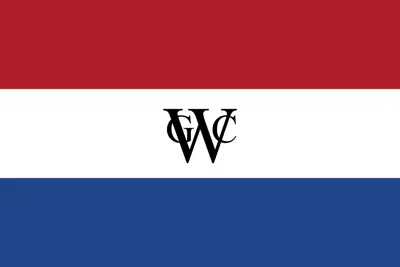
The Dutch West India Company (Dutch: Geoctrooieerde Westindische Compagnie, or GWC; Dutch pronunciation: [ɣəʔɔktroːˈjeːrdə ʋɛstˈɪndisə kɔmpɑˈɲi]; English: Chartered West India Company) was a chartered company of Dutch merchants as well as foreign investors. Among its founders was Willem Usselincx (1567–1647) and Jessé de Forest and the Americas, which included the Pacific Ocean and the eastern part of New Guinea. The intended purpose of the charter was to eliminate competition, particularly Spanish or Portuguese, between the various trading posts established by the merchants. The company became instrumental in the largely ephemeral Dutch colonization of the Americas (including New Netherland) in the seventeenth century. From 1624 to 1654, in the context of the Dutch-Portuguese War, the GWC held Portuguese territory in northeast Brazil, but they were ousted from Dutch Brazil following fierce resistance.
