DeWitt Clinton Quotes
In 1774 the government of Connecticut, in an official statement to the British Secretary of State, represented the original title to the land of Connecticut as in the Pequot Nations of Indians, who were numerous and warlike; that their great sachem Sasacus had under him twenty-six sachems, and that their territory extended from Narraganset to Hudson’s River, and over all Long Island.
Clinton was a founder of the society.
DeWitt Clinton, 1769-1828, Vice President of the United States (NY), U. S. Senator (Anti-Federalist Republican, NY), Mayor of New York City, Governor of New York, Peace Party candidate for President of the United States, “Father of Free Public Schools", Speech to the New York Historical Society, December 6, 1811
Sourced by: Eigen's Political and Historical Quotations


In his honor, there have been no more Comanche chiefs selected. Leaders after Parker have had the title of Chairman. Parker is sometimes referred to as “the last Comanche chief.”


Cass was negotiating with the Shawnees and Cherokees to persuade them to move to land west of the Mississippi. See John Henry Eaton for similar unkept promises.

While Jefferson was clear on this point, there were other forces and points of view that did not recognize Indian rights and were prepared to use force to obtain Indian lands. These, together with some Indians who made bad and sometimes corrupt bargains and treaties ceding land, produced the loss of most of the Indian land in America.

When the British first colonized South Africa, the area they used was akmost uninhabited or very sparcely so. However, some Black tribes (including the Zulus) were moving from the north and themselves were colonizing or annexing the areas to their kingdom. The British were most interested in Trading so did not have large land asperations. The Dutch white Boer Africanners, in contrast, wanted to farm the lands and use the range for their cattle. They wanted the land. The English policy was that there would be friendly relations with the Black tribes surrounding their Cape Colony and no one should take their land. However the Boers started attacking the Black areas and seizing their farms and villages. At first, the English assumed that the Blacks would easily be able to ward off the invasion as the Afrikanners had no professional troops like the British. However, the neighboring tribes were not very warlike or good fighters. They were being overrun by the Zulus coming from the North and the Boers from the South. The British Government had a real problem in that they would have to have British soldiers fight the white Afrikanners if they wanted to stop the illegal white invasions. This was the root of the Boer War where the British would be fully at war with the Africanners.


The rationale for paying these Indians was given in the beginning of the treaty. See {612283}. In addition the treaty provided for the Federal government to build a flour mill and a saw mill and provide technical staff to operate and maintain them. In an interesting gesture the Federal government rebuilt a church that had been the house of worship for some Oneida Presbyterians. The English and the other Iroquois had burned the church to the ground. See {621968}. This is one of the few times in history, and certainly the first time, that the Federal government constructed a church for a particular sect. The other tribes of the Iroquois nation had allied themselves with the English. See {583726}. Only the Oneida joined the colonist cause. At the end of the war, the other Iroquois tribes were run out of the country and they escaped to Canada. The Oneida, in contrast, were rewarded by the Federal government and integrated into New York State society.


Marquis de Seignelay. This shows that the concept of ethnic cleansing has been around for some time. The only thing that prevented the French from implementing the plan was that they couldn’t defeat the Iroquois. There is a certain irony here in that the Iroquois were very much allied with the British even during the American Revolution. After that war, the Iroquois were run out of their traditional lands, not by the French but by the Americans. And where did they go and resettle? Up to then British Canada, the very area where the French so feared them.

Note that there was still a serious attempt to coexist with the Indians and to pay for lands that whites moved into. This would change radically in the administration of Andrew Jackson who would replace Adams.

Wayne played so many parts depicting whites in the process of expanding Westward that many people saw him as an expert on the history of the Westward Expansion. He did not comment on the whites who then kept huge ranches “selfishly” for themselves or those who selfishly would not share the mineral rich land that they had taken with anyone including the original Indian owners. So in this view, the Indians should have not been capitalists but they should have been socialists and shared their resources.

This is an important quotations for two reasons. First, one of the white Europan myths in the colonial era was that the Native America had not concept of land ownership and title. This quotation clearly refutes that/ Second, this shows that some Europeans coming to the new world opposed the view that the white Christians and a moral right to the Native American “heathen” land. A few like Williams did not.

See {633119} for the basic provision of the Dawes Act.

His idea was to send English people who were vagabonds, paupers, failures, and never do wells to America. These people in England were just “waste”. But in America, the could be apprenticed or become indentured servants, learn skill and they would (and indeed did) become the corps of laborers needed to cut down the trees, beat the hemp (for making rope), gather honey, salt and dry fish, dress raw animal hides, dig the earth for minerals, raise olives and silk, and sort and pack bird feathers. In England they were so desperate that they would work in the difficult conditions of the colonies and would be willing to venture out from the country and culture in which they existed—a major problem in getting colonial workers.

The strife between the indigenous Fiji people and the Indian immigrants was not as serious when Indian immigration to Fiji began. The immigrants rented land from the natives at good prices and did the hard work of tilling the land. They had a different work ethic and developed the Fiji economy substantially. However, the Indians became more wealthy and better educated. The minority group became equal or dominant in most aspects of Fijian society and inter-ethnic strife and jealousy eventually developed. This became the modern problem of Fiji.

It is very hard, when we have let the King's subjects have so much of our lands for so little value.
He had received an English style education and had a much better idea of the market value of the land than most of the other Iroquois.
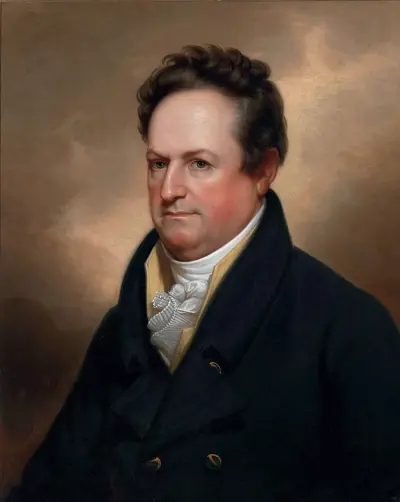
DeWitt Clinton, whose name was almost always spelled De Witt during his lifetime and until the late 20th century, was an American politician and naturalist. He served as a United States Senator, Mayor of New York City, and as the sixth Governor of New York. In this last capacity, he was largely responsible for the construction of the Erie Canal. Clinton was a major candidate for the American presidency in the election of 1812, challenging incumbent James Madison.
