George Rogers Clark Quotes
Sacagewa reconciles all the Indians to our friendly intentions. A woman with a party of men is a token of peace.
a Shoshone Indian woman who accompanied Lewis and Clark in exploring the Louisiana Territory
George Rogers Clark, 1752-1818, Revolutionary War leader and explorer, History of the Expedition of Capts. Lewis and Clark, 1804-5-6, 1814
Sourced by: Eigen's Political and Historical Quotations


The Russians were breaking diplomatic relations with Israel.

Originally published as The Cynic’s Word Book


The quotation was made in the context of the Arab Israeli conflict, but the principle is general.


Little Wolf led 300 Cheyenne off the Reservation. The soldiers followed but never could catch the Indians. Little Wolf made good the escape to Montana where he was allowed to stay. Later, he worked as a scout for the Army.


The central Indian policy problem for Jefferson’s Administration was the fact that most Indians hunted for subsistence and the amount of land needed to support a hunting society was per capita much greater than an agricultural and especially an industrial one. Jefferson had no personal animosity against the Indians as many in his day did. But he perceived the need to obtain Indian lands for white agricultural use.

The issue of force verses diplomacy has been in debate at almost all times. However, the issue of the conflict with Islam is much the same today—almost 1000 years later


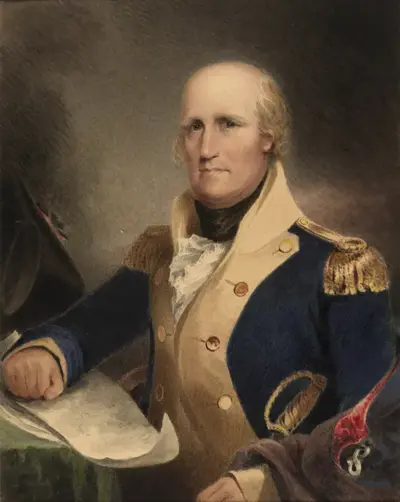
George Rogers Clark was an American surveyor, soldier, and militia officer from Virginia who became the highest-ranking American patriot military officer on the northwestern frontier during the American Revolutionary War. He served as leader of the militia in Kentucky (then part of Virginia) throughout much of the war. He is best known for his celebrated captures of Kaskaskia (1778) and Vincennes (1779) during the Illinois Campaign, which greatly weakened British influence in the Northwest Territory. The British ceded the entire Northwest Territory to the United States in the 1783 Treaty of Paris, and Clark has often been hailed as the "Conqueror of the Old Northwest".
