Charles Tupper Quotes
It is admitted by everybody that rights and privileges enjoyed by the Roman Catholic minority in Manitoba down to 1890, were taken away by legislation of 1890.
Tupper, Charles. Official Report of the Debates of the House of Commons of the Dominion of Canada. S. E. Dawson, 1896.


Catholics were blamed by some for the defeat of Henry Clay in 1844. Anti catholic sentiment was high:. Johnson was then a Congressman representing a district where there were few Catholics and strong anti-Catholic feeling.


See Justice Richard Cox for a similar view.


This special collection brought in the huge sum of 300,000 Guilders. The Protestants in Catholic Ireland were persecuted as were the Catholics in most Protestant dominated lands. The Vatican raised money and armies to strengthen the hand of Catholic states and to foment revolution in Protestant states. Some of the protestant churches used the same methods to “interfere in the internal affairs of other countries” however. The early Americans were well aware of this history of religious struggles to become the State Religion, and this was one of the reasons they wrote the First Amendment. Without it and the others in the Bill of Rights, there would have been no ratification of the Constitution.

This was before the Iranian Revolution and the Government of the Shah was attempting to modernize and allow any Iranian citizen who was otherwise qualified to be judges including women and people of other religions.

Roger Williams, the founder of Rhode Island had provided in its charter for freedom of conscience. See {624148}. However later the Colonial legislature withdrew the franchise from Roman Catholics. Despite this temporary restriction of religions freedom, Rhode Island and Connecticut were far ahead of the other New England colonies in freedom of conscience.

Kelly Armstrong was a gay man who had committed no crime yet the Assistant Attorney General was following him about, going to his home and accusing him of promoting a “deviant” life style. Shirvell was fired from his job for violation of rules of behavior for law enforcement officers. Armstrong sued Shirvell for violating Michigan’s anti-stalking law. He agreed to drop the suit if Shirvell would apologize and stop stalking him. Shirvell refused. Then a Michigan jury awarded Armstrong $4.5 million in 2012.


In this speech, and in {634756}, he argued against unification to a public that was mostly opposed. The leadership was interested because they were facing the Muslim Ottoman Turks who were getting more powerful each day. The Eastern Emperor, Constantine XI, more of a soldier and politician than a cleric, wanted the military strength of the Franks and other Western European Christian armies to help protect the Eastern Empire and Byzantium and were willing to reunite under the Pope to get it. Gennadios and his faction were not. They prevailed and the next year, the Muslims conquered Byzantium which had little help from the armies of the Western Roman Empire.
There has been a similar demographic condition since.


He is a Greek Orthodox Christian, and he correctly observes that the Islamic world was considerably more tolerant than the Christian until the 18th century when Islam had become less tolerant in the Middle East while the Christians were modernizing and going through a cultural and intellectual enlightenment and societal modernization while the Muslims, became less tolerant than they were in earlier years leading to the modern situation.

Robertson does not mention the fact that Hindus are the majority of the world’s largest democracy—India. Freedom thrives there and political equality is extensive. However, economic equality is sadly lacking as in the Untied States. However, India is more unequal.
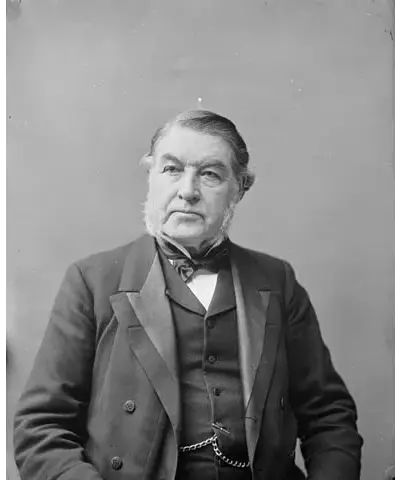
Sir Charles Tupper, 1st Baronet, GCMG, CB, PC was a Canadian father of Confederation: as the premier of Nova Scotia from 1864 to 1867, he led Nova Scotia into Confederation. He went on to serve as the sixth prime minister of Canada, sworn into office on May 1, 1896, seven days after parliament had been dissolved. He lost the June 23 election and resigned on July 8, 1896. His 69-day term as prime minister is the shortest in Canadian history.
