Nathaniel Hawthorne Quotes
It is a strange thing in human life, that the greatest errors both of men and women often spring from their sweetest and most generous qualities; and so, undoubtedly, thousands of warm-hearted, sympathetic, and impulsive persons have joined the Rebels, not from any real zeal from the cause, but because, between two conflicting loyalties, they chose that which necessarily lay nearest the heart. There never existed any other Government against which treason was so easy
Nathaniel Hawthorne, 1804-1864, Writer, “Chiefly About War Matters”, The Atlantic Monthly, July 1862
Sourced by: Eigen's Political and Historical Quotations


For the required Oath, see {623308} . There were several to the amnesty. These included graduates of West Point and the Naval Academy who had joined the rebellion, senior officers and officials of the Confederacy, those who were accused of war crimes and abusing Union prisoners of war, persons who went abroad to help the Confederacy, and Northerners who had gone South to aid the rebellion. Many scholars think that although Lincoln had expressed his desire to provide an amnesty after the war was over, he probably would have been more lenient than Johnson who exempted many on the Southern side—especially the leaders. Ironically, Johnson was a Southerner but was personally, morally outraged at taking up arms against the United States and in that sense was much more of a hawk than Lincoln and many of the radical Republicans even. However, he was an inveterate racist and resisted most of the attempts to implement equality during the Reconstruction. Many argue that but for Johnson, Reconstruction might have been much more successful. It was easy for Southerners to resist equal rights for Blacks when they knew that the President was also opposed to measures to produce equality.


Queen Victoria


Committee of the Congress. This was the prevailing Congressional and public view except for the South which had coalesced around an intellectual rationalization. See {618013}.


These failure of these secession opponents to influence most Southerners was one of the great tragedies of the war. William Tecumseh Sherman also counseled against the rebellion {627900}. Identity of many Americans at the time was defined by their State with less identification with the nation than today. Eggleston was an accomplished writer who had served in the Confederate army of the Civil War. 20 year after the war he wrote a series of articles for the prestigious Northern Atlantic Monthly trying to convey the war from the Southerner’s point of view.

There was some political pressure in the North, to offer terms to the South where they could cease the rebellion and return to the Union and return to the status quo ante—before the rebellion.
His refusal to explain the reasons for and the circumstances of the arrests drew much criticism from Democrats and the press. This was the precedent that Presidents have used ever since to not reveal the grounds for arrest and the circumstances thereof. George W. Bush aides specifically cited this when they refused the details of many of the arrests after the 9-11 attack.


He fought in Algeria and other counterinsurgencies and then studied them. He wrote the classic book on counterinsurgency warfare. After all the mistakes the U. S. made after the successful invasion of Iraq, his book and doctrine were very influential in the change in strategy and tactics that turned the Iraq War in our favor.


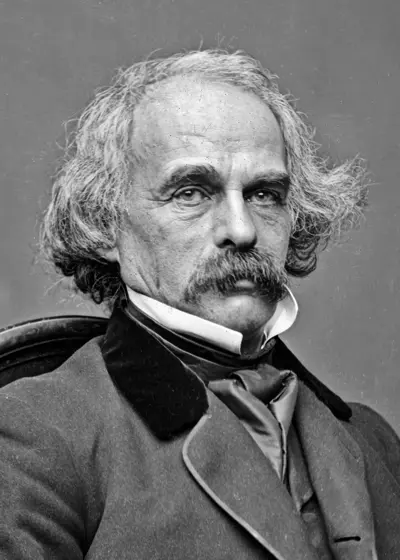
Nathaniel Hawthorne was an American novelist, dark romantic, and short story writer. His works often focus on history, morality, and religion.
