Robert Dale Owen Quotes
The people are forbidden to give aid and comfort to rebels. What of a government that has the power to cut off from aid and comfort all the rebels of the South and fails to exercise it?
Owen, Robert Dale. "To the President of the United States." The Policy of Emancipation: In Three Letters to the Secretary of War, the President of the United States, and the Secretary of the Treasury, J. B. Lippincott & Co., 1863.


Levy had gone to Bengasi—the center of the revolution—and returned to report to the French President. Levy had supported the President’s political opponent in the previous election. None the less, the President listened to Levy and credits him with the arguments that brought France to take the lead in supporting the rebellion.


Vladimir Lenin


Charles Wilkes, a Union Navy Captain enforcing the naval blockade of the South, intercepted a British mail ship in the Caribbean and discovered two Confederate diplomats on board. He took them into custody to the cheers of Congress. England, however, was outraged that passengers—diplomats—on one of their ships was seized after boarding. This was technically an act of war. Abraham Lincoln, to the distress of many in Congress ordered the Confederate diplomats released explaining with this quotation.


Cromwell was not opposed to monarchy per se as long as it was reasonably checked. He saw Charles II as a terrible monarch. After deposing Charles, he and his associates had to come up with some form of government. As “Lord Protector” he was a de facto monarch without the trappings.


The Boxers were against Western and Christian influence. The Government was too weak to protect the foreigners or the Chinese Christians. So the Western Powers used their soldiers and diplomats to defend the Western Enclaves and Christian Churches not unlike the situation with the Taliban in Afghanistan a century later.

This is an interesting retrospective on slavery after the tragedy of the Civil War was recognized.
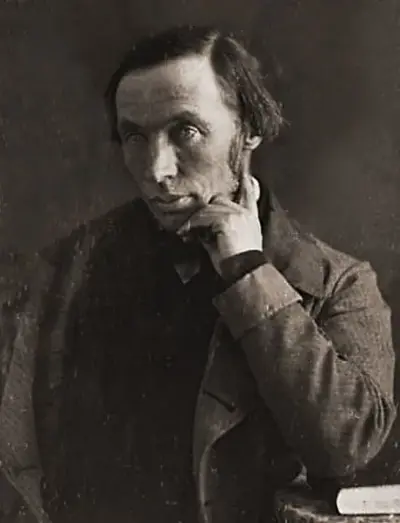
Robert Dale Owen was a Scottish-born Welsh social reformer who immigrated to the United States in 1825, became a U.S. citizen, and was active in Indiana politics as member of the Democratic Party in the Indiana House of Representatives (1835–39 and 1851–53) and represented Indiana in the U.S. House of Representatives (1843–47). As a member of Congress, Owen successfully pushed through the bill that established Smithsonian Institution and served on the Institution's first Board of Regents. Owen also served as a delegate to the Indiana Constitutional Convention in 1850 and was appointed as U.S. chargé d'affaires (1853–58) to Naples.
