Leo Tolstoy Quotes
The government assures the people that they are in danger from the invasion of another nation, or from foes in their midst, and that the only way to escape this danger is by the slavish obedience of the people to their government. This fact is seen most prominently during revolutions and dictatorships, but it exists always and everywhere that the power of the government exists.
Leo Tolstoy, 1828-1910, Russian Writer & Philosopher, Christianity and Patriotism, 1895
Sourced by: Eigen's Political and Historical Quotations


Arguing the need to limit the power of the legislature:


Prevented by the Military from ever taking office. She was commenting on recent attacks against minority Muslims by the majority Buddhists and one of the major reasons she claimed was the lack of trust in the Muslim community that had developed during the period of military dictatorship.


Historically, most dictators have announced their worst intentions and in many cases were not believed by much of the world who then learned that they had made a serious error.


Eggleston was an accomplished writer who had served in the Confederate army of the Civil War. 20 year after the war he wrote a series of articles for the prestigious Northern Atlantic Monthly trying to convey the war from the Southerner’s point of view.


At the time of this statement most people thought that Bush was joking. But by the end of his Presidency many looked back on the quote and thought that Bush had such preferences. He unilaterally took the country into the Iraq War and assumed Presidential Powers that no other president had ever attempted. Most serious, his administration actually took the formal legal position that the President did not have to obey the law if he unilaterally thought that it was not in the nation’s interest from the point of view of the Commander in Chief. So many debate whether this quotation was a light hearted joke of a harbinger of his real feelings about the Presidency.


This was Churchill’s first Radio Address as Prime Minister.


Soon he had the power of a dictator but he didn’t force his will on the vast majority of the Cubans. His decrees made all the wealthy and the cronies of the dictator Batista outraged and most of them left Cuba. He was a dynamic demagogue and the people handed him dictatorial powers which he did not reject. He was so popular that he was the only leader in the Americas who would give 4 hour speeches and move through the streets without any bodyguards until the United States and dissident expatriates tried to assassinate him. With all that popularity, none the less he would not allow open criticism of his regime and jailed many political opponents. So he indeed became a dictator but never needed the machine gun to maintain power.
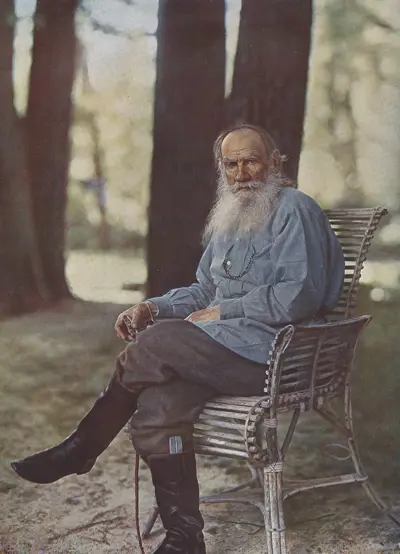
Count Lev Nikolayevich Tolstoy, 9 September, 1828 – 20 November, 1910), usually referred to in English as Leo Tolstoy, was a Russian writer who is regarded as one of the greatest authors of all time. He received nominations for the Nobel Prize in Literature every year from 1902 to 1906 and for the Nobel Peace Prize in 1901, 1902, and 1909. That he never won is a major controversy.
