Omar Al-Bashir Quotes
Any government in the world, when facing an armed rebellion, has a constitutional, legal, and moral obligation to resist these militants.
Haidar, Suhasini. "We Are Victims of U.S. Double Standards: Omar Al-Bashir." The Hindu, 30 Oct. 2015.


Levy had gone to Bengasi—the center of the revolution—and returned to report to the French President. Levy had supported the President’s political opponent in the previous election. None the less, the President listened to Levy and credits him with the arguments that brought France to take the lead in supporting the rebellion.


He had no authority to do this. He just took it upon himself. This was one of the incidents which caused later Congresses to pass very strict laws limiting the authority of all Federal Military and other intelligence and police forces so that they have little or no authority within the United States. President Lincoln did not allow the order to stand, although he repudiated it very delicately and as privately as possible. Many in his own party strongly favored this proclamation as it cracked down on the Southern Rebels and emancipated slaves—both objectives of many Republicans. In addition, Fremont was very popular with the people and had strong political connections. (He would later run for President.) See {635739}.


3rd Earl Russell of Kingston

See {642427} for a case where the United States was accused of not living up to this treaty.

The FBI had obtained a court order requiring apple to write software that could hack into a person's iPhone. Apple, with most other hi-tech companies in support, filed a motion with the court opposing the order. The FBI shortly thereafter withdrew its request for the order saying that they had found other solutions, when they had originally told the court that there were no other solutions.


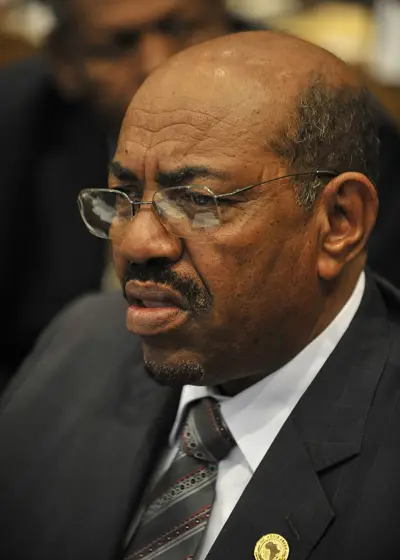
Omar Hassan Ahmad al-Bashir is a Sudanese former military officer and politician who served as the seventh president of Sudan under various titles from 1989 to 2019, when he was deposed in a coup d'état. He was subsequently incarcerated, tried and convicted on multiple corruption charges. He came to power in 1989 when, as a brigadier general in the Sudanese Army, he led a group of officers in a military coup that ousted the democratically elected government of prime minister Sadiq al-Mahdi after it began negotiations with rebels in the south. He was elected three times as President in elections that have been under scrutiny for electoral fraud. In 1992, al-Bashir founded the National Congress Party, which remained the dominant political party in the country until 2019. In March 2009, al-Bashir became the first sitting head of state to be indicted by the International Criminal Court (ICC), for allegedly directing a campaign of mass killing, rape, and pillage against civilians in Darfur. On 11 February 2020, the Sudanese government announced that it had agreed to hand over al-Bashir to the ICC for trial.
