Luella Miner Quotes
This forenoon ten Americans and twenty Russians went to the south cathedral, where the Boxers were looting, burning, and killing, killed seventy Boxers, captured ten, and took Catholic refugees to a place near the British Legation. In the afternoon twenty-five Germans and an equal number of French went to the same place, with much the same result, though not quite so many Boxers were killed
The Boxers were against Western and Christian influence. The Government was too weak to protect the foreigners or the Chinese Christians. So the Western Powers used their soldiers and diplomats to defend the Western Enclaves and Christian Churches not unlike the situation with the Taliban in Afghanistan a century later.
Luella Miner, 1861-1936, Professor at the American College at Tungchau, China, Journal of her experience in the Boxer Rebellion, China, June 15 1900
Sourced by: Eigen's Political and Historical Quotations

The Empress had earlier decided not to try and suppress the Boxers when they started attacking foreigners--{641838}. But now things had gotten out of hand and many ordinary Chinese people—especially Chinese Christians-- were suffering Boxer abuse. Cixi thought the government had to “ally” with the Boxers in the hope that she could influence directions in the future. This, of course, made her anathema in the West and forever damaged her reputation and legacy in Western history.


Levy had gone to Bengasi—the center of the revolution—and returned to report to the French President. Levy had supported the President’s political opponent in the previous election. None the less, the President listened to Levy and credits him with the arguments that brought France to take the lead in supporting the rebellion.
The American plan was to capture Quebec and add that province to the 13 colonies. See {636940} . However, the American officers botched the invasion and did not attack as soon as they arrived when the British had almost no troops to defend Quebec.


He used the “united nations” as a general description as the UN had not been created or named yet, However, as this quotation demonstrates, the President was already thinking about a UN idea, but as a realist, he explained that the great powers had to come to some agreement of interests. Actually China and France, at the time, would go along with whatever the United States and Britain wanted to do and had a great common interest, and there was already a strong association of interests between Britain and America. Russia was to be the problem and a complete common interest was never to be, but there was enough to get the United Nations started.

At the time she was herself in exile in Jordan where she worked with the over 1 million Arab refugees (from both Syria and Iraq) in Jordanian refugee camps. The contrast between the two groups of refugees she found dramatic.

The French had made a series of major military misjudgments and blunders allowing the German troops to reach the interior of France and threaten to rout the French. General French’s forces were called upon to prevent such a rout and did so costing British casualties and diverting British Armies from their desired offensive operations. Then the British Expeditionary Force was again called upon to come to the aid of the French for the second time. General French pushed back but the British really had no other alternative lest their ally could be enfeebled for the rest of the war. The French military leadership and General Staff was terrible at that point.

A few months later, that is exactly what Germany did. She was hoping that England would not enter the war despite her treaty obligations, but she was willing to risk the possibility. The Czar had a strong espionage and intelligence service active in Germany, but, like so many other intelligence failures, the intelligence operatives and analysts had military and economic facts but had little understanding of the German culture which propelled Germany to what to most other cultures was “irrational policy making.” People and nations often engage in irrational activities, even against their own self-interest.
Pride, sense of dignity and self-respect are powerful and dynamic forces that have been constantly underestimated by occupiers and invaders throughout history. In the case of China, it was not the foreign militaries per se that were responsible for the resentment but the diplomats, merchants and missionaries using the protection and threat of the foreign military that did most of bullying.
Assad was the autocratic ruler of Syria. In the second decade of the 21st century, a number of dissident groups started a rebellion. The Unied States and most of the EU countruies wanted to assist the rebels as Assad had been butchering his own people to put down the rebellion. Russia, in addition to having an allaince with Assad for a Navel Base in Syria, was very coincerned about the people replacing Assad if the revolution succeeded. The coalition of rebels was not at all a coalition and there was considerable fighting and hatred between them ISIS was one of the stringest groups and the Russians were worried that they might take over so they supported Assad and in 2016 actually intervened using Russian air power to support the Government troops. That turned the tide and teh rebellion was prevented from succeeding. The Russian leadership was distressed that the United States did not take their concerns seriouly enough and indeed after they were in teh fight, the United States had to deal with them about the fate of Syria, so it was a successful tactic.


At that time, Russia and Germany were autocracy, and the ruler could simply take the English money and force the soldiers to fight in a war they had not stake in nor understood.

Response when German Troops were occupying a part of China. See {641706}.
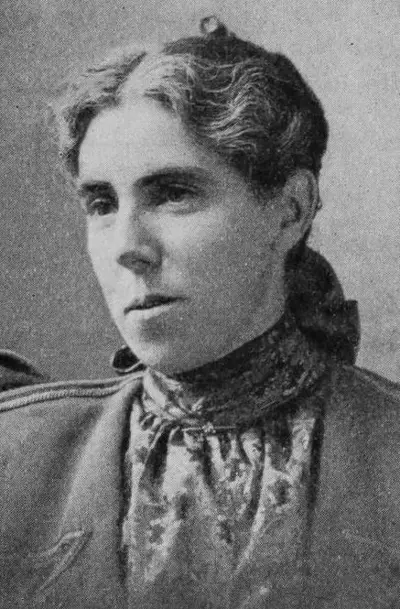
Sarah Luella Miner was an American educator and Christian missionary in China. She founded and led the North China Union College for Women, China's first women's college.
