Judah P. Benjamin Quotes
It is a revolution; a revolution of the most intense character; in which belief in the justice, prudence, and wisdom of secession is blended with the keenest sense of wrong and outrage, and it can no more be checked by human effort for the time than a prairie fire by a gardener’s watering pot.
Judah P. Benjamin, 1811-1884, U. S. Senator (Whig & Democrat, LA), Confederate Attorney General, Secretary of War & Secretary of State, Quoted in Allan Nevins, The Emergence of Lincoln, 1950
Sourced by: Eigen's Political and Historical Quotations


When the first Southern States seceded, each appointed a whose job it was to persuade the other Southern States to also secede. In this case Hale was marketing secession to Kentucky which with Maryland were the only two Southern States to reject what they regarded as treason and rebellion. The importance of the quotation however is in his argument which was all based on enmity to racial equality and abolition. Later Southern apologists would argue that the Civil War was fought, not about slavery and racism butt about different philosophies of government. See {623715} .
The last lines of the editorial were tragically accurate in predicting the Civil War. The more the slavery question was debated in the nation, the more polarized the country became. If the South would persist in trying to curtail men’s freedom and maintain slavery, the slaves had the same right of revolution and insurrection as was established in the American Revolution. That was the view of most abolitionists. Southern slave holders, feared an armed slave rebellion more than anything else, and observed that debating the issue of slavery was just riling up Blacks and whites and would instigate such armed revolutions. The Southern solution was to cease debating the slavery question. The Northern solution was to end slavery. Neither side would accept the solution of the other and the Civil War ensued.

As just one example of Southern States' reasons, see {583044}. Many of the Northern States had passed laws declaring everyone in the state was free and making it illegal to return or assist in the returning of escaped slaves. The Southerners got the Federal Fugitive Slave Act passed which required all Americans to assist in recapturing escaped slaves. It was the Northern States who claimed states' rights were being trampled. The South was vehemently opposed to States' Rights when it came to allowing individual states to decide who was free and who was not. The Southerners had only one fundamental reason for secession—the maintenance of the Negro slavery system on which much of their economy depended as did their sociology, culture, and way of life.
There indeed were although the Southerners tended to exaggerate the numbers. However, the more slavery was debated, the more many of the abolitionists came to believe that insurrection and slave rebellion was not only morally justified but was the only recourse that was left by the racist intransigence of the Southern slave holders and politicians.


The early Union military leadership was so poor and timid that it was not clearly demonstrated that a Confederacy was not viable until later in the war, and the Southerners possessed an extraordinary capacity for ignoring reality and self-delusion, that it was not demonstrated until Grant’s major victories and Sherman’s March through Georgia and the Southern East Coast that an independent South was not going to be.


South America, invaded and colonized by Spain was a brutal combination of slavery and repression. Even the European colonists suffered under the terrible combination of exploitation, militarism and religious dictatorship. Independence from Spain was equally bloody as unlike in North America where the fight was against British rule, in South America the black slaves, the indigenous Indians and the white colonists all had scores to settle with the Spanish rulers. And the Spanish in turn realized that and brutally repressed all rebellion attempts. Atrocities were common, and committed by almost all, including even idealists like Bolivar.

He had worked himself into a crescendo of shouting when he delivered this quotation. The main reason this quotation is important is that most politicians of North and South wanted to get the animosity of the Civil War over with and to do so sponsored these memorial events where both sides could celebrate and remember the bravery of men fighting and dying for their cause. The photographs of former enemies shaking hands which the newspapers ran frequently, would give the impression that by the 1880s the hatred and animosity of the Civil War was behind the nation. However, that was not at all true. Most veterans of both sides maintained their hatreds throughout their entire lives. Even their children carried the hatred into the next generation. Politicians were expected to not open the scabs of the old wounds in public, but many like Oates found political utility in not doing so. The moral outrage of many in the North remained until WWII when regional unity genuinely transcended the Civil War.


He was Chancellor of the Exchequer at the time of this speech. Gladstone was certain about most of his views on foreign policy but correct on only some with many blunders on his watch. This view was very important for the Confederacy as it was a prerequisite to diplomatic recognition. The latter never came.

The Governor was a staunch Confederate supporter but his state legislature majority favored the Union. He was forced out of the governorship when the 1861 election gave the legislature a veto-proof pro Union majority.

The Southern states were illegal rebels. A confederacy had always meant a voluntary association of otherwise independent entities. However technically the Southern states were not independent but in a state of illegal rebellion against the United States. Lincoln, a lawyer, could not being himself to refer to the South by their preferred name—the Confederacy. So this was how he and many in his administration referred to the South.

One of the puzzles of American Civil War history has been how the poor whites of the South (who provided most of the military manpower that fought and died in the Civil War) were persuaded to fight against a much stronger, more highly industrialized, and more affluent few, that had many more soldiers. One of the main reasons, though difficult for us to understand today, was that the Southern leadership actually persuaded the Southerners that men from the North were cowards and lacked the character, virtue or will to fight. The general “party line” of the South was that one Southern solder was worth more than 5 Northern Soldiers,


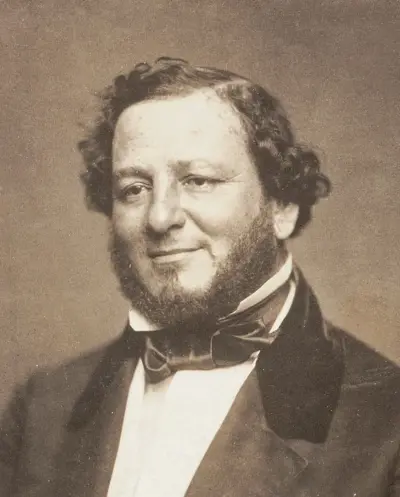
Judah Philip Benjamin, QC was a lawyer and politician who was a United States Senator from Louisiana, a Cabinet officer of the Confederate States and, after his escape to the United Kingdom at the end of the American Civil War, an English barrister. Benjamin was the first Jew to hold a Cabinet position in North America and the first to be elected to the United States Senate who had not renounced his faith.
