John Peter Shindel Gobin Quotes
The Southern Flag on the badge of a grey uniform meant treason and rebellion in 1861 and that’s what it means now. I want it to be distinctly understood that now and for all time, the men who wore the Grey were everlastingly and eternally wrong.
He had worked himself into a crescendo of shouting when he delivered this quotation. The main reason this quotation is important is that most politicians of North and South wanted to get the animosity of the Civil War over with and to do so sponsored these memorial events where both sides could celebrate and remember the bravery of men fighting and dying for their cause. The photographs of former enemies shaking hands which the newspapers ran frequently, would give the impression that by the 1880s the hatred and animosity of the Civil War was behind the nation. However, that was not at all true. Most veterans of both sides maintained their hatreds throughout their entire lives. Even their children carried the hatred into the next generation. Politicians were expected to not open the scabs of the old wounds in public, but many like Oates found political utility in not doing so. The moral outrage of many in the North remained until WWII when regional unity genuinely transcended the Civil War.
John Peter Shindel Gobin, 1837-1910, Union Civil War General, Address, Grand Army of the Republic Wisconsin Regiment Memorial Reunion, Little Round Top, Gettysburg Battle Field, 1888
Sourced by: Eigen's Political and Historical Quotations

Oates was a Confederate Colonel during the Civil War. His statement almost started a brawl as the Memorial Dedication was a joint North-South participation event. Northern politicians, officers and men were outraged and rose to their feet with several mounting the rostrum to refute Oates intemperate remarks. However, like Southern politicians of the 1960s, they produced a lot of redneck support with such extreme statements. The main reason this quotation is important is that most politicians of North and South wanted to get the animosity of the Civil War over with and to do so sponsored these memorial events where both sides could celebrate and remember the bravery of men fighting and dying for their cause. The photographs of former enemies shaking hands which the newspapers ran frequently, would give the impression that by the 1880s the hatred and animosity of the Civil War was behind the nation. However, that was not at all true. Most veterans of both sides maintained their hatreds throughout their entire lives. Even their children carried the hatred into the next generation. Politicians were expected to not open the scabs of the old wounds in public, but many like Oates found political utility in not doing so. The moral outrage of many in the North remained until WWII when regional unity genuinely transcended the Civil War. See {639364} for a Northern example with no political motive but with uncontrollable moral outrage.
As just one example of Southern States' reasons, see {583044}. Many of the Northern States had passed laws declaring everyone in the state was free and making it illegal to return or assist in the returning of escaped slaves. The Southerners got the Federal Fugitive Slave Act passed which required all Americans to assist in recapturing escaped slaves. It was the Northern States who claimed states' rights were being trampled. The South was vehemently opposed to States' Rights when it came to allowing individual states to decide who was free and who was not. The Southerners had only one fundamental reason for secession—the maintenance of the Negro slavery system on which much of their economy depended as did their sociology, culture, and way of life.

After the Civil War and Reconstruction, the American nation was still bitterly divided intelelctually, socially, emotionally and poliotically. In an effort to bring more unity to America, most of the power stucture and the influentials of the nation began to avoid those issues that would divide North and South and try and promote a narrative that both sides might be able to live with. And this is what Zeitz describes in this quotation. America went through a period of Revisionist History that even in the 21st century was held by many people. It wasn't until the middle of the 20th century that the real history and narrative of the Civil War and Reconstrution emerged from the few academics who had all along criticized the fabricated narritive that did unify the country at the cost of historical accuracy and truth. Many scholars point out that the price that America paid for this unity was the Jim Crow era and a century of legalized racism. Much of the nation was built on the labor of Negro slaves and the victims of the slavery era, also bore the brunt of American unity and reconcilliation.


Many believe that the Confederate flag symbolizes bravery and honor in battle, and therefore should be flown even in state government facilities as these are values which our governments hold. And that is true, but the same symbol also connotes, slavery, murder, racism, treason, hate, family destruction, brutality, and torture. Southern whites tend to acknowledge the bravery and honor but ignore the negative symbols. Most other Americans acknowledge the negatives but many tend to ignore the positive virtues.


When the first Southern States seceded, each appointed a whose job it was to persuade the other Southern States to also secede. In this case Hale was marketing secession to Kentucky which with Maryland were the only two Southern States to reject what they regarded as treason and rebellion. The importance of the quotation however is in his argument which was all based on enmity to racial equality and abolition. Later Southern apologists would argue that the Civil War was fought, not about slavery and racism butt about different philosophies of government. See {623715} .
This newspaper editorial has historical importance for two reasons. First, it is yet another proof that the sole reason for southern secession was slavery. Second, note the implication that Lincoln had Negro ancestry. As that could be the only reason that he would hold his views on slavery. This disreputable tactic of slandering opponents who hold different views have extended to German ancestry in WWI, Catholic religion, communist affiliation, and in one of the more recent examples, the accusation—believed by a number of Americans, that President Obama was a secret Muslim.

The Southern states were illegal rebels. A confederacy had always meant a voluntary association of otherwise independent entities. However technically the Southern states were not independent but in a state of illegal rebellion against the United States. Lincoln, a lawyer, could not being himself to refer to the South by their preferred name—the Confederacy. So this was how he and many in his administration referred to the South.

One of the puzzles of American Civil War history has been how the poor whites of the South (who provided most of the military manpower that fought and died in the Civil War) were persuaded to fight against a much stronger, more highly industrialized, and more affluent few, that had many more soldiers. One of the main reasons, though difficult for us to understand today, was that the Southern leadership actually persuaded the Southerners that men from the North were cowards and lacked the character, virtue or will to fight. The general “party line” of the South was that one Southern solder was worth more than 5 Northern Soldiers,

The Prime Minister had a penchant for mis-assessing world affairs in both the old world and the new.

This quotation is very important for in the 20th century Southern revisionists made a major effort to ennoble the Confederate cause by claiming that Slavery and the desire to keep Blacks in bondage and unequal was just of byproduct of the reason for secession—States Rights and the decentralization of government. Many of the school history books were changed to reflect this claim. However, each of the seceding states left a legislative record of secession and the reasons for it. In all cases, Slavery and the preservation of Slavery in the South was the central and in most cases the only reason stated. In this case, Texas made its reasons clear. There was nothing noble therein but racism and racial exploitation.
The Confederates were very clear that slavery was the cause of the war. Revisionists later tried to add other motives to the Southern cause, but Grant and all the contemporaries on both sides knew slavery was the crux of the matter. So the Confederate cause was the right to brutalize, torture, and even kill an unwilling labor force that was unpaid. No war in history had ever been fought for such a lowly cause and the Confederate leadership skills were amazing in keeping up morale without a decent cause to fight for.

This was his name for the wealthy slaveowners in Tennessee. He was the military governor of Tennessee when he so labeled the secessionists.


Some Southerners, in order to obtain support in England for the Confederate cause claimed in their propaganda that slavery was not the issue but their issue with the Union was just one of local and regional autonomy. The British and most Europeans at that time were strongly against slavery so this “spin” might have gotten some support. Stowe and others put the lie to this, and the Confederacy never did get any significant material support from any country in Europe. The secession resolutions of the Southern States all state that Slavery was the cause (and often the ONLY cause stated) of secession. Also Southern General Mosby, called the spin for what it was. See {584991}.

He was Chancellor of the Exchequer at the time of this speech. Gladstone was certain about most of his views on foreign policy but correct on only some with many blunders on his watch. This view was very important for the Confederacy as it was a prerequisite to diplomatic recognition. The latter never came.


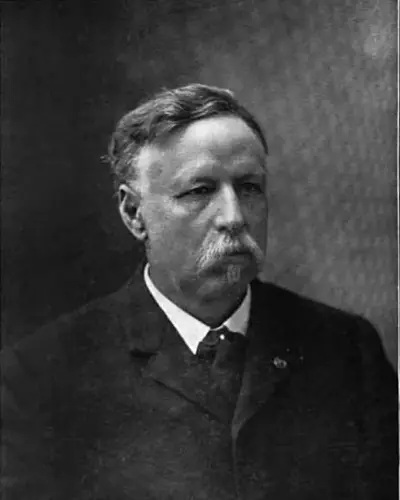
- Born: January 21, 1837
- Died: May 1, 1910
- Nationality:
- Profession:
John Peter Shindel Gobin was an American politician from Pennsylvania who served as an officer in the Union Army during the Civil War, as a member of the Pennsylvania State Senate for the 17th district from 1885 to 1898 and as the seventh Lieutenant Governor of Pennsylvania.
