Alija Izetbegovic Quotes
Islam contains the principle of the umma, i.e. a tendency towards the unification of all Muslims in a single community - religious, cultural and political. Islam is not a nationality, but it is the supranationality of this community.
Most Muslims when asked what they are will say “A Muslim” whereas most members of every other religion will give his/her nationality first and his/her occupation or profession second. Very few answer with their religion.
Alija Izetbegovic, 1925–2003, President of Bosnia and Herzegovina, The Islamic Declaration, 1970
Sourced by: Eigen's Political and Historical Quotations


The Caliph in the past was the religious and secular leader of all Muslims. Many of the fundamentalist terrorists have as their objective, the reestablishment of the Caliphate which will unite all Islamic countries under one leader who is both the secular and religious supreme authority—a religious and a civil dictatorship. Most Muslims, like most people of all religions, are not terrorists and believe that much of terrorist activity violates many basic tenets of Islam. However, in order to function, the terrorist must have the tacit support of sufficient numbers of people so that they can function without being exposed. That is an important objective for Al-Qaeda: to enlist sufficient numbers of ordinary people who although they will not commit the terrorist acts, will support the objectives of the terrorists and provide money, shelter, and other services.


This is a very important quotation as it focused on one critical difference between historical Islam and all the other major religions and fundamentally on the separation between church and state. In Islam there was a Caliph who was both the political ruler and the religious ruler. In comparison at the time, the Christians had a Holy Roman Emperor who was theoretically the overlord of all the Christian Kings but in reality he really could not exercise total or even much authority over all the other kings. At the same time, there was the Pope who was the religious leader of all the Christians. Since the distinction between Church and state was constantly in flux, the Christian Pope and Holy Roman Emperor were often at odds. The third Abrahamic religion, Judaism, had neither a secular leader or a religious one and no hierarchy other than local. Khaldun observed the theoretical advantage of Theocracy as a model, however he did not analyze the disadvantages among which were the assassination of many Caliphs and the laces. Even the Muslim Arabic states abandoned the idea of a Caliph in modern times until Iran adopted a Theocracy with a single Leader all powerful. However, all the other Arab nations wanted no part of a singular leader for all Muslim nations or even a single civil and religious leader within any other country. Al Qaeda however claimed to be fighting for a return to a Caliphate not only for the current Islamic Nations but for all nations which must be subservient to Islam.


One of the noteworthy aspects of this quote is a fundamental intellectual clash. Al-Quaeda and other Islamic fundamentalists are genuinely very concerned that the West will interfere with their religion and their desire to unite all the Muslims in the world. Ironically, the West prides itself on the tolerance of religion and the freedom for anyone to practice any religion. The West does not see where it is interfering at all with the Muslim religion or its moral precepts. The problem lies in the different perception of ideas. Since about 1100 there has been a closing of Islamic intellectual growth and change. Any idea which is contrary to the orthodox view of Islam is perceived as hurtful or at least dangerous to the Muslim. Individuals in the West question Islamic relation no more than different sects of Christianity, Judaism and other religions. Allowing freedom is not sufficient for this Islamic notion; there must be no exposure to different ideas or examples. For us, no exposure means no freedom. While there are many Muslims which agree with this position, there are also many who disagree completely and believe that Islam is strengthened by exposing Muslims to all the ideas in the world. He was killed by an American air strike that had targeted him.

Khomeini was a politician as well as a cleric. He was not always consistent depending on his audience. This book was the publication of 17 different speeches with different audiences. Here he opposes all monarchy, but there is little doubt that his main target was the monarchy of Saudi Arabia. In {620335} he suggests that monarchy would be acceptable if the monarch followed Islamic law. Here he leaves no room for monarchies of which there were and are a number in the Muslim world. And at the height of Islam there was a Caliph who not only had absolute rule of ALL Muslim countries, but he was the absolute ruler of the religion. The Caliph and later the Islamic Sultan held more absolute power than any king or Pope ever had. Most of the Islamic fundamentalists claim that they want a return to having a Caliph with absolute power. And even in Iraq today, the “Supreme Leader” exercises more autonomous power, than any monarch or dictator does in his own country.


While it may be true that some major powers do not presently want unity between Muslims, the Sunni-Shiite conflict has been ongoing for centuries—long before many “major powers” even existed. It is the oldest, continual civil war in history. It is certainly true that major Islamic powers like Saudi Arabia oppose unity was Saudi Arabia is a Sunni majority country and regard the Shiites as not only blasphemous and evil, but see them as dangerous.

This is a noteworthy quotation for two reasons: First, it shows part of the motivation for his murderous acts. Second, it illustrates a unique characteristic of Islam. Most people in the world first view themselves nationally or tribally, then often locally or occupationally, and then religiously. Eg ‘I am a French, Parisian, attorney who is Christian. For many Muslims, they are first a Muslim and the other identities follow. Eg ‘I am a Muslim, Nigerian teacher.

The Muslim Brotherhood had won the Presidency in the first Egyptian democratic election shortly after the ouster of Mubarak when they were the only party that was organized. However, after one year of government, their performance was so bad that critics like El Baradei offered strong public criticism—especially of the preoccupation with Islam with little government attention given to freedom, human rights, and the economy which was in terrible shape. This was the focus of the pointed article title. A few days after this article was published there was an insurrection of huge crowds of Egyptians and the Muslim Brotherhood President Morsi was forced to resign.


This is one of the first examples of a Muslim organization “playing the Palestinian card” in the hope of helping itself and second, the Palestinians. Note the explicit concern of a Western “base” which is how they perceived Jewish emigration from Europe to Palestine,
an old term for Muslims The Muslims were present in every state if India. Jinnah’s concept of nationhood is very Islamic in that Muslims are united even if they be in different states of nations. He was arguing to reserve some states as Muslim states by designation. 7 years later he would insist on a separate homeland. India was partitioned and Pakistan and Bangladesh resulted but at a fearful cost of tens of millions of lives.
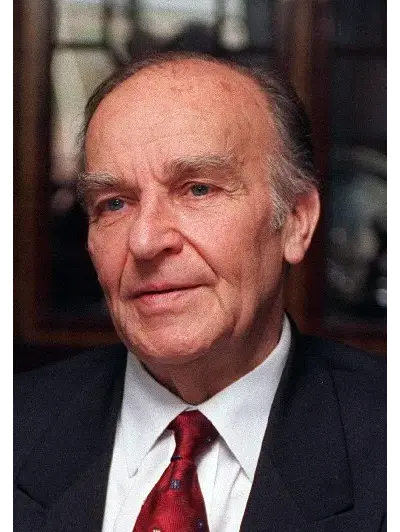
Alija Izetbegović was a Bosnian politician, lawyer, Islamic philosopher and author, who in 1992 became the first president of the Presidency of the newly independent Republic of Bosnia and Herzegovina. He served in this role until 1996, when he became a member of the Presidency of Bosnia and Herzegovina, serving until 2000.
