Yousef Saanei Quotes
Unfortunately, the source of all this conflict between the Sunnis and Shia is some major powers that do not want religious unity amongst Muslims.
While it may be true that some major powers do not presently want unity between Muslims, the Sunni-Shiite conflict has been ongoing for centuries—long before many “major powers” even existed. It is the oldest, continual civil war in history. It is certainly true that major Islamic powers like Saudi Arabia oppose unity was Saudi Arabia is a Sunni majority country and regard the Shiites as not only blasphemous and evil, but see them as dangerous.
Yousef Saanei, Grand Ayatollah & First Head of the Guardian Council of Iran, The Women’s Mufti: Interview with Grand Ayatollah Yousef Saanei, Asharq Alawsat, April 2007
Sourced by: Eigen's Political and Historical Quotations

There is of course no way to tell the sect of a Muslim by physique alone, although there are major behavioral differences. The reason the quotation was newsworthy was that it was amazing that a senior Senate leader was so ignorant of such a critical and problematical subset of the world.


While not in the Koran, this attributed statement is the basis for the ban on non-Muslims going on a Hajj and going to the most holy Muslim places—Mecca, Mina, Muzdalifa, and Arafat as well as the anti-religious hostility to all religions but Islam which is present in some Muslim countries.


“Africa” then meant Northern Africa or what we today call the Middle East. Even in the 4th century it was a hotbed of internecine religious strife. He was not the first to try and cope with the religious strife of Palestine and the rest of the Middle East, and he was certainly not the last.

After years of minority Sunni Muslim rule of Iraq, the U. S. invasion gave the majority Shiite Muslims political control. The Sunnis and Shiites have been at each others throats for centuries despite the fact that they are both Muslims. Saudi Arabia is the center of Sunni Islam and many of its religious extremists issue edicts advocating the suicide bombing of Shiite mosques and other facilities and assuring martyrdom for the suicide bombers.

Different Christian European powers moved in and out of alliances with each other and with the Islamic Ottoman Empire. So Christians were not unified and whenever a Christian country was at war with the Muslims some Christians perceived it as an assault on Christianity—except that there were Christian allies of the Muslims. Later many Muslims would see any conflict with a Christian country as an attack in Islam even when Muslim nations were allied with the Christians as was Turkey at the end of the 20th century. Turkey was a member of NATO and was therefore seen as traitors to Islam by some Muslims. There has always been this tendency to see conflict in terms of religious or ethnic hostility where convenient.


This is an interesting quotation because it illustrates the antipathy that Sunni Muslims hold towards Shiites and their concept of the problems of democracy. While most fundamentalist Muslims oppose democracy in principle, others, not wanting to oppose majority rule outright, have used the rationale in Iraq that the Shiites are not in the majority in the country, and that the Sunnis who controlled Iraq for so many years are the rightful rulers.

She is a leading American Arab who is a Syrian expatriate.


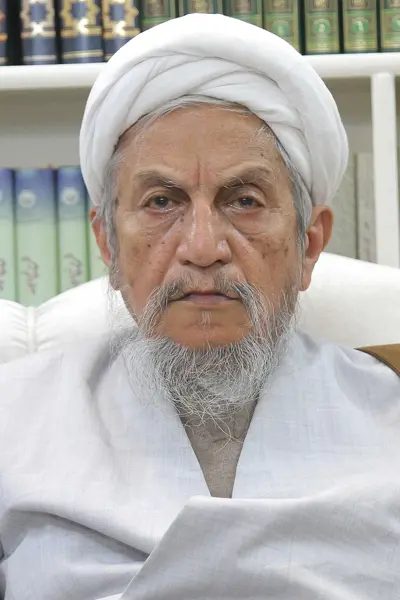
Grand Ayatollah Yousef Saanei was an Iranian Twelver Shi'a Marja' and politician, a member of the Islamic Republic of Iran's powerful Guardian Council from 1980 to 1983 and also Attorney-General of Iran from 1983 to 1985.
