James Larkin Quotes
I have tried to kill sectarianism, whether in Catholics or Protestants.
Larkin, James. Testimony at the Askwith Inquiry. Dublin, Oct. 1913. Cited in Nevin, Donal. James Larkin: Lion of the Fold. Gill & Macmillan, 1998, p. 197.


While not in the Koran, this attributed statement is the basis for the ban on non-Muslims going on a Hajj and going to the most holy Muslim places—Mecca, Mina, Muzdalifa, and Arafat as well as the anti-religious hostility to all religions but Islam which is present in some Muslim countries.

“Africa” then meant Northern Africa or what we today call the Middle East. Even in the 4th century it was a hotbed of internecine religious strife. He was not the first to try and cope with the religious strife of Palestine and the rest of the Middle East, and he was certainly not the last.

France, like the other European nations had suffered through the bloodbaths and civil and other wars including the Protestant Reformation, the Holocaust and others. They. like the Untied States chose a separation of church and state—a secular government to combat the inner and intrareligious bloodbaths that have historically killed millions.


His protest was focused on Middle East policies which he believed did not value the lives of Muslims as highly as Christians and Jews. The irony of this protest is that United States policy claims to value all life equally as do virtually all industrialized democracies. Omeish however is unusual among world Islamic leaders and politicians in that he values Christian and Jewish life as much as Muslim. Most, typically value Muslims almost exclusively and many advocate the killing of Christians and Jews.

Locke wrote the Charter of South Carolina in which any 7 people could assemble and form a church including:

Followers of the religious views of January Hus, 1369-1415 Hus was excommunicated and executed for his views that parts of the church were corrupt.


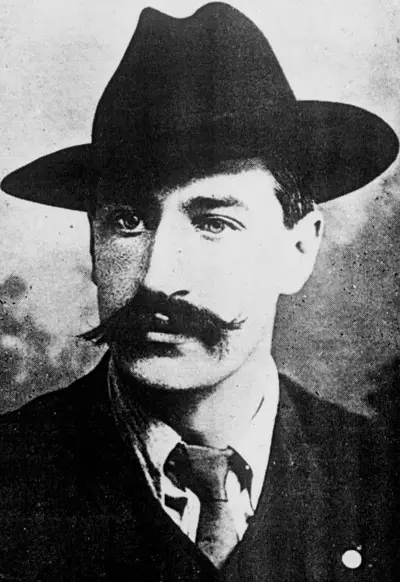
James Larkin, sometimes known as Jim Larkin, was an Irish republican, socialist and trade union leader. He was one of the founders of the Irish Labour Party along with James Connolly and William O'Brien, and later the founder of the Irish Worker League (a communist party which was recognised by the Comintern as the Irish section of the world communist movement), as well as the Irish Transport and General Workers' Union (ITGWU), the Workers' Union of Ireland (the two unions later merged to become SIPTU, Ireland's largest trade union). Along with Connolly and Jack White, he was also a founder of the Irish Citizen Army (ICA; a paramilitary group which was integral to both the Dublin lock-out and the Easter Rising). Larkin was a leading figure in the Syndicalist movement.
