Adam Yahiye Gadahn Quotes
Cease all interference in the religion, society, politics, and governance of the Muslims world. And leave us alone to establish the Islamic shura state, which will unite the Muslims of Earth in truth and justice …. Put an end to all forms of interference in the education curricula and information media of the Islamic world, and impose a blanket ban on all broadcasts to our region, especially those designed to alter or destroy the faith, minds, morals, and values, of our people.
One of the noteworthy aspects of this quote is a fundamental intellectual clash. Al-Quaeda and other Islamic fundamentalists are genuinely very concerned that the West will interfere with their religion and their desire to unite all the Muslims in the world. Ironically, the West prides itself on the tolerance of religion and the freedom for anyone to practice any religion. The West does not see where it is interfering at all with the Muslim religion or its moral precepts. The problem lies in the different perception of ideas. Since about 1100 there has been a closing of Islamic intellectual growth and change. Any idea which is contrary to the orthodox view of Islam is perceived as hurtful or at least dangerous to the Muslim. Individuals in the West question Islamic relation no more than different sects of Christianity, Judaism and other religions. Allowing freedom is not sufficient for this Islamic notion; there must be no exposure to different ideas or examples. For us, no exposure means no freedom. While there are many Muslims which agree with this position, there are also many who disagree completely and believe that Islam is strengthened by exposing Muslims to all the ideas in the world. He was killed by an American air strike that had targeted him.
Adam Yahiye Gadahn, 1978–2015, American Al Quaeda Terrorist Operative, Open Message to American President George W. Bush, MEMRI, May 29, 2007
Sourced by: Eigen's Political and Historical Quotations


The doctor argues that the problem of public health in the Islamic world is in large part due to the fact that health care is not organized any more under the control and governance of an Islamic institution—one which is guided by the Koran and Islamic tradition. Other physicians and public health experts believe one central obstacle to public health in Muslim nations is the strong influence that the Mullahs have over the behavior of the population and the medical and health practices that are acceptable and desirable to them are those of the Arabian Desert of the 7th Century or in some more modern interpretations, the medicine of the Islamic world of the 12th century when Islamic Medicine was the best in the World.
Theological & Legal Expert. The Sunnah, like the Koran, has statements of the Prophet, Mohammad. A fatwa is a religious legal ruling. This particular Fatwa shows the great difference between the Islamic State and a Republic or Democracy. In the latter forms, any religious practices must be consistent with the Constitution. Even though blasphemy might be prohibited by a religion, the United States Constitution for example protects anyone’s right to be blasphemous. In the Islamic system any constitution or law is subservient to and must be consistent with, the sayings of the Prophet Muhammad. In that sense, unless the Muslim populated nation is secular like Turkey, then the governments are partial or total theocracies.

This set of guidelines not only denies the media freedom of expression but requires them to protect Saudi’s from information or views that might divert them from Islam. The media must by law protect the establishment of a particular religion.

Ironically, without the word “wicked” most people would regard the first sentence as a good description of elements of a modern democracy. It illustrates that for the Islamic fundamentalist democracy substitutes the rule of man for the rule of God, freedom of speech allows heresy and blasphemy to to uttered and communicated, and religion which is supposed to inform and direct politics. So what is good for the lover of democracy is the very thing that is bad for Islam. This is not a uniquely Islamic viewpoint. It has been and is held by fundamentalist Christians and Jews as well who would return to Biblical law punishing blasphemy and heresy with death and have religion drive all politics.


Gabriel exaggerates in the sense that while the quotation is correct for many Muslims, it is by no means true of all. Iran for example is an Islamic theocracy, but Turkey is a 99 percent Muslim nation which is totally secular and in some ways is much more restrictive of Islamic teaching and practice than most secular democracies. The fundamentalist Muslim view of the state and religion is essentially the same as the ultra orthodox Jews and Christians. It is true that a greater proportion of Muslims believe in the merging of civil and religious law than Jews and Christians, but by no means all. The non Arab Muslims are much less likely to see the unity of state and religion.


In September of 2005 a Danish Newspaper published some political cartoons showing the hypocrisy of some Muslims who use Islam to justify murder of innocents and terrorism. Months later, in January of 2006 many in the Middle East protested vehemently and Muslim fatal riots broke out because the Prophet Muhammad's visage was depicted against Islamic tradition. Many Muslim nations started a boycott against Denmark. Many Muslim leaders claimed that insulting religion was an “abuse” of freedom of speech including those from nations which regularly publish material that is virulent against Christians and Jews.

In 2005 an Egyptian writer, Usama Anwar Ukasha, criticized one of the Prophet’s companion’s role for causing dissention and divisiveness in Islamic history. Some called for his legal punishment for slandering a holy figure (see {588714}) and a law case was brought to force him to divorce his wife—so that she would not be “contaminated by his heretical thoughts. Al-Bana argued for freedom of thought and speech on such subjects. His view was particularly important since he was the brother of Hassan Al-Bana, the founder of the Muslim Brotherhood, a powerful fundamentalist organization. Note that Al-Bana’s call for intellectual freedom does not go so far as to say that it should be legal to criticize The Prophet Muhammad and it illustrates how far even modern Islam has to go to meet reasonable standards of freedom of thought and speech.

They were protesting the arrest and imprisonment of a Blogger whose Internet views on Islamic history were deemed “holding religion in contempt” a crime in Egypt as it is in most Islamic Countries. See {585059}. The call for action by the United Nations was based on the fact that all member states of the UN have guaranteed to provide basic freedoms including the freedom of religion and the freedom of speech. However many Islamic nations have filed an “understanding: with the United Stations that are unknown to most people that says that nothing is required that would be against Sharia—Islamic Law which does provide the death penalty for heresy.

There is relatively little freedom of speech in Egypt and most Islamic countries where the traditional Sharia laws prohibiting blasphemy and the tradition of not publicly embarrassing the Caliph or the Sultan, combine to protect the modern Islamic state from criticism. Turkey, Tunisia and a few other Islamic states are exceptions. Under this Egyptian law anyone could be jailed for bringing “shame” to national and Islamic values. On September 6, 1981, the Egyptian Director of Public Health, Dr. Nawal El Saadawi was actually arrested and jailed for three months for saying that women were ill treated in Egypt and the rest of the Arab world. See {586710} for the kinds of statements for which Egypt would jail leading citizens.

Said, one of the leading American academic intellectuals and an Arab, was together with many other Muslim intellectuals, anguished at the lack of basic intellectual freedom in most Muslim nations and all Arab countries. The only Middle Eastern country in which Arabs had freedoms of expression political and otherwise was at the time, ironically Israel.


“Disbelievers” are non Muslims. The “Ummah” is the Arabic term for the Muslim Community as a whole. Note that this fundamentalist religious party is not only against the non-Muslim West, but it also opposes most of the leaders of the Muslim countries of the world on the grounds that they are nationalist and do not represent the Ummah of the Muslim world. So ironically, this party is not only opposed by the democracies of the world (Islamic and not) but also the Muslim Dictatorships such as Syria who arrest all members of the party periodically.

In 2005 Rose published a number of cartoons some of which depicted the Muslim Prophet, Muhammad which offended many fundamentalist Muslims who had a tradition who had a tradition of never depicting the visage of the Prophet. A delegation of clerics demanded an apology from Rose and the country of Denmark, claiming that they and Islam, like other religions, were entitled to respect.
Abdul Rahman had converted from Islam to Christianity 16 years before. Conversion from Islam is a capital crime under Sharia Law. Rahman was charged but the judge demonstrating the tolerance of Islamic law said that Rahman would be given an opportunity to change his mind and re-embrace Islam and if he did so, he would be converted and not killed.

In September of 2005 a Danish Newspaper published some political cartoons showing the hypocrisy of some Muslims who use Islam to justify murder of innocents and terrorism. Months later, in January of 2006 many in the Middle East protested vehemently and Muslim riots broke out because the Prophet Muhammad's visage was depicted against Islamic tradition. Many Muslim nations started a boycott against Denmark. Many Muslim leaders claimed that insulting religion was an “abuse” of freedom of speech including those from nations which regularly publish material that is virulent against Christians and Jews. In the United States a debate raged over whether or not news organizations should show the cartoons. Some did; most did not.

In September of 2005 a Danish Newspaper published some political cartoons showing the hypocrisy of some Muslims who use Islam to justify murder of innocents and terrorism. Months later, in January of 2006 many in the Middle East protested vehemently and Muslim riots broke out because the Prophet Muhammad's visage was depicted against Islamic tradition. Many Muslim nations started a boycott against Denmark. Many Muslim leaders claimed that insulting religion was an “abuse” of freedom of speech including those from nations which regularly publish material that is virulent against Christians and Jews.
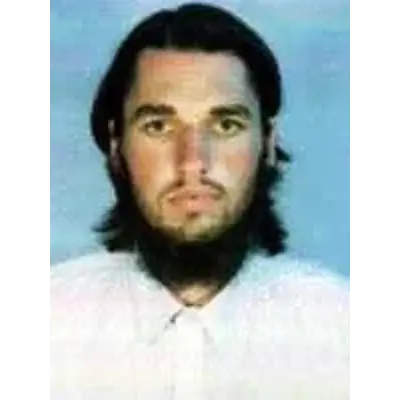
Adam Yahiye Gadahn was an American senior operative, cultural interpreter, spokesman and media advisor for the Islamist group al-Qaeda. Beginning in 2004, he appeared in a number of videos produced by al-Qaeda as "Azzam the American" ('Azzām al-Amrīki, عزام الأمريكي, sometimes transcribed as Ezzam Al-Amerikee). Gadahn, who converted to Islam in 1995 at a California mosque, was described as "homegrown," a term used by scholars and government officials for Western citizens "picking up the sword of the idea" (in the words of one FBI agent) to commit attacks in the West. American intelligence officials allege that he inspired the 2007 Osama bin Laden video.
