Abdurrahman Wahid Quotes
If we cling to the institution of Islam, then we tend to defend it against whatever we see as a danger to it, so because of this we see now that many people are defending states, defending territories, defending everything institutional in the belief that they defend Islam.
Wahid, Abdurrahman. "Interview: Abdurrahman Wahid." Frontline: Muslims, PBS, 9 May 2002.


Most Muslims when asked what they are will say “A Muslim” whereas most members of every other religion will give his/her nationality first and his/her occupation or profession second. Very few answer with their religion.

The Caliph in the past was the religious and secular leader of all Muslims. Many of the fundamentalist terrorists have as their objective, the reestablishment of the Caliphate which will unite all Islamic countries under one leader who is both the secular and religious supreme authority—a religious and a civil dictatorship. Most Muslims, like most people of all religions, are not terrorists and believe that much of terrorist activity violates many basic tenets of Islam. However, in order to function, the terrorist must have the tacit support of sufficient numbers of people so that they can function without being exposed. That is an important objective for Al-Qaeda: to enlist sufficient numbers of ordinary people who although they will not commit the terrorist acts, will support the objectives of the terrorists and provide money, shelter, and other services.


Religious obligation of Islam requires all Muslims to try and convert all others. However that is not different from some of the Christian, fundamentalist religions where attempted conversion of non-believers is a duty. However, where many in the Islamic world see that obligation as a peaceful, nonviolent, effort to persuade others to accept Islam, there are many others who believe that Jihad should impose Islamic law—Sharia—upon the world and the use of force and violence is not only acceptable but is necessary and desirable to achieve their objection.


Here Khomeini takes the classic Islamic view of the Koran that leaders should be obeyed unless they do not follow Islam. To the leaders of Islamic nations, this means that even if the state is not a theocracy, the Muslim clergy has the final say as to whether a ruler may justly remain in power since they are the ones who determine if a ruler is properly following Islam.
The writer was born and brought up a Muslim and because he criticizes Islam, he has had a death fatwa issued against him much like Salman Rushdie. His prediction was one of the earliest warnings


The notion that Islam would be practiced by individuals was in the Ayatollah’s view insufficient. Islam must also control the government—the head.


The key security organizations of the Pakistan government had large numbers of radical Islamicists with great sympathy and close ties with the Islamic terrorists.
Ms. Moran would likely be outraged if a gun manufacturer would not sell her a gun on the grounds that as a Christian she can be assumed to agree with the dozens of verses in the Bible where God called on his followers to kill (and even mutilate), including the killing of insolent children. Most Christians do not take those commands literally just as most Muslims do not take her 109 verses literally. She also refused to allow brown skinned Hindus to patronize her range.

The party to which he was referring was the Ennahda Party of which he was a founder. Note that party's acknowledgement that Islamic extremists had hijacked the terms "Islamic" and "Islamism", thus requiring them to change vocabulary to distinguish themselves and their more democratic values.


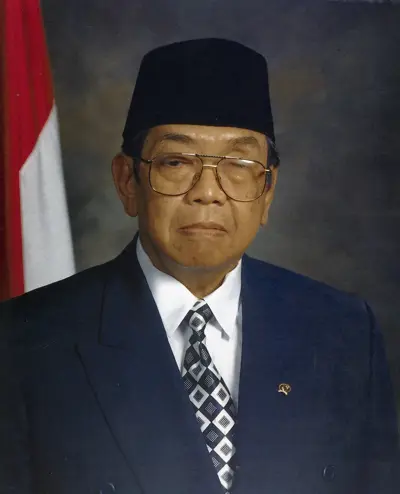
Abdurrahman Wahid, colloquially known as Gus Dur (listen (help·info)), was an Indonesian Muslim religious and political leader who served as the fourth president of Indonesia from 1999 to 2001. The long-time president of the Nahdlatul Ulama and the founder of the National Awakening Party (PKB), Wahid was the first elected president of Indonesia after the resignation of Suharto in 1998.
