Isoroku Yamamoto Quotes
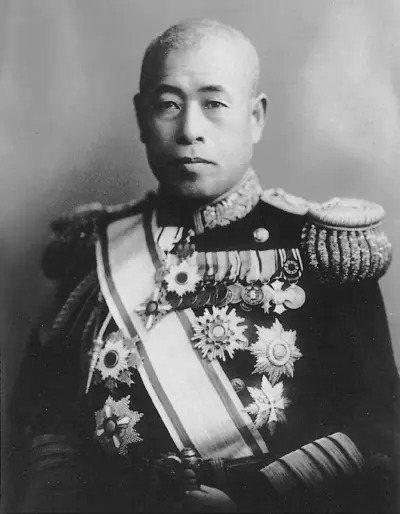
In the first six to twelve months of a war with the United States and Great Britain I will run wild and win victory upon victory. But then, if the war continues after that, I have no expectation of success.
Isoroku Yamamoto, 1884-1943, Japanese Admiral, Commander in Chief of the Japanese Navy, 1940
Sourced by: Eigen's Political and Historical Quotations

Prior to this the Japanese had not even considered what terms they might fight for if there were to be a peace negotiation. What the Japanese leadership apparently totally missed was the fact that President Roosevelt and all other American leaders throughout the war had promised that only unconditional surrender would be acceptable. This was reiterated in a Joint Declaration of the U. S. , China, and Great Britain. The Japanese thought this just propaganda and never took it seriously.


Churchill saw before many others that technology and weaponry had changed the nature of warfare. At the time the military leadership of all the major powers were pursuing 19th century tactics with 20th century weaponry including mass bayonet charges against machine guns behind barbed wire. Churchill and other civilians, although they had legal control over the military, had little de facto tactical control. As a politician he became an itinerant meddler in military tactics thereafter.

Lee was trying to negotiate a peace treaty as a part of his his potential surrender. However, Grant would not be drawn into that, Lee was NOT the government of the Confederacy, and Grant had served with him earlier in the Mexican War and knew he was not a fanatic on teh subject of slavery and race as most of the Southern leaders were. They werenthe ones who would have to be captured or driven to surrender. Grant could have gotten authoirioty as he was in almost real time contact with President Lincoln by telegraph. However, neither wanted to negotiate peace with Lee. Instead, Grant gave Lee and his men incredibly gracious termsof surrender which he and Lincoln hoped would casue the avarage Southern soldiers to feel better about surrender for although Lee's was the largest Confederate Army, there were still others out there that had to be dealt with,


This is the quotation that came to define Chamberlain’s naivety for history and the icon of failed diplomacy. However to see the beginning of the sequence of events that would lead up to this statement, see {585940} when Chamberlain suggested the infamous meeting in Munich. There had been an interesting history to Chamberlain’s appeasement of Germany. 39 years earlier, Chamberlain’s father, then Britain’s Colonial Secretary, and advocated a natural alliance with Germany. See Joseph Chamberlain, 1836-1914: {585939}.

In 1786 the Barbary Pirates demanded bribes so as not to seize American ships. England and France customarily paid the bribes. Thomas Jefferson proposed to build a navy and attack the pirates. However, there was no American navy at the time, Adams counseled a different course and in January of 1787 they signed a “pact” with Morocco whereby America paid for protection.

See a similar sentiment by Tallyrand


Santa Ana was, at the time, a captive of Sam Houston.


He was exactly right. Two decades later Germany had started WWII.
World War I World War II
