Ulysses S. Grant Quotes
If we exchange more prisoners, they will again fight us immediately and we will have to exterminate the entire South.
Ulysses S. Grant, 1822-1885, 18th President of the United States (Republican, OH), Order ending prisoner exchanges in the Civil War, Quoted in The History Channel, January 15, 2006
Sourced by: Eigen's Political and Historical Quotations

Lee was trying to negotiate a peace treaty as a part of his his potential surrender. However, Grant would not be drawn into that, Lee was NOT the government of the Confederacy, and Grant had served with him earlier in the Mexican War and knew he was not a fanatic on teh subject of slavery and race as most of the Southern leaders were. They werenthe ones who would have to be captured or driven to surrender. Grant could have gotten authoirioty as he was in almost real time contact with President Lincoln by telegraph. However, neither wanted to negotiate peace with Lee. Instead, Grant gave Lee and his men incredibly gracious termsof surrender which he and Lincoln hoped would casue the avarage Southern soldiers to feel better about surrender for although Lee's was the largest Confederate Army, there were still others out there that had to be dealt with,


Generally after civil wars there have been extensive reprisals and trials of the winning side against the losing one. Lincoln was determined that this pattern not be followed as the bloody war was coming to an end. Ironically, Andrew Johnson, Lincoln’s successor and a Southerner, was, together with some of the Radical Republicans, in favor of trying many of the Southern leaders for treason and rebellion. Lincoln’s view however and that of the moderate members of Congress prevailed. However, the Southern Whites generally would not comply with the Constitutional Amendments and laws regarding the role of the Negro, and Johnson was very sympathetic to their racism which led to a conflict between Johnson and Congress.


When Confederate General Simon Bolivar Buckner suggested a negotiated surrender of Fort Donaldson, which protected Nashville, TN, his West Point classmate and friend wired back:
Lincoln was depressed when the Union had over 30,000 casualties in a two-week time.


General Grant had the fort surrounded and the confederate general hoped to surrender the fort and allow him and his men to leave to fight again some other day. This was often agreed to so the military objective would be gained without the casualties of a battle. However, Grant and Lincoln did not simply want to gain forts and territory. They wanted to end the war. Those Confederates who survived the battle were taken prisoner and were out of the fight.
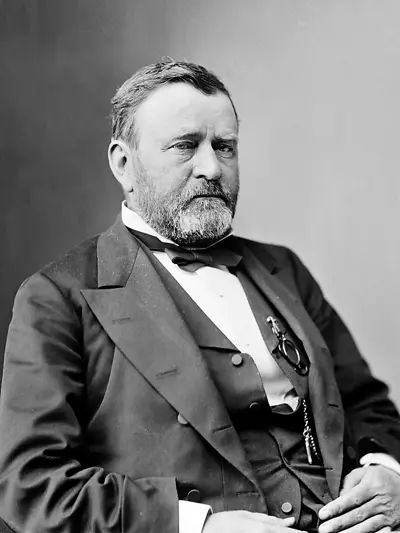
Ulysses S. Grant was an American military leader who served as the 18th president of the United States from 1869 to 1877. As president, Grant was an effective civil rights executive who created the Justice Department and worked with the Radical Republicans during Reconstruction to protect African Americans. As Commanding General, he led the Union Army to victory in the American Civil War in 1865 and thereafter briefly served as Secretary of War.
