Q'orianka Kilcher Quotes
If Pocahontas had been given the foresight to see what devastating consequences her actions and belief in the possibility of peace would have brought upon her people, I wonder if she would have avoided befriending the English or not.
Kilcher, Q'orianka. Interview. Indian Country Today, Indian Country Today Media Network, 2006.


Published 100 years after it was written. This is the first known written statement of what became a de facto policy regarding the American Indian.

Clark’s men had English Colonel Hamilton under siege by making him think there were many more Americans in Clarks army than the real 180 or so. He tried to get Hamilton to surrender by threatening if they had to take the fort they would treat Hamilton and the British as murderers—Hamilton had paid hostile Indians for American scalps. At that point a party of Clark’s men arrived with 4 or 5 Indian prisoners who had been captured raiding
civilian farms. After the Indians were executed, Hamilton agreed to surrender.

Carson was one of the few Indian Agents who spent every penny of his budget on the Indians as opposed to himself. He was married to an Indian woman and was close enough to many Indians that he understood their resentment whenever they came into a town. They were treated terribly and while most of them were literally starving, seeing the white opulence produced resentment.

He was a brutal officer who by modern standards committed various war crimes.


The Indian allies of the French scalped some American colonists which for some whites was akin to the modern reaction to terrorist atrocities. The British and Americans then justified the scalping of their Indian allies as simple retaliation. While Indians had scalped before the whites ever came, the whites accelerated the practice. There was an economic element to scalping. The French “paid” their Indian allies in arms, blankets, trinkets and alcohol by the scalp as it was a crude way of “performance measurement.” Not to be outdone, the English adopted the same custom with the French allied Indians as targets. In North Carolina, for example, the “volunteer” rangers were paid the enormous rate of 10 pounds a scalp.

Justification for policy of settling all Indians west of the Mississippi River.

This comprehensive report of 457 pages was written, printed and distributed at her expense prior to her Federal appointment.
Self Given Title. The governor distinguished between friendly Indians from others to the consternation of Bacon and his followers.

The rationale for paying these Indians was given in the beginning of the treaty. See {612283}. In addition the treaty provided for the Federal government to build a flour mill and a saw mill and provide technical staff to operate and maintain them. In an interesting gesture the Federal government rebuilt a church that had been the house of worship for some Oneida Presbyterians. The English and the other Iroquois had burned the church to the ground. See {621968}. This is one of the few times in history, and certainly the first time, that the Federal government constructed a church for a particular sect. The other tribes of the Iroquois nation had allied themselves with the English. See {583726}. Only the Oneida joined the colonist cause. At the end of the war, the other Iroquois tribes were run out of the country and they escaped to Canada. The Oneida, in contrast, were rewarded by the Federal government and integrated into New York State society.

Shabonee in a warning ride reminiscent of Paul Revere, warned many white settlers of an impending attack by unfriendly Indians. He also gave an eyewitness account of the Battle of Tippecanoe which propelled Harrison to the Presidency. The U. S. Navy named a ship in his honor in the 1940s. Several schools are named for him also.


They stopped and a massacre was averted.

The Indians did not have the wheel when the whites came, but soon there were wagons, stage coaches and railroads.

Samuel Langhorne Clemens, 1835-1910. Twain was one of the few whites who realized that success in assimilating American Indians would destroy their culture and identity. Even today, whites and Indians alike constantly debate the desirability of assimilation policies and supporting independent reservations.

His idea was to send English people who were vagabonds, paupers, failures, and never do wells to America. These people in England were just “waste”. But in America, the could be apprenticed or become indentured servants, learn skill and they would (and indeed did) become the corps of laborers needed to cut down the trees, beat the hemp (for making rope), gather honey, salt and dry fish, dress raw animal hides, dig the earth for minerals, raise olives and silk, and sort and pack bird feathers. In England they were so desperate that they would work in the difficult conditions of the colonies and would be willing to venture out from the country and culture in which they existed—a major problem in getting colonial workers.
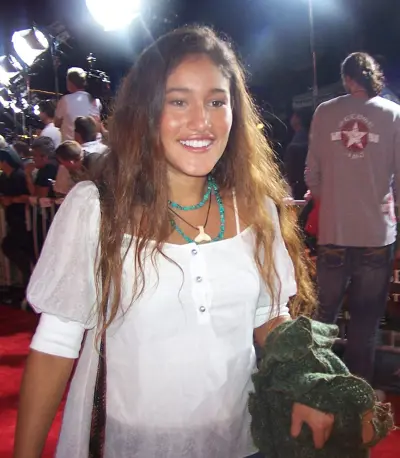
Q'orianka Waira Qoiana Kilcher is an American actress, singer, and activist. Her best known film roles are Pocahontas in New Line Cinema's 2005 film The New World, and Kaʻiulani in Princess Kaiulani (2009).
