James Harlan Quotes
I know that there is an objection to the association of colored children with white children in the same schools. This prejudice exists in my own State. It would be impossible to carry a proposition to educate the few colored children that now live in that State in the same school houses with white children.
James Harlan, 1820-1899, U. S. Senator (Free Soiler, IA), Senate Debate over desegregation of schools in the District of Columbia, April 1860
Sourced by: Eigen's Political and Historical Quotations


Following the lead of Arkansas, many southern schools were closed by order of the Governor when they received a court order to desegregate. Southern education was the poorest in the nation and the Southern students not able to go to school made the situation worse. Governor Almond changing his position realized that the cost of defying the Constitution and the courts was the ignorance of the students of the state, and became a major force persuading the state to integrate their schools. He is remembered for his leadership of desegregation and most people have forgotten that at the beginning of his term as governor he was as bad as most of the other Southern segregationist politicians.

Berea College in Kentucky was founded as an interracial college. This law made it illegal in Kentucky to operate an integrated college. Day was not only a racist but a sexist as well. He introduced and got it passed another education law that made co-education in Kentucky illegal


to have separate schools for Blacks


There are few people today who could believe that a United States senator would castigate the head of a Federal Agency for spreading “racial equality propaganda.” But at the time—1943—the actions of Education Commissioner John W. Studebaker and his Assistant took remarkable courage.


In 1848 a free Black applied for admission to Harvard College, amidst protests from the white students:


Perhaps there is no more dramatic quotation illustrating MacArthur’s arrogance where his own views and decisions should obviously prevail regardless of the policies of his superiors and his commander-in-chief. The army had been officially integrated by President Truman, The reality was that the general honestly believed that he had no superiors among the military, that civilians should not control the military, and in any event that the President—Truman—was not fit to be Commander-in-Chief.

Sumner would later become a Senator. However over a century before Brown v. Board of Education finally outlawed segregated schools, Sumner made one of the basic legal arguments that was involved in the case.


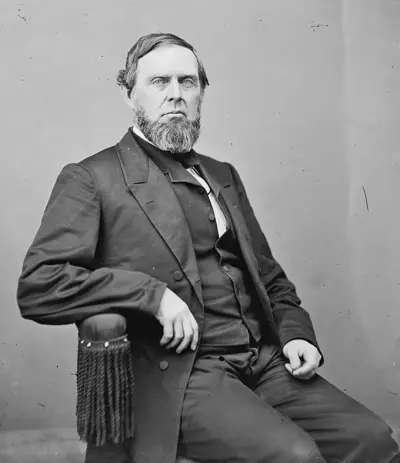
James Harlan was an attorney and politician, a member of the United States Senate, a U.S. Cabinet Secretary at the United States Department of Interior under President Andrew Johnson, and a Federal Judge.
