Charles Sumner Quotes
If the power exists in the present case it cannot be restricted to this alone. The Committee may distribute all the children into classes, according to mere discretion. They may establish a separate school for Irish or Germans… They may separate Catholics from Protestants … separate different sects of Protestants … establish a separate school for the rich, that the delicate taste of this favored class may not be offended by the humble garments of the poor … All this, and much more, can be done in the exercise of that high-handed power which makes a discrimination on account of race or color
to have separate schools for Blacks
Charles Sumner, 1811-1874, U. S. Senator (Democrat, Free Soiler and Republican, MA), Argument against separate schools or classes for Negroes, Before the Supreme Court of Massachusetts, in the case of Sarah C. Roberts vs. the city of Boston, December 4, 1849
Sourced by: Eigen's Political and Historical Quotations


Sumner would later become a Senator. However over a century before Brown v. Board of Education finally outlawed segregated schools, Sumner made one of the basic legal arguments that was involved in the case.

There are few people today who could believe that a United States senator would castigate the head of a Federal Agency for spreading “racial equality propaganda.” But at the time—1943—the actions of Education Commissioner John W. Studebaker and his Assistant took remarkable courage.

This quote illustrates the Southern segregationist view in the Jim Crow South.


Following the lead of Arkansas, many southern schools were closed by order of the Governor when they received a court order to desegregate. Southern education was the poorest in the nation and the Southern students not able to go to school made the situation worse. Governor Almond changing his position realized that the cost of defying the Constitution and the courts was the ignorance of the students of the state, and became a major force persuading the state to integrate their schools. He is remembered for his leadership of desegregation and most people have forgotten that at the beginning of his term as governor he was as bad as most of the other Southern segregationist politicians.


Booth was the younger son of a very prominent Northern family of actors. His older brother was considered the greatest American actor, and the rest of the family were abolitionists and vehement Union supporters. They found young John’s views reprehensible.


Description of the Dutch Reformed Church in South Africa in the 1730’s

The first sentence is inscribed on the Jefferson Memorial in Washington DC. The last two sentences are rarely quoted.


Billy Sunday was the most famous preacher of the day. Unlike the vast majority of white preachers, he not only preached to black audiences but exuded an atmosphere of friendliness and comfort around Blacks that amazed most. Most Black leaders thought Sunday was very good for race relations, but there were some critics like Grimke. Sunday was castigated by many racist whites for preaching to Blacks, but he did not go as far as to condemn or preach against racism and the discrimination of the day and he would not preach to an integrated audience. See {585416} for another critique.


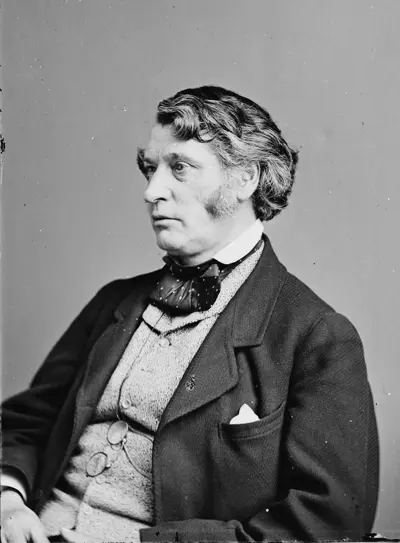
Charles Sumner was an American statesman and United States Senator from Massachusetts. As an academic lawyer and a powerful orator, Sumner was the leader of the anti-slavery forces in the state and a leader of the Radical Republicans in the U.S. Senate during the American Civil War. During Reconstruction, he fought to minimize the power of the ex-Confederates and guarantee equal rights to the freedmen. He fell into a dispute with President Ulysses Grant, a fellow Republican, over the control of Santo Domingo leading to the stripping of his power in the Senate and his subsequent effort to defeat Grant's re-election.
