William Tyndale Quotes
I defy the Pope and all his laws. If God spare my life, ere many years I will cause a boy that drives the plough to know more of the Scripture, than he does.
The Catholic Church had ordered that the Bible only be written and read in Latin. Individual reading by laymen was not considered desirable. Tyndale wanted to bring the Gospels and the Old Testament to every Englishman, and he did just that. He was, however, burned at the stake for his “heresy.”
William Tyndale, 1494-1536, English Cleric & Religious Reformer, Statement upon translating the Bible into English, Quoted in Foxe, Book of Martyrs
Sourced by: Eigen's Political and Historical Quotations


King Henry VIII had left the Roman Catholic church and taken England and Ireland out also. He replaced the Pope as the head of the English and Irish churches. There was much opposition in Ireland and the priests were the most assertive opponents to the change and were still loyal to the Pope. Queen Elizabeth continued to have problems with the Priests. James I, Elizabeth’s successor, became fed up by the Roman Catholic Priests and therefor issued this Proclamation.

In his preface he lists the objections that the religious authorities had made to allowing common people to read the Bible. The priests were in danger of losing their monopoly in telling people how God required them to behave. Note that one of the objections was that it was impossible to render an accurate translation of the scriptures. Although some of the scholars realized that the Latin version of the Bible was itself a translation from Aramaic, Greek and Hebrew, most men of the era thought that the Latin version was the only version of the Bible. Tyndale wanted to bring the Gospels and the Old Testament to every Englishman, and he did just that. He was however burned at the stake for his “heresy.”

Of all the Western Colonial Powers, Spain was the worst. They took the most from their possessions and contributed the least. Worst, they killed off almost all the indigenous people.


The Vatican & the Chinese Communist Government had been at odds for years with much of the Chinese church going underground. Fr. Jin had been jailed for a decade. Then the government allowed him and the Catholic Church and operate openly, but there were still Vatican conflicts over numerous issues including the right of the Government to approve senior appointments of church officials—a privilege the church claimed exclusively. The Vatican ordered Jin not to cooperate and especially not to reopen the national theological seminary which the government had ordered closed. There had been no training for Chinese priests and Jin wanted to reopen the national theological seminary but the Vatican refused cooperation waiting for the government to capitulate to the Vatican’s various demands. Fr. Jin defied the Vatican & reopened the seminary. Without officially admitting their failed tactics, the Vatican let the discipline issue against Jin drop & the national theological seminary thrived.

This notice of Excommunication was promulgated to the Catholic clergy in Ireland in May of 1538. It required all Roman Catholic leaders to size the property of Protestants or Catholics who sympathized with them. Those who did were then regarded as traitors by the Protestant King. The anti-Protestant feeling culminated with the massacre of about 100 Protestants who were drowned in Bann a few years later.

The letter was written at the behest of the Archbishop of Canterbury. The quotation appears to ratify the Pope’s unlimited power, but in actuality carves out an exception whereby the Pope’s authority might be challenged in the future. Specifically, it claims the Pope has not the authority to alter that which “by the word of God, has eternal validity.” Politically, this position put the pope in a box. By arguing against the proposition, the Pope would have to maintain that he should have the right to alter the word of God that had eternal validity which no pope wanted to state. By not challenging the doctrine, there was an opening by which the pope’s omnipotence could be challenged in the future.


The Christian Roman Empire was split in two—a Western (Latin) Empire led by the Roman Catholic Church in Rome, and the Eastern (Greek) Roman Empire led by the Orthodox Church headquartered in Constantinople (Byzantium). The two churches were not only in a theological conflict but violence broke out and the armies of the two religious empires attacked each other now and then. In 1439, leaders of the two versions of Christianity met in Florence, and they agreed to reunuion in which the Eastern Orthodox would again acknowledge the authority of the Pope. This was not a popular agreement with the majority of the Eastern Orthodox people and some of the clerical leadership. Constantine, realizing that he did not have pubic support at home for the end to the schism and the acceptance of the authority of the Pope, kept stalling on officially announcing and implementing the unity treaty. The Pope’s patience was wearing thin. Constantine did not adhere to ther treaty and the two churches have been apart ever since.


The King had earlier replaced the Pope as the head of the English church. The references to money referred to a then common corruption of the Church whereby people could buy indulgences—religious papal pardons of past or future sins. This was a major revenue source for the Vatican and a major issue for Martin Luther and the Protestant Reformers some of who saw the pope as the Devil incarnate See {623153}. For Martin Luther’s view pf the practice and {626720}, {595195}, and {639436} for other contemporary views.

In effect, the English Parliament replaced the Pope as head of the Catholic church in Ireland with King Henry the VIII. He had already become the head of the Church in England when the Pope refused to grant him the right of divorce so that he could marry Anne Boleyn, The Irish clergy and many Irishman were aghast. They were instructed to erase the Pope from their literature {639436}. They were even more distressed when the English Royal Commission recommended the closing of all Irish monasteries. See {639434}.

Martin Luther not only reformed Christianity but was a catalyst for many religious Christian alternatives thereby ending monolithic worldwide Christian religious doctrine and control. He argues that Islam must have a similar reform process.


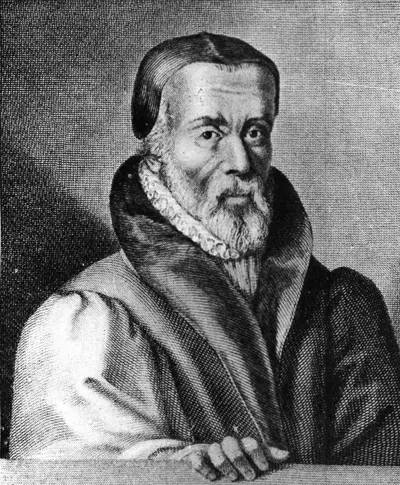
William Tyndale was an English scholar who became a leading figure in the Protestant Reformation in the years leading up to his execution. He is well known as a translator of the Bible into English, influenced by the works of Erasmus of Rotterdam and Martin Luther.
