James Anthony Froude Quotes
Whatever the cause, the Calvinists were the only fighting Protestants. It was they whose faith gave them the courage to stand up for the Reformation, and but for them, the Reformation would have been lost..
James Anthony Froude, 1818–1894, English historian, novelist, philosopher biographer, and editor of Fraser's Magazine, Observation of Calvinists
Sourced by: Eigen's Political and Historical Quotations


In 17th century England the Puritans were major opponents of the Celebration of Christmas which at the time had been celebrated mostly by Roman Catholics.

For the majority of the time of Christian History, it has been Catholic Christian History. Protestantism did not begin until the 16th Century.

See {639434}, {639436}, and {639437} for the triggers to this report.


This sura is interpreted in two ways. For many modern Muslims it means that in discussions and debates on religion with non-Muslims, do not back off, and if you do it is a religious transgression. Defend the faith. For the fundamentalists and extremists, they interpret the same sura in physical warlike terms. So if there is a fight or battle with disbelievers, retreating from the battlefield is not only cowardice and perhaps a crime under military regulations as it is in the West, but it is in Christian terms a mortal sin for which there one will go to hell. So the most religious of Muslims will fight to the death using this sura as their guidance. On the other hand, Muhammad himself as the military and civil leader of Islam made strategic retreats. In the history of almost all warfare between the West and Muslims—especially the Arabs—courage on the battlefield has been lacking and the Israelis, British, French, Americans, and Hindus of India all observe this military weakness and accounting for this is built into their military doctrine.


The Catholic Church had ordered that the Bible only be written and read in Latin. Individual reading by laymen was not considered desirable. Tyndale wanted to bring the Gospels and the Old Testament to every Englishman, and he did just that. He was, however, burned at the stake for his “heresy.”
Martin Luther not only reformed Christianity but was a catalyst for many religious Christian alternatives thereby ending monolithic worldwide Christian religious doctrine and control. He argues that Islam must have a similar reform process.


1st Baron Macaulay

5th Earl of Montrose. The public reaction to a new prayer book issued by the King and created by the King’s religious appointees. Although Protestant in nature, it was created without the early Scottish Protestant tradition of consultation with many levels of clergy and society. It was seen as authoritarian and much like the Catholic mass which was proscribed by Rome. The National Covenant was a document of protest. It was first drafted by Alexander Henderson and Johnston of Wariston, and signed by others, but Montrose was the first signer and the acknowledged leader of the Covenanters.

He was the only English Pope. This was the authority that enabled English King Henry II to invade Ireland. Many historians consider it the beginning of the problems between the Ireland and England which persists to this day. See {610520}. Some scholars think that this bull was a forgery stating that the writing style was different from other bulls of Adrian IV. Opponents believe that a change in secretaries could easily have accounted for the difference.
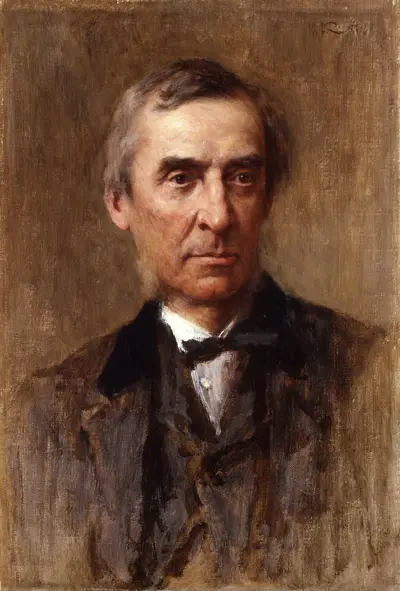
James Anthony Froude FRSE was an English historian, novelist, biographer, and editor of Fraser's Magazine. From his upbringing amidst the Anglo-Catholic Oxford Movement, Froude intended to become a clergyman, but doubts about the doctrines of the Anglican church, published in his scandalous 1849 novel The Nemesis of Faith, drove him to abandon his religious career. Froude turned to writing history, becoming one of the best known historians of his time for his History of England from the Fall of Wolsey to the Defeat of the Spanish Armada. Inspired by Thomas Carlyle, Froude's historical writings were often fiercely polemical, earning him a number of outspoken opponents. Froude continued to be controversial up until his death for his Life of Carlyle, which he published along with personal writings of Thomas and Jane Welsh Carlyle. These publications illuminated Carlyle's often selfish personality, and led to persistent gossip and discussion of the couple's marital problems.
