William Tyndale Quotes
Say, some … that it is impossible to translate the scripture into English, some that it is not lawful for the lay people to have it in their mother tongue, some that it would make them all heretics — as it would no doubt from many things which they of long time have falsely taught, and that is the whole cause wherefore they forbid it, though they other cloaks pretend. And some, or rather every one, say that it would make them rise against the King…
In his preface he lists the objections that the religious authorities had made to allowing common people to read the Bible. The priests were in danger of losing their monopoly in telling people how God required them to behave. Note that one of the objections was that it was impossible to render an accurate translation of the scriptures. Although some of the scholars realized that the Latin version of the Bible was itself a translation from Aramaic, Greek and Hebrew, most men of the era thought that the Latin version was the only version of the Bible. Tyndale wanted to bring the Gospels and the Old Testament to every Englishman, and he did just that. He was however burned at the stake for his “heresy.”
William Tyndale, 1494-1536, English Cleric & Religious Reformer, Preface to the Translation of the Old Testament, 1530
Sourced by: Eigen's Political and Historical Quotations

The Catholic Church had ordered that the Bible only be written and read in Latin. Individual reading by laymen was not considered desirable. Tyndale wanted to bring the Gospels and the Old Testament to every Englishman, and he did just that. He was, however, burned at the stake for his “heresy.”

As a result of Henry VIII establishing himself as the head of the Church in England and Ireland in place of the Pope, Henry’s heirs also became head of the Church. And that was the role that Queen Elisabeth had inherited in addition to the Crown. Many of those loyal to the Pope found most offensive the fact that a woman was making decisions for men and women on matters of faith. A Papal representative travelled with FitzGerald and probably helped him compose this document of which this is but 2 sentences. He may have drafted it completely. The Pope was a factor in many of the Irish rebellions against the English, and this caused great suspicion of all English Catholics whose loyalty to the Queen was in conflict with their loyalty to the Pope who was plotting for a Catholic takeover of England and Ireland.

This began the Church's most notorious attack on any dissent or disagreement and it was the start of the Inquisition.


Although James’ mother, Mary Queen of Scots had been a Catholic, James was a fervent Protestant. However, he found the separation of the State from authority over the church and the Presbyterian approach not to his liking. Also, the early tradition of the Presbyterian preachers scolding the monarch, especially his mother, was uncomfortable for James.


The King, a religious fanatic, was a great supporter of the Inquisition whose excesses were even more horrible during his reign than others.


Michael Servetus, 1511-1553, a Spanish theologian, was tried and burned at the stake in Switzerland. John Calvin drew up the charges and pronounced the sentence. However his ill health prevented him from personally officially reading the charges. De la Fontaine did it in his stead. Most people are familiar with the charges of questioning the doctrine of the Trinity. However, before those there were a series of more civilly oriented charges of which sever are given herein. Note the emphasis on his book. It was found do offensive that it was burned along with Servetus. See related quote.

This famous quotation has been attributed to Voltaire, 1694-1778, and French Philosopher, Denis Diderot, 1713-1784. Most quotation collections erroneously attribute it to Diderot in the version “Men will never be free until the last king is strangled with the entrails of the last priest.” Both Voltaire and Diderot used the quotation as did many others opposed to monarchy and the then repressive church hierarchies. But the origin of the famous phrase was with Meslier. When the priest died, three handwritten manuscripts were found written and signed by him in which he attacked religion in general and the church and the Bible in particular. His Testament was read by Voltaire and Denis Diderot among others and he was very influential in their development as opponents of organized religion.

In 1848 a number of revolutions flared throughout Europe with a call for democracy rather than monarchy. The Prussian king was one of those who really believed that he was selected by God to rule, was very frightened and tried to enlist the Queen and England to present a united front against the revolutionaries. England, which had already had a strong functioning parliament and extensive voting suffrage, protected most of the rights of its citizens and was a Constitutional Monarchy where there were limits to the power of the monarch. Further, Victoria was extremely popular and in many ways was far ahead of the electorate in terms of modern democratic reforms. So she was not in the panic of many of the other crowned heads of Europe were in. Somewhat following the example of England, King William IV allowed a parliament and minimized the strong military role that characterized Prussia. Most of the 1848 revolutions failed to sieze governments but, as with Prussia, forced reforms in what was a long movement to European democracy that would take another 150 years. Note also the logic about religion. Since the revolutionists did not believe in the divine right of kings, they opposed God’s will on earth. Therefore, they opposed God and must be atheists. Almost all counter revolutionary accusations included the claim—often not true—that the revolutionaries were atheists.

Her predictions turned out to have been very prescient. However, there are many who disagree that there IS a “right blend”, and the only solution is a complete separation of church (mosque in this case) and state. That if there is total civil freedom, people are then free to have as much or as little faith as they choose.
The KKK were riling up the white shrimpers because Vietnamese-American fishermen were fishing in ‘their waters”. The Southern Poverty Law Center, on behalf of the Vietnamese Fishermen, sued the KKK in Federal Court and won an injunction prohibiting the Klan from continuing its training program to burn the Vietnamese-American’s boats. Some of the Vietnamese-American fisherman had fought agaist the Viet Cong in Vietnam before coming to American and they armed themselves with shotguns and rifles, Faced with legal and possible violent resistance, Beam and the Klansmen disappeared from the area.


Yazid ibn al-Walid ibn 'Abd al-Malik. This is an Islamic doctrine that operates to this day together with the stricture that a bad ruler must be endured and not revolted against UNLESS he does not follow his Islamic religious obligations. This is why many Islamic rulers curry favor with the clerics. As long as they do not claim he is violating the word of God, his rule is safe from revolution. However, if the clerics turn on him, he is in deep trouble. Thus Saudi Arabia endures a monarchy and the ruling family pays the Wahhabi enormous sums to avoid their religious condemnation.


Vladimir Lenin. This is a very important historical quotations. It was made by Lenin soon after the 1917 Russian Revolution and surprisingly to most he declared that the exporting of the Communist Revolution was more important than the national interest of communist Russia. Many Western nations, including the U. S. sent troops to part of Russia on various pretexts and it appeared to many that the West was ganging up against Russian Communism and interfering with their internal affairs. However, in effect, the new Russian state, with the attitude expressed by this quotation, was declaring a type of revolutionary war on all the capitalist nations who saw this fledgling mess of a country as a potential threat. They were right.

In effect, the English Parliament replaced the Pope as head of the Catholic church in Ireland with King Henry the VIII. He had already become the head of the Church in England when the Pope refused to grant him the right of divorce so that he could marry Anne Boleyn, The Irish clergy and many Irishman were aghast. They were instructed to erase the Pope from their literature {639436}. They were even more distressed when the English Royal Commission recommended the closing of all Irish monasteries. See {639434}.
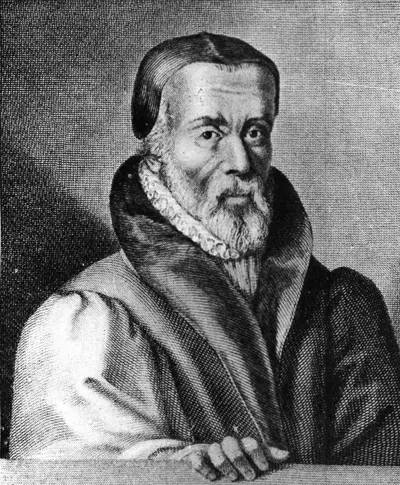
William Tyndale was an English scholar who became a leading figure in the Protestant Reformation in the years leading up to his execution. He is well known as a translator of the Bible into English, influenced by the works of Erasmus of Rotterdam and Martin Luther.
