Denis Diderot Quotes
Let us strangle the last king with the guts of the last priest.
Denis Diderot, 1713-1784, French Philosopher, 1750
Sourced by: Eigen's Political and Historical Quotations

This famous quotation has been attributed to Voltaire, 1694-1778, and French Philosopher, Denis Diderot, 1713-1784. Most quotation collections erroneously attribute it to Diderot in the version “Men will never be free until the last king is strangled with the entrails of the last priest.” Both Voltaire and Diderot used the quotation as did many others opposed to monarchy and the then repressive church hierarchies. But the origin of the famous phrase was with Meslier. When the priest died, three handwritten manuscripts were found written and signed by him in which he attacked religion in general and the church and the Bible in particular. His Testament was read by Voltaire and Denis Diderot among others and he was very influential in their development as opponents of organized religion.


He was also the primary planner of the assassination. He was executed for his crime which not only killed Sedat but also a diplomat and a Christian Cleric. Iran named a street in Tehran for Islambouli in 1981 in honor of his “martyrdom.”

The Pope was justifying his earlier excommunication of Holy Roman Emperor Henry IV who in turn excommunicated Pope Gregory.


Ingersoll was considered to be the greatest orator and political thinker of his day, but his overt atheistic views curtailed his elected political career.

Although James’ mother, Mary Queen of Scots had been a Catholic, James was a fervent Protestant. However, he found the separation of the State from authority over the church and the Presbyterian approach not to his liking. Also, the early tradition of the Presbyterian preachers scolding the monarch, especially his mother, was uncomfortable for James.

1st Baron Macaulay


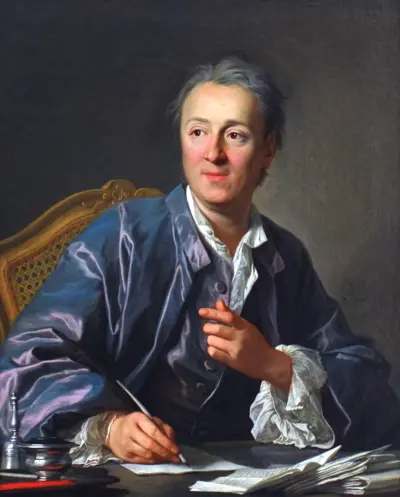
Denis Diderot was a French philosopher, art critic, and writer, best known for serving as co-founder, chief editor, and contributor to the Encyclopédie along with Jean le Rond d'Alembert. He was a prominent figure during the Age of Enlightenment.
