Yazid III Quotes
A Caliph who disobeyed God deserves to be disobeyed and killed.
Yazid ibn al-Walid ibn 'Abd al-Malik. This is an Islamic doctrine that operates to this day together with the stricture that a bad ruler must be endured and not revolted against UNLESS he does not follow his Islamic religious obligations. This is why many Islamic rulers curry favor with the clerics. As long as they do not claim he is violating the word of God, his rule is safe from revolution. However, if the clerics turn on him, he is in deep trouble. Thus Saudi Arabia endures a monarchy and the ruling family pays the Wahhabi enormous sums to avoid their religious condemnation.
Yazid III, 701–744, Islamic Umayyad Caliph, Quoted in David Levering Lewis, God’s Crucible, 2008
Sourced by: Eigen's Political and Historical Quotations

Gordon himself was killed shortly thereafter by the Madhi’s followers at the siege of Khartoum. Ahmed died soon thereafter. Although Ahmed was an extreme religious fanatic, and a skillful leader, he was not a terrorist.

This is one of the passages of the Bible that Christian Kings cited in expecting obedience. Most of the monarchs took this passage to mean that God had selected and appointed them to rule.

During the American Revolution many patriot clerics argued against the monarchy by claiming that God has given Kings to the Ancient Jews—who had a type of Republic—as a punishment. Therefore monarchy is to be avoided.

This sura is interpreted by some Islamic fundamentalists as absolution for the killing of a non-Muslim by a Muslim. It was Allah who did it. In a greater sense, critics of Islam observe that many Muslims and Islamic nations have a double standard of responsibility for crimes. If the victims are Muslims, the normal standards of morality hold; but if a non-believer there can be no crime. Terrorism, torture, beheading, mass murder can all be done with a clean conscience if a Muslim takes this interpretation of this sura. Many Muslims however take an opposite point of view. These people do not have the concept of fatalism and lack of free will that others believe. There is a parallel to this problem in Judeo Christian countries although it is less common statistically. But the murder of physicians who perform abortions, and the Jewish radical fundamentalist who killed innocent Arabs at worship are examples of people who viewed themselves as instruments of God in their heinous activities.


As a slave holder himself, this was a dramatic statement. Slavery was immoral, God’s justice will not be on the white slave owners side, a slave revolt or other event could occur and change things radically. One great puzzlement of American history has been why Jefferson, who wrote so eloquently against slavery and predicted the disaster that would come. would himself keep his slaves and never free them as George Washington did. Some argue that he was so broke financially, that he could not afford to free them.

Quoted in somewhat different form by Richard Nixon


People of this era not only saw epidemics as the wrath of God, but also saw military catastrophe, invasion and raids as a punishment of God for the sins of the people of the area.

A massive earthquake struck Japan, destroying most of Tokyo and Yokohama. The deaths were so extensive that no official count was ever made. At the time, Japanese politics was polarized by two factions: One urged Japan to become democratic and modern like the West; the other, urged Japanese right wing militarism and expansionism. The shock of the Japanese population of such an enormous natural disaster, were seem by most Japanese as a punishment from God as Yasubumi and many other Japanese leaders stated. The reason for the punishment claimed by most was the recent adoption of Western ideas, lifestyles and particularly the trend away from traditional Japanese authoritarian government and toward Democracy. Japan then rejected democratic ideas and followed a militaristic, expansionistic, aggression leading directly to WWII.
For many extremists Muslims, this sura calls for the torture or killing of the enemies of Islam. For the more moderate Muslims, the penalty of opposing Islam should be expulsion or banishment. The further modern complication of this sura is the definition of “making war with Allah.” To some extremists, it is writing or publishing anything contrary to their view of Islam; it is occupying any Islamic nation or warring with that nation even though the basis of the war might have nothing to do with religion; it is bringing a Bible into an Islamic nations; it is allowing alcohol to be sold and served; it is opposing their discriminatory customs and laws; it is pressuring them not to stone adulteresses.

This famous quotation has been attributed to Voltaire, 1694-1778, and French Philosopher, Denis Diderot, 1713-1784. Most quotation collections erroneously attribute it to Diderot in the version “Men will never be free until the last king is strangled with the entrails of the last priest.” Both Voltaire and Diderot used the quotation as did many others opposed to monarchy and the then repressive church hierarchies. But the origin of the famous phrase was with Meslier. When the priest died, three handwritten manuscripts were found written and signed by him in which he attacked religion in general and the church and the Bible in particular. His Testament was read by Voltaire and Denis Diderot among others and he was very influential in their development as opponents of organized religion.

Ivan the Terrible. He was referring to himself as God’s Chosen One. He and the Church were aligned against the Nobles, whose lands Ivan wanted. He would execute hundreds of “traitors” every month. He even executed the families of his enemies in very cruel ways. He claimed to be “cleansing” the land of sinners in preparation for the coming judgment day, and the church backed him up on this. The Church gave him carte blanche to “punish” all sinners and his paranoia eventually got around to the church fathers themselves who became the final victims.


The Confession was a statement of doctrine to which the Swiss Anabaptists adopted.
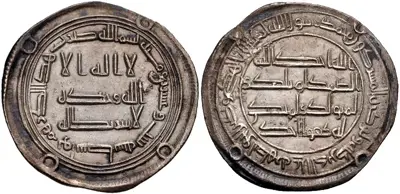
Yazid ibn al-Walid ibn 'Abd al-Malik or Yazid III (Arabic: يزيد بن الوليد بن عبد الملك) was the twelfth Umayyad caliph. He reigned for six months, from April 15 to October 3 or 4, 744, and died in that office.
