John Albion Andrew Quotes
Dispatch received. By what route shall I send?
John Albion Andrew, 1818-1867, Governor of Massachusetts, Telegraphic response to President Abraham Lincoln’s call for troops to put down the rebellion of the South, 1861
Sourced by: Eigen's Political and Historical Quotations


“Schmoozer” is a Yiddish word to describe people why spend time discussing things. New York politicians like Tweed picked up ethnic expressions which became common in the New York political dialogue.


Monroe was then Secretary of State and the U. S. was at war.


In the Civil War a drafted conscript could pay money instead of serving in the army. Many rich and middle class men did so leaving a higher proportion of the poor to be drafted. The song is sometimes misattributed to William Cullen Bryant.

In contrast to the American army, there was no conscription in Canada. Note the quaint Canadian euphemism, "invited."

There was no conscription during the War of 1812 and the State militias were notoriously unreliable.


The President was distressed to hear that the Confederates had captured some horses and a Union general. He seemed more distressed about the horses. A copy of this quotation was given to Colin Powell when he was promoted to brigadier general.
In 1863 the king of Siam (Thailand) wrote to Lincoln offering a breeding stock of war elephants to assist his fight and the Civil War. Actually elephants could breed in the U. S. but Lincoln and his aides did not think they would be a military advantage. This was a diplomatically polite, no thanks.
The Shakers were an American religion and pacifists Lincoln learned. He was so impressed with their sincerity and way of life that he exempted Shaker men from the draft—the first conscientious objectors formally recognized in America. However, Lincoln made the statement to the Shakers which greatly impressed them and caused much reflection. Quakers had been pacifists also, but until the Civil War Draft there was no mechanism to test.


Benjamin was the Confederacy’s strongest proponent for use of Negro troops in exchange for a promise of freedom. Ironically, the racial prejudice of the Southern soldier may well have doomed the South’s last chance for independence. Lee, although he personally favored such a course of action, could not get a general sentiment from the army as a whole.


Webb was opposing the all volunteer army which became a reality despite his and others objections.


He was not a very good agent in the sense of making accurate reports. At the time this was an unrealistically positive assessment, but it is likely that he was provided with “American propaganda”. France would only assist America if they thought that the Americans had a good chance, and the American diplomats’ propaganda efforts were successful in exaggerating the size of the army, the morale, the provisioning, and the pay.

The poem was to the Union Volunteer soldiers in the Civil War.
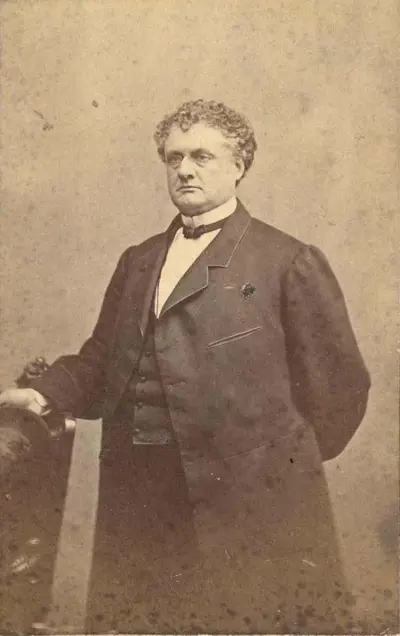
John Albion Andrew was an American lawyer and politician from Massachusetts. He was elected in 1860 as the 25th Governor of Massachusetts, serving between 1861 and 1866, and led the state's contributions to the Union cause during the American Civil War (1861-1865). He was a guiding force behind the creation of some of the first African-American units in the United States Army, including the 54th Massachusetts Infantry.
