Charles B. Rangel Quotes
Nobody wants to go to war, but the burden of service cannot fall only on volunteers who, are attracted to the military for financial reasons.
Charles B. Rangel, U. S. Congressman (Democrat, NY), Time, January 5, 2004
Sourced by: Eigen's Political and Historical Quotations


Webb was opposing the all volunteer army which became a reality despite his and others objections.


Monroe was then Secretary of State and the U. S. was at war.


During the Iraq war the enlistments of servicemen were unilaterally extended causing great controversy. However the concept of extension of a term of service in an emergency existed more than 60 years earlier.

Debs was jailed for sedition for this speech.

The founder was Charles E. Coughlin, 1891-1979, a demagogic Catholic Priest who drafted the principles and invited others to join him. Hundreds of thousands did in this organization which began in idealism, and ended in scandal and hate mongering, so much so that Father Coughlin was ordered off the radio and out of politics by the Catholic Church. The National Union in 1936 had morphed into the Union Party which ran Presidential candidates in the 1936 election. In this principle there were two purposes: First to have the wealthy sacrifice something in time of war. Historically wealth could keep a man from the draft if he so wanted. Second, when the company went to war the argument went it was the rich who could profit who had more political influence and could make the war. This way, they would pay a high price and might oppose war. Many of Coughlin’s followers were pro-German and wanted to keep the country out of the European war.


This was the inception of the Civil War draft.


If a military loses a war, it has shown to be insufficient quality; if it wins, the evaluation is good. With all the talk about what makes for an effective and quality military, as the General states, it is war that is the final arbitrator. So ideally we never want to really know how good our military is.

The lack of military preparedness of the United States for the First World War by then was evident and a major subject of political discussion. Mitchel was a “hawk” for his day. He was defeated the next year and joined the military flying service but died in 1918 when he forgot to fasten his seat belt in the airplane and fell from the plane to his death.


The Shakers were an American religion and pacifists Lincoln learned. He was so impressed with their sincerity and way of life that he exempted Shaker men from the draft—the first conscientious objectors formally recognized in America. However, Lincoln made the statement to the Shakers which greatly impressed them and caused much reflection. Quakers had been pacifists also, but until the Civil War Draft there was no mechanism to test.


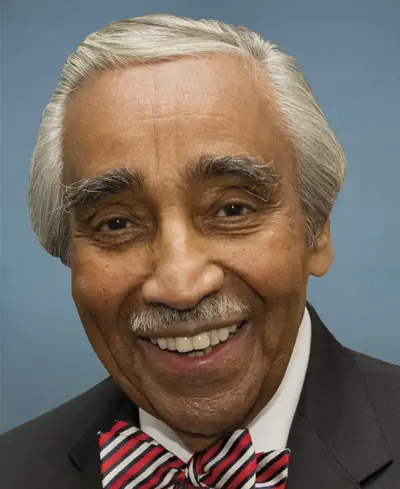
Charles Bernard Rangel is an American politician who was a U.S. representative for districts in New York from 1971 to 2017. A member of the Democratic Party, he was the second-longest serving incumbent member of the House of Representatives at the time of his retirement, serving continuously since 1971. As its most senior member, he was also the Dean of New York's congressional delegation. Rangel was the first African-American Chair of the influential House Ways and Means Committee. He is also a founding member of the Congressional Black Caucus.
