Richard Hull Quotes
Conscription may have been good for the country, but it damned near killed the country.
Richard Hull, 1907-*, British General, Quoted in Anthony Sampson, Anatomy of Britain Today
Sourced by: Eigen's Political and Historical Quotations


The founder was Charles E. Coughlin, 1891-1979, a demagogic Catholic Priest who drafted the principles and invited others to join him. Hundreds of thousands did in this organization which began in idealism, and ended in scandal and hate mongering, so much so that Father Coughlin was ordered off the radio and out of politics by the Catholic Church. The National Union in 1936 had morphed into the Union Party which ran Presidential candidates in the 1936 election. In this principle there were two purposes: First to have the wealthy sacrifice something in time of war. Historically wealth could keep a man from the draft if he so wanted. Second, when the company went to war the argument went it was the rich who could profit who had more political influence and could make the war. This way, they would pay a high price and might oppose war. Many of Coughlin’s followers were pro-German and wanted to keep the country out of the European war.

During the Iraq war the enlistments of servicemen were unilaterally extended causing great controversy. However the concept of extension of a term of service in an emergency existed more than 60 years earlier.

Debs was jailed for sedition for this speech.

This was the inception of the Civil War draft.


Ataturk was a young major at the time commanding troops of a weak and corrupt Ottoman regime. However a combined English and French (the strongest military powers in Europe) invasion of the Gallipoli Peninsula threatened to capture the Turkish capital, Constantinople. Ataturk alone rallied the Turkish defenders and fought the invaders to a standoff in long drawn out battle with huge casualties on both sides. Ataturk became a national hero. Although Ataturk thereafter was very reluctant to use military force or endanger troops, the thing he always thought worth the supreme sacrifice (including his own) was the independence and sovereignty of the nation. See {584502} for his continuing belief in this type of sacrifice.

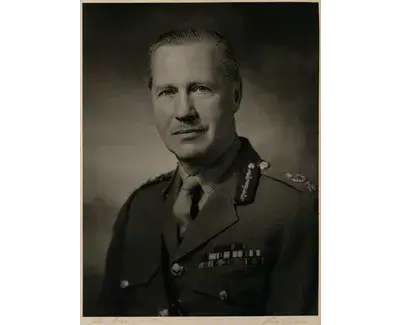
Field Marshal Sir Richard Amyatt Hull, KG, GCB, DSO, DL was a senior British Army officer. He was the last Chief of the Imperial General Staff (1961–64) and the first Chief of the General Staff (1964–65), and, as such, the professional head of the British Army. He later became Chief of the Defence Staff (1965–67), the professional head of the entire British Armed Forces. He served with distinction during the Second World War, fighting from 1942 to 1945 in North Africa, Italy and Western Europe, became the youngest divisional commander in the British Army, and later advised the British government on the response to the Indonesia–Malaysia confrontation.
