C. P. Scott Quotes
I was honestly willing to accept compulsory military service, provided that the voluntary system had first been tried out, and had failed to supply the men needed and who could still be spared from industry, and were numerically worth troubling about.
Charles Prestwich Scott, 1846-1932, British Member of Parliament, Editor of the Manchester Guardian, Letter to Arthur Balfour about the threatened introduction of military conscription, January 2, 1916
Sourced by: Eigen's Political and Historical Quotations

Monroe was then Secretary of State and the U. S. was at war.


Just 7 months earlier the King had made a direct appeal to the people for enlistment in the military—See {587166}. The response was very good, but the First World War developed in such a way that huge manpower resources were needed and the King had to reluctantly assent to a military draft.

Webb was opposing the all volunteer army which became a reality despite his and others objections.

This was the inception of the Civil War draft.


The founder was Charles E. Coughlin, 1891-1979, a demagogic Catholic Priest who drafted the principles and invited others to join him. Hundreds of thousands did in this organization which began in idealism, and ended in scandal and hate mongering, so much so that Father Coughlin was ordered off the radio and out of politics by the Catholic Church. The National Union in 1936 had morphed into the Union Party which ran Presidential candidates in the 1936 election. In this principle there were two purposes: First to have the wealthy sacrifice something in time of war. Historically wealth could keep a man from the draft if he so wanted. Second, when the company went to war the argument went it was the rich who could profit who had more political influence and could make the war. This way, they would pay a high price and might oppose war. Many of Coughlin’s followers were pro-German and wanted to keep the country out of the European war.

During the Iraq war the enlistments of servicemen were unilaterally extended causing great controversy. However the concept of extension of a term of service in an emergency existed more than 60 years earlier.

The French and English, with larger numbers and more experienced troops and officers, wanted the American units to come under the command or their officers and be integrated into the allied army. However Wilson established the tradition that American troops fighting abroad most always fight as an American Army under American Command. Although resented then and into the 21st century by America’s allies who are expected to fight under American command, it is a tradition that no American major politician has seriously challenged since then.


This principle became the Civil War Draft. Ironically, when the draft was legislated by Congress, there were relatively few men drafted as enlistments increased. See {621897} .

Many of the young men who were given this form to fill out, had never been in Japan and some did not even know there was an emperor there. Nonetheless the Japanese American divisions of enlistees were the most effective and most decorated fighting units for America while their parents who had not been born in America were still imprisoned in the internment camps. See {624010}.


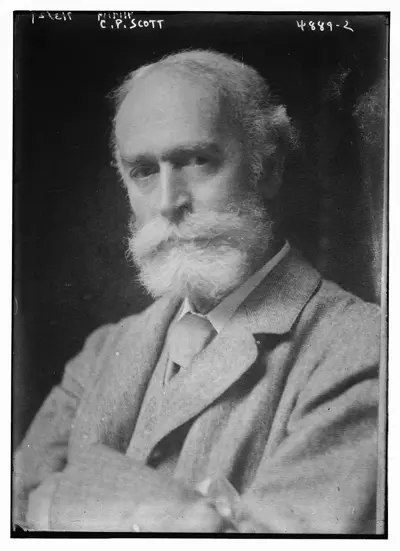
Charles Prestwich Scott, usually cited as C. P. Scott, was a British journalist, publisher and politician. Born in Bath, Somerset, he was the editor of the Manchester Guardian (now the Guardian) from 1872 until 1929 and its owner from 1907 until his death. He was also a Liberal Member of Parliament and pursued a progressive liberal agenda in the pages of the newspaper.
