New Statesman Quotes
Conscription would amount to the sacrifice of nine-tenths of our moral case in this war. It would not only amount to an admission—wholly unjustified—that the heart of the country is not in the war…. It will change the basis of our participation. It will no longer be the war of the British people; it will be the war of the British governing classes.
The New Statesman, English Newspaper, Editorial opposing military conscription for WWI, Late 1914
Sourced by: Eigen's Political and Historical Quotations


During the Iraq war the enlistments of servicemen were unilaterally extended causing great controversy. However the concept of extension of a term of service in an emergency existed more than 60 years earlier.

Monroe was then Secretary of State and the U. S. was at war.

The founder was Charles E. Coughlin, 1891-1979, a demagogic Catholic Priest who drafted the principles and invited others to join him. Hundreds of thousands did in this organization which began in idealism, and ended in scandal and hate mongering, so much so that Father Coughlin was ordered off the radio and out of politics by the Catholic Church. The National Union in 1936 had morphed into the Union Party which ran Presidential candidates in the 1936 election. In this principle there were two purposes: First to have the wealthy sacrifice something in time of war. Historically wealth could keep a man from the draft if he so wanted. Second, when the company went to war the argument went it was the rich who could profit who had more political influence and could make the war. This way, they would pay a high price and might oppose war. Many of Coughlin’s followers were pro-German and wanted to keep the country out of the European war.

26 years after he wrote this, both the Government and the Southern Rebels had introduced military conscription, and with few exceptions, it has prevailed through the 20th century, and then replaced by a volunteer army concept.


This was the inception of the Civil War draft.


In contrast to the American army, there was no conscription in Canada. Note the quaint Canadian euphemism, "invited."


Webb was opposing the all volunteer army which became a reality despite his and others objections.


The concept of a draft was very unpopular at the time with most politicians. However, Marshall—then the Army Chief of Staff—warned that there was no way to field a large army without conscription.

Just 7 months earlier the King had made a direct appeal to the people for enlistment in the military—See {587166}. The response was very good, but the First World War developed in such a way that huge manpower resources were needed and the King had to reluctantly assent to a military draft.


The King was asking for volunteers for the British Army. What is particularly interesting about this quote is the overt appeal to “men of all classes.” This illustrates that there was an extensive class system then operational in Britain. Almost all people knew to which class they belonged. A very popular King could then make a statement like this and no one was critical of his referring to citizens by class distinctions. Even in modern times, Britain is a more class conscious society than America. The response to this appeal was very good, but the First World War developed in such a way that huge manpower resources were needed and the King had to reluctantly assent to a military draft 7 months later.
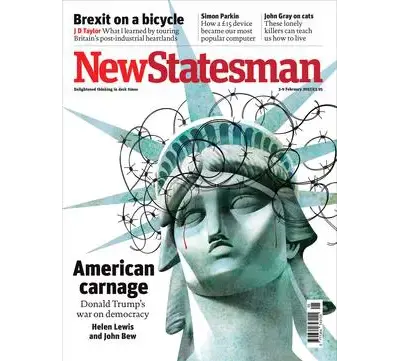
The New Statesman is a British political and cultural magazine published in London. Founded as a weekly review of politics and literature on 12 April 1913, it was connected then with Sidney and Beatrice Webb and other leading members of the socialist Fabian Society, such as George Bernard Shaw, who was a founding director.
