James C. Miller III Quotes
... when you have a draft you're more likely to go to war than if you have to pay for a volunteer army. A draft lowers the cost for the wealthy because the people who are important don't have their children going off and they're also not paying as much in taxes.
James C. Miller III, Chairman, Federal Trade Commission (Republican), Quoted in "Economists against the Draft", The New York Times, February 7, 2016
Sourced by: Eigen's Political and Historical Quotations


Wilson was very candid that there would be high cost to war and sacrifice would be needed. See {584570} for other similar candor. This quotation was often used by critics of George W. Bush who initiated the Iraq War and then cut taxes for the rich, but then financed the war through the budgetary emergency appropriations bypassing the budget rules that the revenue must be specified to pay for it. His administration even claimed at an early stage in the war that the oil revenue from Iraq oil would defray the costs.


The prerogative of preparedness weakens after a war is won; everyone expects some sort of peace dividend.


Monroe was then Secretary of State and the U. S. was at war.


Webb was opposing the all volunteer army which became a reality despite his and others objections.


Since the Partition of India to create the state of Pakistan, Pakistan has wanted to integrate the Muslims—especially near the border. However, many Indian Muslims did not choose to leave India for the new Islamic nation. Pakistan has had designs on some of the Indian areas and has maintained a very large army.


The Roman Senate elected two Counsels who were the Executive of the State. Gaius Marius was elected Counsel 7 times making him perhaps the most popular politician of the ancient world. Prior to his law, only Roman men who owned sufficient land could join the army.

The founder was Charles E. Coughlin, 1891-1979, a demagogic Catholic Priest who drafted the principles and invited others to join him. Hundreds of thousands did in this organization which began in idealism, and ended in scandal and hate mongering, so much so that Father Coughlin was ordered off the radio and out of politics by the Catholic Church. The National Union in 1936 had morphed into the Union Party which ran Presidential candidates in the 1936 election. In this principle there were two purposes: First to have the wealthy sacrifice something in time of war. Historically wealth could keep a man from the draft if he so wanted. Second, when the company went to war the argument went it was the rich who could profit who had more political influence and could make the war. This way, they would pay a high price and might oppose war. Many of Coughlin’s followers were pro-German and wanted to keep the country out of the European war.

He was advocating peace and no expansionism, which led to military involvement.
This was an official publication of the U. S. Army. The First World War had very little affect on future military preparedness At that time conservatives in Congress were very isolationist and military preparedness was not a high priority or even a significant political issue. The Democrats then were more supportive of military spending than the Republicans. It took World War II, for which America was very unprepared, to produce a change in public and political opinion regarding military preparedness.

The bulk of Australian taxes were prior to that import and excise taxes. Taxes of individuals and land was late in coming.
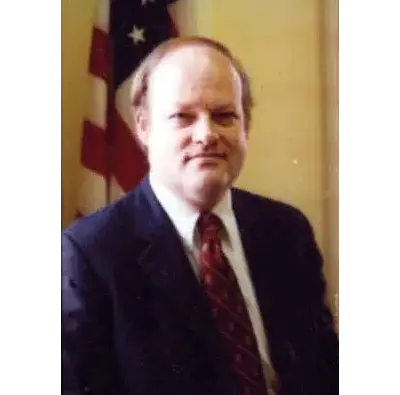
James Clifford "Jim" Miller III is a former U.S. government official and economist who served as chairman of the Federal Trade Commission between 1981 and 1985 and as Budget Director for President Ronald Reagan between 1985 and 1988. He also ran for United States Senate in Virginia, losing the Republican nomination at the convention to Oliver North in 1994 and losing the nomination in the primary to John Warner in 1996.
