William Pulteney Quotes
The army causes taxes, the taxes cause discontents, & the discontents are alleged to make an army necessary.
William Pulteney, 1684-1764, 1st Earl of Bath, English Secretary of War, Attack on the justification of maintaining a large army
Sourced by: Eigen's Political and Historical Quotations

In early America, there was great concern about a standing army—a military force that exists and is organized in peacetime. History showed the founding fathers that tyrants who siezed power almost always did so by getting control of the standing army. The logic was if there is no standing army, no one can control it and therefore no tyrant can control the country by force. At the time, however, with oceans protecting us, there was penty of time to mobilize a defensive army should any foreign power invade. However, with modern military technology, and the importantance of retaliation as a protective3 strategy, it is virtually impossible to not have a standing army and stoll be secure.

Congress and most of the Founding Fathers were very distrustful of standing armies. They were aware that standing armies had taken over societies ever since ancient Rome and Julius Caesar.


Jefferson was opposed to a standing army or a buildup of revenue even in case of war. He thought that a national surplus might tempt an administration to engage in war. This was one of the biggest differences between the Jeffersonians or Republican Democrats as they called themselves and the Federalists led by George Washington and John Adams. Washington was a strong advocate of military preparedness, while Jefferson believed that a nation which had a strong army and war chest would be too easily tempted to use it. That debate has raged in America since. However, at the beginning of the second world war, the then conservative party, the Republicans, had adopted the Jeffersonian view and it was FDR and the Democrats arguing for armament and preparedness. The United States was terribly unprepared for war, but mobilized rapidly and won the day. Since then both parties have supported military preparedness and the political argument has been over the degree, but there are few Jeffersonians left when it comes to military preparedness.


The French and English, with larger numbers and more experienced troops and officers, wanted the American units to come under the command or their officers and be integrated into the allied army. However Wilson established the tradition that American troops fighting abroad most always fight as an American Army under American Command. Although resented then and into the 21st century by America’s allies who are expected to fight under American command, it is a tradition that no American major politician has seriously challenged since then.


This historical quotation is surprising to us over a century later. We are surprised at the very large revenue from the then relatively low tax rates on alcohol and tobacco and many people who did not pay their taxes at the time. Also, the incredibly small appropriation for the military. WWI was only 4 years away. Generally, until the Second World War, the Democratic party did not advocate large military expenditures and the Republicans were more isolationist and opposed almost all defense spending. After WWII, the Republican Party flip flopped and became the champion of military readiness and defense spending.

This size standing army which alarmed so many at the beginning of the 20th century, looked very small when compared with the standing army of America a century later. For earlier American Politician’s views on a standing army, see {592824}, {631687}, {622888}, and {641008}.


Since the Partition of India to create the state of Pakistan, Pakistan has wanted to integrate the Muslims—especially near the border. However, many Indian Muslims did not choose to leave India for the new Islamic nation. Pakistan has had designs on some of the Indian areas and has maintained a very large army.


A negotiated end to the war made sense for both sides. The English budget was in terrible shape with the huge costs of dealing with Napoleon and although Liverpool wanted to teach the Americans a lesson, he could not get the money to finance it. The Americans could prevent British conquest but they could not defeat the British overall or eject them from the continent.


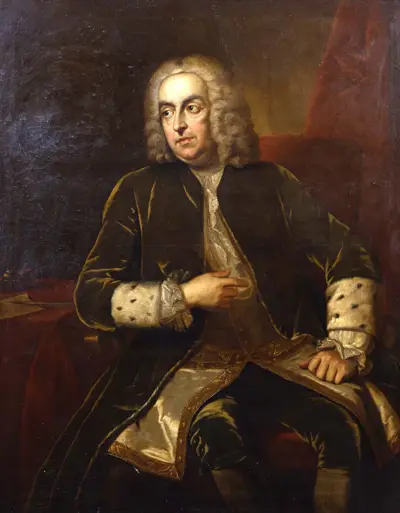
William Pulteney, 1st Earl of Bath, PC was a British Whig politician who sat in the House of Commons from 1707 to 1742, when he was created the first Earl of Bath by King George II.
