Gerrit Smith Quotes
Christians, even in enlightened and gospelized lands, may be blind to the great wickedness of certain customs and institutions
Gerrit Smith, 1797-1874, U. S. Congressman (Free-Soil, NY), Presidential Nominee, Prohibition Party, Letter to Rev. James Smylie of Mississippi in response to his tract defending slavery, 1837
Sourced by: Eigen's Political and Historical Quotations

This argument—that Christians were more cruel and uncivilized than heathens in some respects was very persuasive to many serious white Christians who began to see slavery and the slave trade in a new light.


This was Jefferson’s definition of Christianity. However, for orthodox Christians, this was insufficient as Jefferson did not believe in the Trinity or in the divinity of Jesus. Nor did he believe in the Biblical narrative of most historical events. He was a Christian in the sense that he thought the ethics and philosophy of Jesus was as good as he had seen. See {629222}. In this sense, a number of the Founding Fathers were “Deists” including Jefferson’s conservative rival, John Adams.

This is a very important quotation because it reflects the attitude of many of the leading American expansionists and imperialists of the period—ie that American imperialism would uplift peoples around the world. This was an extension of the religious motive of many of the British imperialists who referred to the “3 Cs”: Commerce, Civilization & Christianity. Seelye himself was a missionary of the Protestant Dutch Reformed Church.


He is often referred to as The Reformer as he was a modernist. In particular, the told his people that there was no religious obligation is Islam for wearing a veil or a burka. These are just customs. Yet most Muslims still believe that veils and burkas were required by God. The only Koranic statement on the subject simply says that women should dress modestly. Despite his efforts, veils and burkas are still required by most Afghani families and most people think the requirement is religious.


Throughout the history of American Slavery, the Southern apologists for slavery have accused abolitionists and anyone opposed to slavery of being Communists, Atheists, or any other group that was generally unpopular in the day. This is one of the early instances where that heinous practice was started. However it continued and became especially virulent, in the Civil Rights movement of the 1960s where anyone who opposed segregation was accused by Southern Segregationists of being Communists and Atheists as well as other unpleasant epithets. Most religious Americans opposed slavery in the 1850s but there are some in the South, like this Preacher, who seemed totally ignorant of the strong pro abolitionist views of the many religious leader abolitionists in the North and a few in the South.


Alito speaking at the University of Notre Dame Law School’s Religious Liberty Summit in Rome, July 21, 2022.

Spinoza’s ideas were considered so radical and dangerous that he was the only man in history who was excommunicated by the Catholics, the Jews and the Muslims.

This title of his essay shocked his fellow politicians and may churches that a Congressman would attack churches. Few abolitionists were that outspoken over the disgraceful role that most American Churches had in refraining to oppose slavery. At the time, most Protestant, Roman Catholic, and Jewish clerics either supported slavery or were reluctant to publicly criticize slavery. At the same time the Quakers and many other congregations and clergymen were among the most outspoken and fervent abolitionists. They were very much in the minority,

This moral statement from a New jersey Quaker abolitionist is not particularly noteworthy, However what makes this quote important is that Woolman traveled throughout the South preaching this as his main theme. At that time — before the American Revolution — he did so and was not attacked or intimidated; he was mostly ignored by the Southern authorities. At the time, the South was very confident of its ability to continue slavery. Years later, when the abolition movement grew larger and stronger, a Northern Quaker Preacher doing this not not escape with his life.

Constantine the Great. This is one of Constantine’s major defenses of his decision to adopt Christianity. Scholars today still argue as to what part practical politics played in Constantine’s conversion and what part was his personal religious conversion.

The Emperor, who had persecuted many Christians by blinding them was himself going blind from an eye disease. He sought pardon from the Christians and their God. This statement he gave before the Christian bishops.
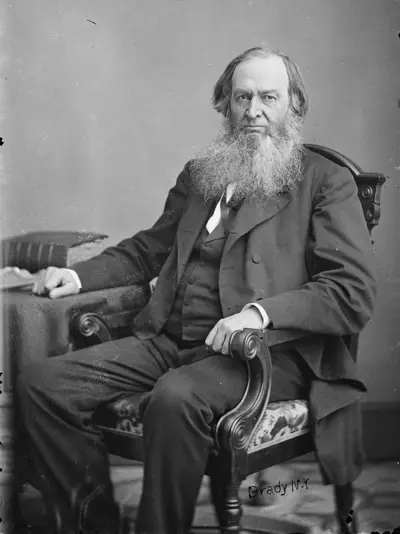
Gerrit Smith, also spelled Gerritt, was a leading American social reformer, abolitionist, politician, and philanthropist. Spouse to Ann Carroll Fitzhugh, Smith was a candidate for President of the United States in 1848, 1856, and 1860, but only served 18 months in the federal government—in Congress as a Free Soil Party Representative, in 1853–4.
