James Henley Thornwell Quotes
The parties in this conflict are not merely abolitionists and slaveholders—they are atheists, socialists, communists, red republicans, Jacobins, on one side, and the friends of order and regulated freedom on the other. In one word, the world is the battleground—Christianity and Atheism the combatants; and the progress of humanity is at stake.
Throughout the history of American Slavery, the Southern apologists for slavery have accused abolitionists and anyone opposed to slavery of being Communists, Atheists, or any other group that was generally unpopular in the day. This is one of the early instances where that heinous practice was started. However it continued and became especially virulent, in the Civil Rights movement of the 1960s where anyone who opposed segregation was accused by Southern Segregationists of being Communists and Atheists as well as other unpleasant epithets. Most religious Americans opposed slavery in the 1850s but there are some in the South, like this Preacher, who seemed totally ignorant of the strong pro abolitionist views of the many religious leader abolitionists in the North and a few in the South.
James Henley Thornwell, 1812–1862, South Carolina, Presbyterian Preacher, Sermon Preached at the Dedication of a Church Erected in Charleston, S.C., for the Benefit and Instruction of the Colored Population, May 26, 1850
Sourced by: Eigen's Political and Historical Quotations

Zeal in religious opinion is one of


The king was making his judgment that the English whites did not have the “gut” to kill the number of people and perpetuate the other cruelties to forcibly convert Black Africans to Christianity, and even if they did, it would be inconsistent with the moral tenets of the religion. He was not familiar with the Reformation persecutions of previous generations, nor did he anticipate the effect of colonialism by which large parts of Africa were culturally and religiously converted.

Moody was an avid Protestant Evangilical. The reference to the "reign of terror" was not to the French Revolution per se but to a national calamity of the severity and magnidute of the French Revolution sd God's wrath would be triggered if more AMericans were not Evangelized. What is particualry interestting is by 1886 Communism had already developed a bad reputation in the part of many religious fundamentalists and considered a sin of the first order such as adultery. The red scare was alive and well. Ironically, Moody and most other anti-communism evengelicals were not hostile brecause of Karl Marx's economic or historical views and theories, but rather Marx's, Engels', and other early Communitists hostility to organized religion was the main casue. The economic adn political opponents of Communism enlisted the aid of as many religious people was possible by emphasing "Godless Communism" and the vast majority of Americans at the time, if they knew anything about Communism at all, it was that the communists were hostile and opposed to religion.


He was of course not the President then. But the stands that politicians took with respect to the rebellion of the South often determined their political futures. See {640752} for another future President’s quotation on the subject.


This was a common view of Southern leaders. Society had to be monolithic culturally. In the North, the constant immigration from the world over made pluralism much more normative. However, the vast majority of the North opposed slavery and believed that slavery and free labor could not coexist. So the Southern argument on that point was turned on them, and the monolithic views of the South has constantly eroded and become more tolerant and pluralistic and by the 21st century, there were parts of the South that were more tolerant and pluralistic than some parts of the North. Change, reform and liberalism was slow to take hold but it was inexorable.
This quotation illustrates a peculiar situation with regard to President Barack Obama. Among some subgroups of the United States, there are people who hate President Obama. And some of them, throughout his Presidency, has described Obama in these obviously false phrases. They manage to hold these false belief’s despite the fact that the refuting evidence is very easy to find. Obama was a very devout Protestant. And his political world view was not communism or Marxism, but middle of the road. He was not even in the left wing of his Democratic Party. However what De Varona and others with these seemingly absurd views discount the data because it is part of a communist conspiracy to plant false information so they can put their man in the White House.


The Roman Catholic Church in America had a very difficult problem with slavery. Catholics were themselves a minoirty, hated and distrusted by many Protestants. In most of the country, the distrusr was based on their large immigrant population, but in the South Catholic theology was hated and the Vatican and Pope were particular targets. The Catholic Clergy generally did not want to take sides in the most contentious issue in America since its inception. The Southern Catholic Clergy did not have that option as in the South, anyone who was not a supporter of slavery was an "enemy of the community and subject to all kinds of violence." Some Southern priests were willing to take the personal risk but did not want to put their followers at risk. In a strange consequence, Catholics--especially Irish Catholics--fought on both sides of the Civil War and often against each other. While it was not an exemplary moral behavior for the Church, there were difficult pressures on Catholic leaders. Further, most of the lowest and most difficult, undesirable jobs were filled by Catholics and most Catholic laymen so and end to slavery as the start of pitting the Catholics against the Blacks. So there was not a groundswell for abolition in most Catholic parishes even in the North.

American Catholic bishops were divided during the Civil War over the slavery question. For a bishop’s view opposing abolition of slavery, see Hughes {611579}.


This title of his essay shocked his fellow politicians and may churches that a Congressman would attack churches. Few abolitionists were that outspoken over the disgraceful role that most American Churches had in refraining to oppose slavery. At the time, most Protestant, Roman Catholic, and Jewish clerics either supported slavery or were reluctant to publicly criticize slavery. At the same time the Quakers and many other congregations and clergymen were among the most outspoken and fervent abolitionists. They were very much in the minority,
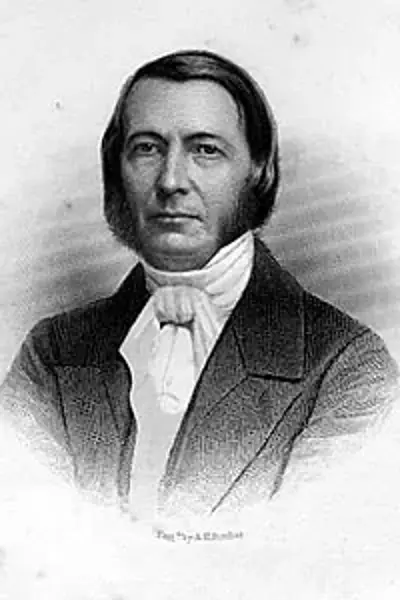
James Henley Thornwell was an American Presbyterian preacher and religious writer from the U.S. state of South Carolina during the 19th century. During the American Civil War, Thornwell supported the Confederacy and preached a doctrine that claimed slavery to be morally right and justified by the tenets of Christianity. He became prominent in the Old School Presbyterian denomination in the south, preaching and writing on theological and social issues. He taught at South Carolina College, eventually served as its president, and went on to teach at Columbia Theological Seminary. He was a contemporary of Charles Hodge and represented the southern branch of the Presbyterian church in debates on ecclesiology with Hodge.
