Frederick Law Olmsted Quotes
They [slaves] are forbidden by law to meet together for worship, or for the purpose of mutual improvement. In the cities, there are churches especially for them, in which the exercises are conducted by white clergymen.
Frederick Law Olmsted, 1822-1903, Farmer & Journalist, Father of American Landscape Architecture, A Journey in the Seaboard States, 1856
Sourced by: Eigen's Political and Historical Quotations

[This was the first Abolition appeal written by a Black Man. It was published in Boston and despite the fact that it was very critical of whites, was very popular going through two more printings within the next two years.]

This gun control was not even the first in the nation. See {613055}. However it even applied to free Negroes, halfbreeds, as well as slaves. Five years later even though Virginia needed militia for the French and Indian Wars they passed a law barring even Free Blacks from serving in the Militia except “as drummers or trumpeters.” This the whites felt was critical in that most whites did not own firearms. See {613056}.

Throughout the history of American Slavery, the Southern apologists for slavery have accused abolitionists and anyone opposed to slavery of being Communists, Atheists, or any other group that was generally unpopular in the day. This is one of the early instances where that heinous practice was started. However it continued and became especially virulent, in the Civil Rights movement of the 1960s where anyone who opposed segregation was accused by Southern Segregationists of being Communists and Atheists as well as other unpleasant epithets. Most religious Americans opposed slavery in the 1850s but there are some in the South, like this Preacher, who seemed totally ignorant of the strong pro abolitionist views of the many religious leader abolitionists in the North and a few in the South.


This moral statement from a New jersey Quaker abolitionist is not particularly noteworthy, However what makes this quote important is that Woolman traveled throughout the South preaching this as his main theme. At that time — before the American Revolution — he did so and was not attacked or intimidated; he was mostly ignored by the Southern authorities. At the time, the South was very confident of its ability to continue slavery. Years later, when the abolition movement grew larger and stronger, a Northern Quaker Preacher doing this not not escape with his life.

This title of his essay shocked his fellow politicians and may churches that a Congressman would attack churches. Few abolitionists were that outspoken over the disgraceful role that most American Churches had in refraining to oppose slavery. At the time, most Protestant, Roman Catholic, and Jewish clerics either supported slavery or were reluctant to publicly criticize slavery. At the same time the Quakers and many other congregations and clergymen were among the most outspoken and fervent abolitionists. They were very much in the minority,


This quotation illustrates how the racist South defeated the objectives of the Civil War and Reconstruction by the institution of Jim Crowe laws and so called “states’ rights”. It would take more than another half century for the Yankees and the vast majority of the non-Southern Americans decided that the Southerners could no longer “do as they pleased” with fellow human beings. It is hard to believe for us today that an entire section of our country could actually believe in the morality of the South but that is the tragic history of race relations in America.
The king was making his judgment that the English whites did not have the “gut” to kill the number of people and perpetuate the other cruelties to forcibly convert Black Africans to Christianity, and even if they did, it would be inconsistent with the moral tenets of the religion. He was not familiar with the Reformation persecutions of previous generations, nor did he anticipate the effect of colonialism by which large parts of Africa were culturally and religiously converted.

Referring to Montgomery Alabama in 1950.

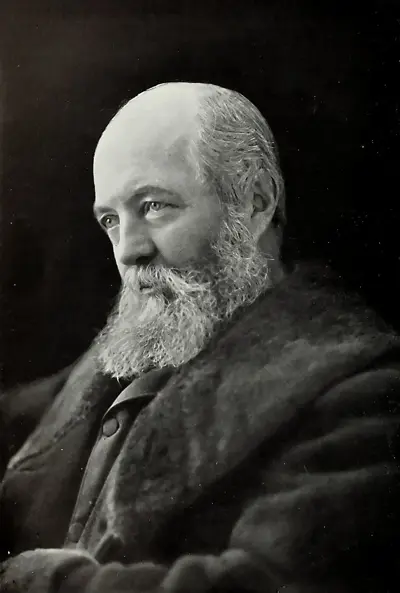
Frederick Law Olmsted was an American landscape architect, journalist, social critic, and public administrator. He was the father of American landscape architecture. Olmsted was famous for co-designing many well-known urban parks with his senior partner Calvert Vaux. One of Olmsted's early works included designing the Walnut Hill Park in New Britain, Connecticut. His later efforts included Central Park and Prospect Park in New York City and Cadwalader Park in Trenton. He headed the pre-eminent landscape architecture and planning consultancy of late nineteenth-century America, which was carried on and expanded by his sons, Frederick Jr and John C, under the name Olmsted Brothers.
