John B. Purcell Quotes
The Catholic Church has ever been the friend of human freedom. It was Christ’s mission to set men free, and Christian people disregard his precepts and principles and example, when they seek to uphold or perpetuate involuntary human servitude.
American Catholic bishops were divided during the Civil War over the slavery question. For a bishop’s view opposing abolition of slavery, see Hughes {611579}.
John B. Purcell, 1800-*, Archbishop of Cincinnati, President, Mount Saint Mary’s College, Quoted in Catholic Telegraph, November 4, 1863
Sourced by: Eigen's Political and Historical Quotations

First Irish Bishop in the United States. American Catholic bishops were divided during the Civil War over the slavery question. For a bishop’s view opposing slavery, see Purcell {612351}.


The “enemy of the human race” is the Devil, Note that the Pope labels as “allies” of the Devil those who advocate and participate in slavery. Slavery was not only immoral, but the Devil was behind it all. The fact that slavery persisted on a massive scale by Catholic countries illustrates that while the Pope was a powerful leaders and figure, even he could not influence all the “sinners.”

The wording was rejected and the delegates insisted upon the original proposed language: “Well aware that Almighty God hath created the mind free …” This is a very important historical quotation because it shows that Henry and a few others wanted to make the society Christian centric, However, the majority insisted that it be non-sectarian. Many of the delegates rejecting the “Jesus Christ” language were themselves practicing Christians, but they were aware of the terrible religious wars and strife in Europe and between Christians and Muslims as well as the persecution of Jews, Quakers, and other sects; they did not want that in America so they rejected the idea of an established Christian Church or culture.

Quintus Septimius Florens Tertullianus

Religious and ethnic political conflict had broken out in Fiji. Some in the Christian majority strove to make Fiji officially a “Christian country” and marginalize the Indian Hindu minority. The archbishop opposed and thwarted them.

Williams was the first theologian who not only advocated religious toleration but argued that Christianity demanded it and the separation of church and state.


At first this clause appears to be very enlightened and establishing freedom of conscience. This clause allowed Catholics to practice freely whereas in other colonies they could not. However, as one reads on, it becomes clear that the “tolerance” is limited to Christians only. Then if one examines the exception within the parentheses and refer to the rest of the act—see {611994}—, one finds that even Christians who have certain theological beliefs are to be put to death—those for example who deny the holiness of the Trinity such as Unitarians who were a major group in the New England Colonies. It was a significant step at the time however to protect Roman Catholics.
This is the first American ordinance of freedom of conscience. Note that it only provided freedom of religion for Christians. However, that was an important first step as different sects of Christianity had been persecuting each other whenever the opportunity arose.

Prior to Vatican II, freedom of conscience was not explicit in Catholic Doctrine. The controlling view had been that of Pope Pius IX a hundred years earlier. See {612299}.

Henry of Navarre. This edict made the Huguenots and other Protestants legal in France whereas only 26 years earlier 50,000 of them had been slaughtered in France by the Catholics. It wasn’t a century before the Catholics reneged. See {617765}.
Henry of Navarre. The practice of kidnapping children from parents of the other faith and baptizing them was rampant.


Pen name: Jack Nipps


Lopez and Elizer were Jews who had escaped the persecution in Portugal to come to America. They and other non-Christians could live and work in Rhode Island but could not vote or hold public office by a previous decision of the Rhode Island Assembly. See {619707}.The Jews had petitioned for their civil rights.


- Born: February 26, 1800
- Died: July 4, 1883
- Nationality:
- Profession:
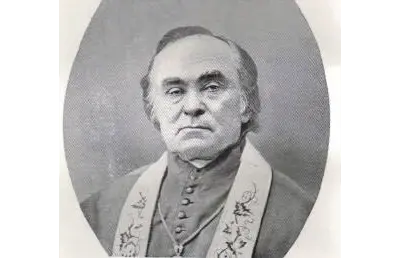
John Baptist Purcell was an Irish-born prelate of the Catholic Church. He served as Bishop of Cincinnati from 1833 to his death in 1883, and he was elevated to the rank of archbishop in 1850. He formed the basis of Father Ferrand, the Ohio-based "Irish by birth, French by ancestry" character in the prologue of Willa Cather's historical novel Death Comes for the Archbishop who goes to Rome asking for a bishop for New Mexico Territory.
