John Hughes Quotes
The Catholics, so far as I know, whether of native or foreign birth, are willing to fight to the death for the support of the constitution, the Government and the laws of the country. But if it should be understood that, with or without knowing it, they are to fight for the abolition of slavery, then, indeed, they will turn away in disgust from the discharge of what would otherwise be a patriotic duty.
First Irish Bishop in the United States. American Catholic bishops were divided during the Civil War over the slavery question. For a bishop’s view opposing slavery, see Purcell {612351}.
John Hughes, 1797-1864, Catholic Archbishop of New York Letter to Secretary of War, Simon Cameron, October 2, 1861
Sourced by: Eigen's Political and Historical Quotations

American Catholic bishops were divided during the Civil War over the slavery question. For a bishop’s view opposing abolition of slavery, see Hughes {611579}.

While Douglas and Lincoln were political opponents with little love lost between them, both were patriots. And Douglas was committed to seeing that Lincoln was inaugurated and the Union preserved, if Lincoln won the election. When Lincoln did so, Douglas traveled throughout the South trying to persuade Southerners to stay in the Union. See {584870}.


Though Ryan was not necessarily a proponent of Southern secession, he was an outspoken critic of the Lincoln administration’s misuse of Constitutional powers in the Civil War.

President Andrew Johnson had been impeached by the House of Representatives and was being tried in by the Senate. A majority of the Senators voted for conviction but the vote was 1 short of the two-thirds that were needed. Johnson remained in office.

The Union troops had just been routed at Bull Run. Many in the North thought that the war would be a short one with little disruption of loss of life. Here Norton, like so many others, provided a a more realistic assessment. Also note the reference to “barbarism” in the South, When the Union was formed, the Southern states were not as well developed as the North from an industrial, educational or cultural perspective. There were vestiges of aristocracy, crude law enforcement, and much more poverty (Virginia excepted) than in the North. Most Northerners thought that the South would reform—modernize and become more like the North, but instead the gulf became greater as the North itself developed and changed rapidly while the South was mired in its traditions with their aristocracy gaining more political, economic and cultural control. This attitude of Northern superiority, objectively valid though it may have been, was sorely resented by the South and this resentment has persisted into relatively modern times.


In his Senate confirmation hearings Frankfurter was repeatedly asked about his association with the ACLU and his views on Communism by conservative Senator Pat McCarran:

The political machine of New York City, unlike most others in the Northeast were supporters of the Southern position on slavery. They had strong economic relations with the Southern planters and wanted to keep the federal government far away from state and local affairs.


This oath was required of Southern Rebels who wanted obtain amnesty from treason which they had committed by engaging in the Civil War. See {623307} for the Presidential Proclamation.


Butler was at the time the Union general in charge of Louisiana. He had on his hand a large group of slaves whose owners had abandoned the area. There was no emancipation yet. He wrote for instructions. The result was the first actual emancipation of slaves.


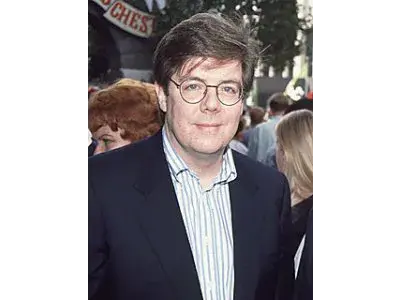
- Born: February 18, 1950
- Died: August 6, 2009
- Nationality: American
- Profession: Filmmaker
John Wilden Hughes Jr. was an American filmmaker. Beginning as an author of humorous essays and stories for National Lampoon, he went on to write, produce and sometimes direct some of the most successful live-action comedy films of the 1980s and 1990s such as National Lampoon's Vacation (1983) and its sequels National Lampoon's European Vacation (1985) and National Lampoon's Christmas Vacation (1989), Mr. Mom (1983), Sixteen Candles (1984), Weird Science (1985), The Breakfast Club (1985), Ferris Bueller's Day Off (1986), Pretty in Pink (1986), Some Kind of Wonderful (1987), Planes, Trains and Automobiles (1987), She's Having a Baby (1988), Uncle Buck (1989), Dutch (1991), Dennis the Menace (1993), Baby's Day Out (1994), the Beethoven franchise (co-written under a pseudonym with Amy Holden-Jones) and Home Alone (1990) and its sequels Home Alone 2: Lost in New York (1992) and Home Alone 3 (1997).
