Martin Luther Quotes
Christ will remain a priest and king; though He was never consecrated by any papist bishop or greased by any of those shavelings; but he was ordained and consecrated by God Himself, and by Him anointed.
Luther, Martin. The Table Talk of Martin Luther. Translated by William Hazlitt, H.G. Bohn, 1857.

Some politicians then and later were not as religious as the leading clerics would prefer. The quotation shows that priests commonly married at that time even though the church had forbidden it.

The delegation consisted of 4 leading English nobles, accompanied by 3 chaplains, 4 bishops and an archbishop. The clerics spoke in Latin.


In modern times this would appear to be a most reasonable approach to quality and doctrinal control within a church. But keep in mind that these were to be promulgated by Catholic Kings and become the civil law of the land as well as the religious. So the Catholic Bishops were granted control of who could preach in any church in the Bishopric. The power of the state was there to back up the Bishops with criminal laws and law enforcement. This together with the Inquisition would counter the forces of Reformation—Protestants.
Stephani had written a legal analysis of the 1555 “Peace of Augsburg” and used the phrase of the quotation to describe the most basic and important legal agreement. It was that the recognized religion of a nation would be determined by the religion of the king or other ruler. Prior, Protestant and Catholic nations were constantly warring with each other and supporting insurrections in another country of its co-religionists and often warring with the other country where some towns were mostly Protestant and others, mostly Catholic. The treaty which dealt with Europe initially allowed Catholic citizens of a nation ruled by a Protestant to emigrate to a Catholic nation and the reverse. Those who chose to remain, would therefore be a minority of the country where their king was of a different faith. This principle is one of the reasons that English law requires the King or Queen to be the Head of the Church of England. In effect the Protestants controlling England at the time guaranteed that the sovereign was a Protestant and could not have a Catholic spouse in line for the throne. This then guaranteed that England would remain Protestant since the ruler was Protestant. Other European nations, Protestant and Catholic, had similar schemes and many still have them to this day.

England had, under Henry VIII, left the Roman Catholic Church where the King replaced the Pope as head of the English Church. Henry’s successors then had to organize and manage the national Christian church. James was discussing the hierarchy of the Church of England and there was a suggestion that Bishops be eliminated and have every priest directly responsible to the crown. Bishops would be powerful figures who might form a power center. (They did later). However, King James I observed that the King is God’s choice and rules by divine right. So there had to be bishops to crown kings. The bishoprics were retained.


Most of the Roman Catholic Clergy in Yugoslavia did not oppose the Nazis in WWII. Many in Croatia actually supported the Concentration Camp that the Croat Military Allies of Germany ran, The only major difference between that concentration camp and the Nazi run camps were that instead of murdering Jews en masse, the Croats murdered Serbs en masse. The Bishops were silent. After the Nazis were defeated, the Catholic Bishops attacked the pro Communist Yugoslav government run by Tito. To Tito the hypocrisy was palpable.

His response was to being asked whether he could do something with Russian Catholics to help Laval win favor with the Pope, to counter the increasing threat of Nazism. This quotation is often used as an example of Stalin’s disrespect for the Papacy. However, in this case, the Pope was extremely weak politically and some argue spiritually for he did not oppose Hitler and the Nazis very much. Defenders of the Papacy argue that Hitler had overwhelming force and little respect for the Pope, and ironically this was what Stain was referring to. Ironically, another Pope, John Paul, had a major part in bring down the Soviet Union and he had no divisions.

The Roman Catholic Church hierarchy had just cracked down on some nuns and their orders who were discussing and debating classic church positions, like male only priesthood, birth control, women’s roles in the society and in the search. There were many strongly worded admonishments from the Vatican. Down found it odd that the Church Fathers should be so distressed by activist nuns when their reaction to Priest sexual predation of young boys was by comparison, so mild.

The clergy of the colonies were split on the American Revolution, but those clergy who supported the revolution made a huge contribution to the individual American’s intellectual view of the legitimacy of Parliament’s making laws governing the American Colonies. The anti-British clerics called for action while other forces of colonial America urged caution.


What Alcuin did not say was that Charlemagne had the largest and most powerful army.


Wycliffe, although a Roman Catholic, was an early reformist. He not only opposed the Pope vis a vis King Edward of England, but he went against church doctrine and printed the first English Bible. He was burned at the stake.


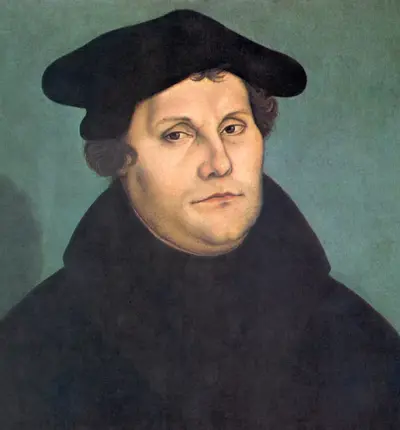
Martin Luther, O.S.A. was a German professor of theology, priest, author, composer, Augustinian monk, and a seminal figure in the Reformation. Luther was ordained to the priesthood in 1507. He came to reject several teachings and practices of the Roman Catholic Church; in particular, he disputed the view on indulgences. Luther proposed an academic discussion of the practice and efficacy of indulgences in his Ninety-five Theses of 1517. His refusal to renounce all of his writings at the demand of Pope Leo X in 1520 and the Holy Roman Emperor Charles V at the Diet of Worms in 1521 resulted in his excommunication by the pope and condemnation as an outlaw by the Holy Roman Emperor.
