John Wycliffe Quotes
Already a third and more of England is in the hands of the Pope. There cannot be two temporal sovereigns in one country; either Edward [Edward III] is King or [Pope] Urban is king. We make our choice. We accept Edward of England and refute Urban of Rome.
Wycliffe, although a Roman Catholic, was an early reformist. He not only opposed the Pope vis a vis King Edward of England, but he went against church doctrine and printed the first English Bible. He was burned at the stake.
John Wycliffe, ~1324-1384, English religious reformer & Bible translator, Quoted in Brian Moynahan, William Tyndale: If God Spare My Life — Martyrdom, Betrayal and the English Bible, 2003
Sourced by: Eigen's Political and Historical Quotations

The Holy Roman Emperor and the Pope were at odds. The Pope had issued an edict staking out the powers of the Pope. King Henry called a conclave of clerics and deposed Pope Leo VII. The Pope Excommunicated Henry and deposed him as king and emperor. Civil war ensued, and finally they reached a compromise and accommodation with each other." Saint Hildebrand

The letter was written at the behest of the Archbishop of Canterbury. The quotation appears to ratify the Pope’s unlimited power, but in actuality carves out an exception whereby the Pope’s authority might be challenged in the future. Specifically, it claims the Pope has not the authority to alter that which “by the word of God, has eternal validity.” Politically, this position put the pope in a box. By arguing against the proposition, the Pope would have to maintain that he should have the right to alter the word of God that had eternal validity which no pope wanted to state. By not challenging the doctrine, there was an opening by which the pope’s omnipotence could be challenged in the future.

His response was to being asked whether he could do something with Russian Catholics to help Laval win favor with the Pope, to counter the increasing threat of Nazism. This quotation is often used as an example of Stalin’s disrespect for the Papacy. However, in this case, the Pope was extremely weak politically and some argue spiritually for he did not oppose Hitler and the Nazis very much. Defenders of the Papacy argue that Hitler had overwhelming force and little respect for the Pope, and ironically this was what Stain was referring to. Ironically, another Pope, John Paul, had a major part in bring down the Soviet Union and he had no divisions.

Some politicians then and later were not as religious as the leading clerics would prefer. The quotation shows that priests commonly married at that time even though the church had forbidden it.

What Alcuin did not say was that Charlemagne had the largest and most powerful army.

The King had earlier replaced the Pope as the head of the English church. The references to money referred to a then common corruption of the Church whereby people could buy indulgences—religious papal pardons of past or future sins. This was a major revenue source for the Vatican and a major issue for Martin Luther and the Protestant Reformers some of who saw the pope as the Devil incarnate See {623153}. For Martin Luther’s view pf the practice and {626720}, {595195}, and {639436} for other contemporary views.


At the time the Pope had secular, diplomatic relationship with many of the states of Europe:


There was a continuing power struggle between the more powerful kings of Europe and the Roman Catholic Pope. This struggle however was not one of church and state. Neither the kings nor the clergy viewed the two as separate domains. Instead they saw the two in much the same way as the ancient Jews and many contemporary Muslims view relationship—as an inseparable amalgam. However there was much debate over who could best protect and manage the amalgamated entity. In this case Alcuin was arguing that Charlemagne could ensure the well-being of the church better than the Pope. The power struggle went on for centuries between more or less able, powerful, and corrupt kings and popes.

England had, under Henry VIII, left the Roman Catholic Church where the King replaced the Pope as head of the English Church. Henry’s successors then had to organize and manage the national Christian church. James was discussing the hierarchy of the Church of England and there was a suggestion that Bishops be eliminated and have every priest directly responsible to the crown. Bishops would be powerful figures who might form a power center. (They did later). However, King James I observed that the King is God’s choice and rules by divine right. So there had to be bishops to crown kings. The bishoprics were retained.


Many American colonists had relatives and friends in England, and Paine argued that American independence would help and not het the English people.
Juan Lopez de Vivero. This document was a written declaration of sovereignty and war, read by Spanish military forces to assert their sovereignty (a dominating control ) over the Americas and their peoples. He issued it on “behalf of the King, Don Fernando, and of Doña Juana I, his daughter, Queen of Castille. and León”. It was read to the native peoples of the New World in Spanish which they did not understand and then were held to it on penalty of death thereafter. It was the legal and philosophical foundation for the worst example of colonial abuse in history.

Stephani had written a legal analysis of the 1555 “Peace of Augsburg” and used the phrase of the quotation to describe the most basic and important legal agreement. It was that the recognized religion of a nation would be determined by the religion of the king or other ruler. Prior, Protestant and Catholic nations were constantly warring with each other and supporting insurrections in another country of its co-religionists and often warring with the other country where some towns were mostly Protestant and others, mostly Catholic. The treaty which dealt with Europe initially allowed Catholic citizens of a nation ruled by a Protestant to emigrate to a Catholic nation and the reverse. Those who chose to remain, would therefore be a minority of the country where their king was of a different faith. This principle is one of the reasons that English law requires the King or Queen to be the Head of the Church of England. In effect the Protestants controlling England at the time guaranteed that the sovereign was a Protestant and could not have a Catholic spouse in line for the throne. This then guaranteed that England would remain Protestant since the ruler was Protestant. Other European nations, Protestant and Catholic, had similar schemes and many still have them to this day.

The Vatican & the Chinese Communist Government had been at odds for years with much of the Chinese church going underground. Fr. Jin had been jailed for a decade. Then the government allowed him and the Catholic Church and operate openly, but there were still Vatican conflicts over numerous issues including the right of the Government to approve senior appointments of church officials—a privilege the church claimed exclusively. The Vatican ordered Jin not to cooperate and especially not to reopen the national theological seminary which the government had ordered closed. There had been no training for Chinese priests and Jin wanted to reopen the national theological seminary but the Vatican refused cooperation waiting for the government to capitulate to the Vatican’s various demands. Fr. Jin defied the Vatican & reopened the seminary. Without officially admitting their failed tactics, the Vatican let the discipline issue against Jin drop & the national theological seminary thrived.
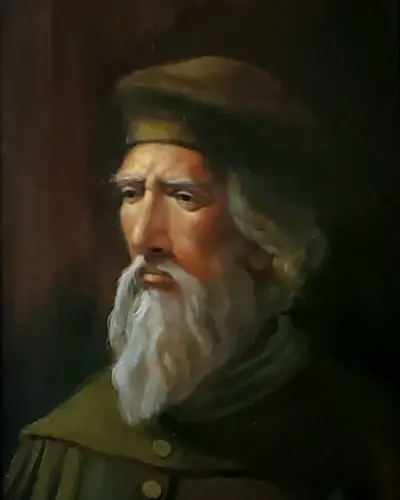
John Wycliffe was an English scholastic philosopher, theologian, biblical translator, reformer, priest, and a seminary professor at the University of Oxford. He became an influential dissident within the Roman Catholic priesthood during the 14th century and is considered an important predecessor to Protestantism.
