William Jennings Bryan Quotes
When a Republican tells me that God’s hand is in his, demand to see his credentials.
William Jennings Bryan, 1860-1925, U. S. Secretary of State, U. S. Congressman (Democrat, NB), 3 Time Unsuccessful Democratic Presidential Candidate, Campaign Speech, 1900
Sourced by: Eigen's Political and Historical Quotations

She was running for the United States Senate. God must have chosen her opponent as she lost.


This is one of the passages of the Bible that Christian Kings cited in expecting obedience. Most of the monarchs took this passage to mean that God had selected and appointed them to rule.


This proposal and others like it over the years have never even gotten out of Committee.

See Walter Reynolds {32317} for a later English version. Also, Alcuin of York {593018} and William Tecumseh Sherman for an opposite view using a similar phrase. Hesiod's seems to be the earliest version of this idea that is with us today.


It is you who have called us unto this office; but being thus called we have our authority from God;
Then the Deputy Governor, Winthrop had been attacked as being too authoritarian. The conceptual struggle with democracy, divine right, and religion had begun in America long before the American Revolution. There is an interesting parallel with the current debate over Islamic attacks on democracy by an Islamic party being elected, but then responsible to God and not only the people who elected them.

The King assumed the role of head of the Church of England.

In that era the Protestant Religious Fundamentalists were a key constituency of the Republican Party and candidates for Republican primary and general elections made extensive efforts to show their Christian religious bona fides.

Joseph ben Matthias. There a different kinds of theocracy, There can be a Pope, a King, or a Supreme Leader who acts as the chief magistrate using a religious tract as the law of the land. The Ancient Jews had a Republican Theocracy were the leaders were chosen by the people but they did not promulgate any laws. The Torah—the first 5 books of the Old Testament—was the law of the land. In comparison. 21st century Iran recognized the Koran as the source of Laws. However, their chief magistrate was a cleric—the supreme leader who is not elected but appointed by a few other clerics. None of the other Iranian leaders are chosen by the people because all candidates must be approved by the Supreme Leader in order to even stand for election. So the ancient Jews had a republican theocracy, while Iran was an autocratic theocracy.
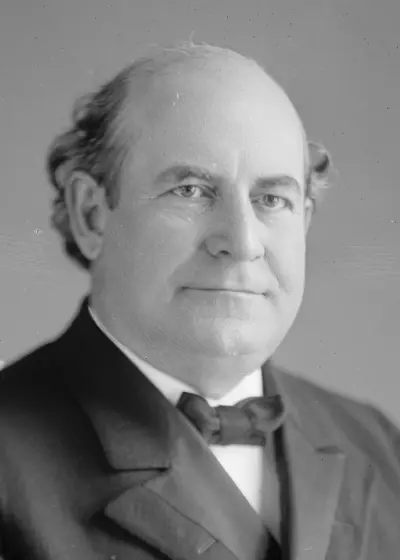
William Jennings Bryan was an American orator and politician from Illinois and Nebraska. Beginning in 1896, he emerged as a dominant force in the Democratic Party, running three times as the party's nominee for President of the United States in the 1896, 1900, and 1908 elections. He also served in the United States House of Representatives and as the United States Secretary of State under Woodrow Wilson. Because of his faith in the wisdom of the common people, he was often called "The Great Commoner".
