Book of Mark Quotes
Render unto Caesar what is Caesar's, and render unto God what is God's.
New Testament, Mark 12:17
Sourced by: Eigen's Political and Historical Quotations


This is one of the passages of the Bible that Christian Kings cited in expecting obedience. Most of the monarchs took this passage to mean that God had selected and appointed them to rule.


In what may have been amongst the lowest intellectual discussions regarding religion, the mores of the time was that slaves belonged to the slave owners and just as the owner had all power over the slave, he could also select the religion of the slaves as well. From a Christian point of view, freedom to be a Christian was critical, so what was to be the position and law regarding non-Christian slave owners, especially the Jews. Should property rights be dominant as was the tradition or should the Church have the right to dictate the religion of slaves? At no point in the discussion was the possibility even considered that the individual slave might have the right to select his/her religion. As a practical matter, at the time there were relatively few Jewish slave-holders, but as the Jews integrated into Christian society many assimilated—especially the wealthy who also traded and bartered with slaves. Muslims were not a problem as the newly emerging religion prohibited Muslims from holding other Muslims as slaves—although Christians and Jews could be held in servitude and were.


This verse has been one of the bases of Muslim theocratic states like Iran’s claim to legitimacy.


Watchtower Bible and Tract Society of New York


Niemoller, a World War I U-boat commander and clergyman, was jailed for rejecting the National Socialist ideology and for appealing to German Christians not to embrace the new paganism of Nazism and Fascism.


Magistrates included not only judges but mayors, governors and other Executive officials appointed by the King. The President of the United States is often referred to as the “Chief Magistrate”. At the time, Baptists taught that authorities were acting for God therefore must be obeyed.


She was running for the United States Senate. God must have chosen her opponent as she lost.
This Biblical quotation has been used for more than a thousand years by Christian authorities, civil and religious, to induce obedience to the existing authority and suppress revolution.


A conservative Calvinist weekly periodical. There has always been a religious right in America.
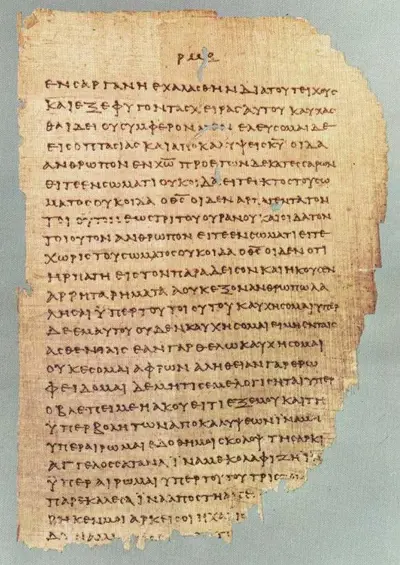
The Gospel according to Mark (Greek: Εὐαγγέλιον κατὰ Μᾶρκον, romanized: Euangélion katà Mârkon), also called the Gospel of Mark, or simply Mark, is the second of the four canonical gospels and of the three synoptic Gospels. It tells of the ministry of Jesus from his baptism by John the Baptist to his death and burial and the discovery of Jesus' empty tomb. There is no miraculous birth or doctrine of divine pre-existence, nor, in the original ending (Mark 16:1-8), any post-resurrection appearances of Jesus. It portrays Jesus as a heroic man of action, an exorcist, a healer, and a miracle worker. He is also the Son of God, but keeps his messianic nature secret, with even his disciples failing to understand him. All this is in keeping with prophecy, which foretold the fate of the messiah as suffering servant. The gospel ends, in its original version, with the discovery of the empty tomb, a promise to meet again in Galilee, and an unheeded instruction to spread the good news of the Resurrection of Jesus.
