Henry Adams Quotes
Between New England and the Middle [Atlantic] states was a gap like that between Scotland and England.
The American Colonies were very diverse culturally, educationally, sociologically and economically as the States are in modern times. Despite the intellectuals of Boston, most of New England at the time of the Revolution was much less sophisticated than New York and Philadelphia.
Henry Adams, 1838-1918, Historian, Quoted in Kevin Phillips,, 1775: A Good Year For Revolution, 2012
Sourced by: Eigen's Political and Historical Quotations


Nostradamus made thousands of prophecies most of which seem not to have occurred as he predicted. However there were a few that some people believe predicted later events. In this case some think that he predicted the colonization and independence of America.
during and after the American Revolution

This was one of the first and is considered the best of the Colonial arguments against taxation without representation. The argument here about exports also affected other commodities—see {636866}. Despite this, Dulany is not well known in American history because when the Revolution finally came he was a loyalist.


This parochial and sectional point of view was held much more strongly by the South and to a great extent, still is. We are all conflicted by wanting and American culture (that can be adopted by the world in globalization) and also wanting local customs, cultures, norms, policies and thought patterns to exist. However, there is inevitable conflict between the two, so it is a constant American source of debate, ebb and flow.


D. H. Hill. These are very important historical quotations in that they illustrate something that is not well known by most of us. In the decades before the Civil War there was a strong cultural enmity on the part of most Southerners of the Northern countrymen. It was so gross and overt that problems like this in a Southern college Algebra Text were not only published but used un schools throughout the South. Northerners were depicted in many of the Southern Cultural examples as duplicitous, greedy, dishonorable, cowardly, radical, irreligious, and extremist. The North did not have a very favorable view of Southerners who were perceived as uneducated, reactionary, anti-modern, lazy, hypocritical, cruel and backward – much implied by the acceptance of slavery. However the Northerners were not overt about their biases. These kinds of derogatory school problems were not acceptable. However the Northern bias was in some ways worse as it made most Northerners quite condescending when interacting with Southerners. After the Civil War, Southern education, culture, science and industry did not develop at the same pace as the North and the condescension continued well into the 20th century, at the end of which the South began to close the historical gap.

The clergy of the colonies were split on the American Revolution, but those clergy who supported the revolution made a huge contribution to the individual American’s intellectual view of the legitimacy of Parliament’s making laws governing the American Colonies. The anti-British clerics called for action while other forces of colonial America urged caution.

He was a Loyalist Tory and generally opposed to independence. The passion of the other politicians at the First Continental Congress surprised him greatly.

Several years before the Battle of Bunker Hill, revolutionary activity had already broken out in the American colonies—See {634132} for an example. This law gave the British authorities much more “clout” in dealing with the “seditious” American activities. It protected English law enforcement officials from being tried in local Colonial courts for murder or assault in putting down insurrections. George Washington and other Patriots were outraged over this law. See {634131}.

Wilkes was a strong advocate for the American cause—so much so that some in Parliament tried to deny him his seat in Parliament for his disloyal point of view.


We are so used to hearing the freedom seeking reasons for the American Revolution that we overlook the more selfish and venal motives. This quotation shows that the large merchants of the colonies had banded together in an illegal conspiracy trust and monopoly and managed to keep many British competitive products out of the colonies. The British, for equally venal reasons, began to enforce the laws in favor of free trade. Many large American merchants were getting huge profits (and American consumers paying more) from their protectionist illegal monopoly. A Revolution would de facto assure that monopoly for many years to come, so they became supporters—patriots—of the American Revolution. As the Revolution drew closer, the Americans made efforts to protect the protectionism and monopoly of some of the richest Americans. See {636861}.
The simplistic view that the American colonists were patriots and the British were the colonizers against whom the colonists revolted is not really accurate. The American colonists were polarized into patriots and loyalists. The Loyalist Americans ranged from many of those merchants whose business depended upon England, those whose family were still in England, those whose religion made them loyal to the Church of England, slaves who would be free under British law, Americans who had strong cultural and intellectual ties to England and those Americans who were great believers in monarchy and whose honor required that they fulfill the oath that they had taken to the King of England. Some of the worst atrocities of the American Revolution occurred in the battles of these Americans against each other. See {82105} for more on this point.

This was written more than a year before the “blows” began. It took time to ship the men and supplies to America and the British did not handle that task with much efficiency.
This was written more than a year before the American Revolution Battles began. It took time to ship the men and supplies to America and the British did not handle that task with much efficiency. See {636926} for another of the King’s statements.
While the official battles of the American Revolution did not begin until 1776, parts of the American colonies were in a de facto state of rebellion and the British could not enforce their laws. See {636925} for another of the King’s statements.
It was the Dutch that first founded New York and there were many mercantile relationships existing between New Yorkers and Dutch merchants. Initially, the Dutch gunpowder was smuggled into New York because it was less expensive than English gunpowder or gunpowder from Kentucky or other parts of America. (The transportation costs by ship from Holland were much less than the overland cost from Kentucky.) By 1774, there was great friction between American patriots and the British and the smuggling was used to stockpile gunpowder for a possible revolutionary war. See {636944} for insight into the gunpowder shortage.
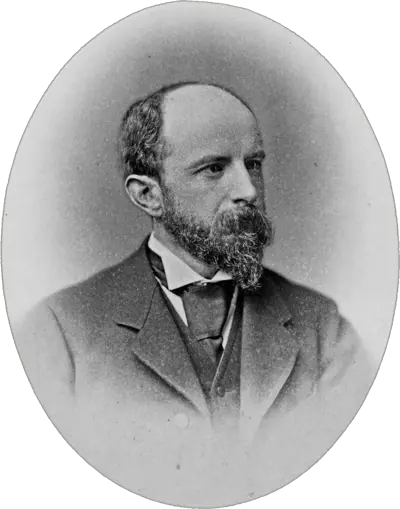
Henry Brooks Adams was an American historian and a member of the Adams political family, descended from two U.S. Presidents.
