Horace Walpole Quotes
The next Augustan age will dawn on the other side of the Atlantic. There will, perhaps, be a Thucydides at Boston, a Xenophon at New York, in time a Vergil at Mexico, and a Newton at Peru.
Eldest son of Robert Walpole
Horace Walpole, 1717-1797, 4th Earl of Oxford, English Economist, Writer & Politician, Letter to Horace Mann
Sourced by: Eigen's Political and Historical Quotations


Burke was one of the few in England who predicted economic and commercial success of America.

Fox was one of the opposition leaders who were opposed to the heavy handed policies that the British King and Government had used.

Over a decade later a leading English politician realized the same possibility and took steps to prevent it {636871}. Brazil was a colony of Portugal which grew at so fast a comparative rate, that Brazil became many times the size of the original mother country.

This resolution of independence was voted upon a month before the Declaration of Independence. It was approved by 12 of the colonies but not by New York. The Congress appointed a committee to draft what became the Declaration of Independence and that was approved by all the colonies. The resolution was introduced by Richard Henry Lee on instructions from Virginia. The graphic is of Lee’s original notes.

Clark’s men had English Colonel Hamilton under siege by making him think there were many more Americans in Clarks army than the real 180 or so. He tried to get Hamilton to surrender by threatening if they had to take the fort they would treat Hamilton and the British as murderers—Hamilton had paid hostile Indians for American scalps. At that point a party of Clark’s men arrived with 4 or 5 Indian prisoners who had been captured raiding
civilian farms. After the Indians were executed, Hamilton agreed to surrender.

Americans were by no means united in wanting to take up arms against Britain. Relatively few of the loyalist quotations have come down to us, but here is one. It also illustrates why some Americans wanted complete independence: So that they could escape their debts to English merchants. Most however had more noble and unselfish motives. As a matter of fact, the American Revolution is unusual in the sense that there were so many men of substance who sacrificed much of their material wealth for the American ideal. There were also the rogues and opportunists as Galloway describes.

1st Earl of Chatham. The Continental Congress had endorsed and sent to England a set of resolutions from Suffolk County, Massachusetts, drawn up by Joseph Warren. Legislators forever since have admired the logic and presentation of the case for America. The King and the Prime Minister failed to heed Pitt’s view, and the Declaration of Independence and the American Revolution followed.

He was acting as French Foreign Secretary at the time.

Nostradamus made thousands of prophecies most of which seem not to have occurred as he predicted. However there were a few that some people believe predicted later events. In this case some think that he predicted the colonization and independence of America.


This quotation is an excellent example of the attitude of many upper class Englishmen towards the United States in the early part of the 19th century. With the notable exception of Ben Franklin, American Science was undeveloped, and the arts were equally unrefined. However, in assessing the United States, nothing was more derogatory than American Slavery which was totally primitive and barbaric by sophisticated European standards. What is amazing about this quotation was its truth and accuracy which shows us the amazing American development that the United States underwent in the next hundred years when it would be equal to any nation on earth. The American freedom, the abolition of slavery and the brilliance of welcoming immigrants from the world to help develop the free nation produced the greatest country on Earth.


5th Earl of Rosebery. At this point in history, America was growing rapidly, but had not yet become a dominant superpower. Rosebery was prescient enough to realize that although England was the great superpower of the time, the very conservative values were holding the nation back. He saw America as the model, even when England was still the dominant empire in the world.

The American Colonies were very diverse culturally, educationally, sociologically and economically as the States are in modern times. Despite the intellectuals of Boston, most of New England at the time of the Revolution was much less sophisticated than New York and Philadelphia.

Of the 13 colonies, the 3 Middle Atlantic States, were the least enthusiastic about an armed revolution against England. Jersey—Now New Jersey—was the most recalcitrant then with Benjamin Franklin’s son as Governor. See {634108} for an explanation of why that was.

See {636935}for the policy decision that triggered this order.

This was one of the first and is considered the best of the Colonial writings against taxation without representation. Despite this, Dulany is not well known in American history because when the Revolution finally came he was a loyalist.
The profits that England made on the North American Colonies and the Caribbean were very large. 10 years before the American Revolution most sophisticated English politicians realized that and one of the reasons the British fought so hard to keep America from Independence was that money.

This was written more than a year before the American Revolution Battles began. It took time to ship the men and supplies to America and the British did not handle that task with much efficiency. See {636926} for another of the King’s statements.

While the official battles of the American Revolution did not begin until 1776, parts of the American colonies were in a de facto state of rebellion and the British could not enforce their laws. See {636925} for another of the King’s statements.

2nd Earl of Guilford. Britain had a double standard of how they would fight wars and battles. If the contention was a rebellion, more mild military means would be used. But if a foreign war, they would use all means. For example, the use of mercenaries would not be used in most rebellions. With this letter, Lord North was escalating the American Revolution into a “foreign war”. As a result, not only would mercenaries be used, but so would Indian allies whose mode of war was not as restrained as the British troops. It also allowed for emancipating slaves and inviting them to take up arms. With this quotation, the American Revolution was raised to a new and more serious military level. See {634115} for the instructions to implement this policy.
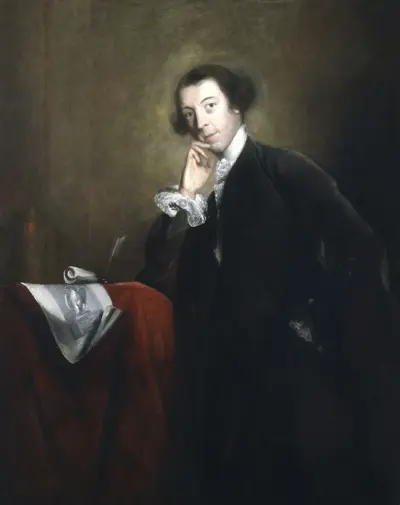
Horatio Walpole, 4th Earl of Orford, also known as Horace Walpole, was an English writer, art historian, man of letters, antiquarian and Whig politician.
