Eleanor Roosevelt Quotes
The people who came to New England, came for freedom of religion. The problem is, freedom of religion to them meant freedom for only their religion
Roosevelt, Eleanor. Tomorrow Is Now. Harper & Row, 1963.

Both Puritans and Quakers were persecuted and physically abused in England by the Anglican Church. The Puritans as soon as they became dominant in part of the American colonies began persecuting Quakers. The Quakers who were the majority in the Pennsylvania colony, however were tolerant of other religions. This history was another of the many reasons the Founding Fathers wanted no established church. A “scorpion” was a type of whip that was particularly painful.


This is a particularly interesting historical quotation because it succinctly gives a history of the various horrors of religious strife in British history—a history that was very well known to the American Founding Fathers and the general American Colonial population. This history was the major driver behind the public insistence for the Bill of Rights and the 1st Amendment which erected a wall of separation between church and state with government never favoring or abetting any particular religion.


Michener had chaired a county campaign committee and discovered that most great amount of the virulent, anti-Catholic, messages and materials that impinged on the campaign were tax-exempt religious publications and church newsletters.


Ingersoll was considered to be the greatest orator and political thinker of his day, but his overt atheistic views curtailed his elected political career.


New Ross was under siege by Cromwell and his English Parliamentarian troops. After two days, the town tried to negotiate terms of surrender and one of the main things they asked for was freedom of religion to practice Roman Catholicism. This famous response set the stage for religious bigotry over the next years. Cromwell’s reasons for not allowing Catholicism to be practiced was not only one of religious zeal. At the time, the Roman Catholic Church was a major geopolitical power under a Pope who commonly supported or even dispatched troops for geopolitical and religious ends. The Vatican was particularly resentful of England for separating from the Church and asserting that the King of England was the head of the Church and not the Pope. Therefore Cromwell and many Englishmen had to deal with the reality that every practicing Catholic in the realm was a potential spy, traitor, and/or rebel. This fear of control of countries by the Pope strongly affected America, and was responsible for the defeat of the first Catholic Presidential Candidate, Al Smith. It was also a major factor in the election of John F. Kennedy so he dealt with it head on.
The Governor of New Amsterdam, Peter Stuyvesant, was a bigoted Protestant of the Dutch Orthodox church and did not want to allow non-Protestants into the Colony, However, he was overruled by the Directors of the Dutch West India Company which rolled the colony designed to be a money making enterprise. Jews and others were allowed to enter and become citizens, however while they could worship in any way they chose in their own homes, they could not build any places of worship of have any public prayer of other aspects of their religion. This was the hypocrisy to which Bangs refers. However, at the time, it was more liberality and tolerance than most of the Christian world.


Although the Puritans were the first religious group of immigrants who came to America for religious freedom, once the obtained it, they were terribly despotic in trying to force others to adopt their religious views. By seeking religious freedom the planted the seeds of democracy. By denying it to others, they also planted the seed of the First Amendment. Those who insisted upon separation of church and state always cited the Puritans as example one of what can happen with an established church in America.
The penchant for Southern conservatives to always blame outsiders whenever there were local people demanding change or reform may have begun here. It reached its peak in the Civil Rights Movement of the 1960s. There was however, a conscious effort of the Massachusetts Patriots to have descriptions of their revolutionary activities sent as newspaper articles throughout all the colonies quickly after the events. The Americans thus were able to frame all the issues, before the reports could get to London and the British thus got their viewpoints to the public weeks and months after the revolutionists did.

Williams was the first theologian who not only advocated religious toleration but argued that Christianity demanded it and the separation of church and state.
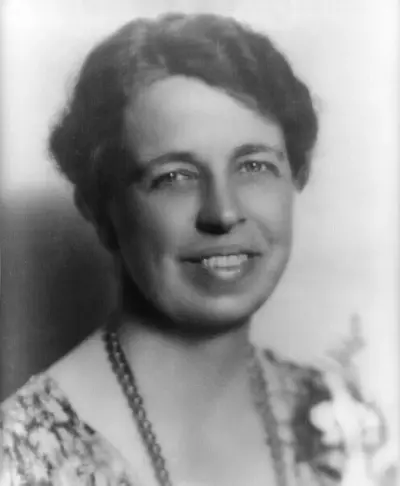
Anna Eleanor Roosevelt was an American political figure, diplomat and activist. She served as the First Lady of the United States from March 4, 1933, to April 12, 1945, during her husband President Franklin D. Roosevelt's four terms in office, making her the longest-serving First Lady of the United States. Roosevelt served as United States Delegate to the United Nations General Assembly from 1945 to 1952. President Harry S. Truman later called her the "First Lady of the World" in tribute to her human rights achievements.
