John Wilkes Quotes
They [the Americans] justly expect to be put on an equal footing with the other subjects of the empire, and are willing to come into any fair agreement with you in commercial concerns.
Wilkes was a strong advocate for the American cause—so much so that some in Parliament tried to deny him his seat in Parliament for his disloyal point of view.
John Wilkes, 1747-1797, English Reformer & Member of Parliament, Lord Mayor of London Speech in Parliament, 1775
Sourced by: Eigen's Political and Historical Quotations

He was one of those arguing for tha nation to award every American 15 pounds upon reaxhing the age of 18, This would allow the young man (it is not clear that this applied to females as well) to buy a basic start in life. A houirse, a gun, and the ability to buy a small plot of land. The proposal got lost in the events of the Revolution. The ancient middle age Jews had a custom whereby when a young man reached the age of 13, and could demonstrate that he was literate, and familiar with the Torah (1st 5 Books of the Old Testament which was for them the "law", he would be given gifts by his relatives and often the comminithy or congregation as a whole, so taht he had the wherewithall to start an adult life. Many of the founding fathers were very familiar with the Ancient Jewish Republic and some adopted a version of this.]


The statement was made just before Kenyan Independence was official. His statement was surprising to many people who perceived him as a racist and anti-white. There was a fear that whites would no longer be welcome in Kenya after independence, but Kenyatta’s leadership maintained a pluralistic society.

Cheating consumers with fraudulent scales was common. Fox started his own consumer movement.

This proverb operates with the force of law and in a sense is the doctrine of contributory negligence. I have a right to compensation for damage you have done me unless I have done something which impinges on your rights. If your camel destroys my crops, my rights have been violated, but if had used your camel without your permission, and he got out of control. I right is cancelled out. In a larger sense, this principle is used globally in international disputes. The Israeli right to live in peace has been, in the view of some Arabs, “cancelled out” by the fact that the Israelis have taken others land.

This statement in the President’s Second Inaugural. Infuriated the politicians of the Southern States. Remember, at the time there was brutal discrimination throughout most of the South, and more important to the South than the fact if the discrimination was their perverse view that this was a right, proper and necessary state of affairs for the welfare of the people and was required by Christianity’s mandates as they read the Scripture. For the President to state so publicly that discrimination was contrary to the law, justice, good faith, citizenship and fairness was a major shock. Since the early days of reconstruction after the Civil war in the Grant Administration, no president had spoken so publicly and openly against the Southern status quo.


12 Indians had originally come to the new colony from Massachusetts. Williams admitted them with the full rights, including voting rights, of the colonists and opened the way for other Indians who wanted to join. Although a minister and theologian, Williams created the first jurisdiction in America where there was freedom of religion.

Vanderbilt with his railroad monopoly was able to dictate prices to all the oil refineries for the transportation of kerosene of which over 400 million gallons was shipped annually to provide light to the USA and some other countries as well. However by charging some higher prices than others he could ruin some after investing in others. Under pressure, he made this famous agreement. The agreement became famous for although he charged all refineries the same, he gave rebates (kickbacks) secretly to Standard Oil ensuring that they would have an oil monopoly. Then Standard oil demanded to be paid their “rebate” on all oil the railroads shopped for Standard competitors. Their demands grew. When Standard could net get a big enough kickback to drive all the other refineries out of business, they built their own pipelines to bypass the railroads entirely. As there was virtually no regulation of monopolies or common carriers, most of this was legal, but was so egregious that it led to the passage of the Anti-Tust laws.

This statement was made before there was a Civil Rights Act or a Voting Rights Act and racial discrimination was rampant in America.

She was opposed to women accepting so called chivalrous behavior by men. Many women were reluctant to give up the few advantages that they did have.

While this statement and others like it, appear reasonable to most people, in practice most societies impose a different standard. They often do not want the only limitation on freedom to be refraining from impinging on the liberty of others. They often want to impose a morality on the society. Gay marriage is a good example. If a gay couple weds, there is no impingement on the liberty to marry of straight people. None-the-less, many opposed it.

See {641497} for a quote from the Grenville speech. Fox, a conservative on most issues was an absolute radical on the issue of America. To aggravate the hawks in parliament, he used to dress in the colors of George Washington’s uniform to show his support once the war broke out.

At the beginning of the dispute between America and England, the issue was the raising of internal American taxes by Parliament without any American representation in Parliament. The issue escalated and when the British began using force, independence then became the American objective.

Excesses that CEOs and other corporate executives were getting for remuneration became an issue of political controversy in the beginning of the 2nd Milleneum. However, this quotation shows that this was not a new problem and has been considered for a long time.

This is a remarkably modern statement for the time.


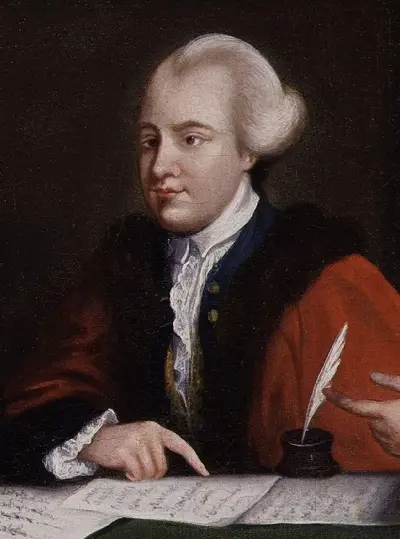
John Wilkes FRS was a British radical journalist and politician, as well as a magistrate, essayist and soldier. He was first elected a Member of Parliament in 1757. In the Middlesex election dispute, he fought for the right of his voters—rather than the House of Commons—to determine their representatives. In 1768, angry protests of his supporters were suppressed in the St George's Fields Massacre. In 1771, he was instrumental in obliging the government to concede the right of printers to publish verbatim accounts of parliamentary debates. In 1776, he introduced the first bill for parliamentary reform in the British Parliament.
