Cornelius Vanderbilt Quotes
All agreements for the transportation of oil after this date shall be upon a basis of perfect equality
Vanderbilt with his railroad monopoly was able to dictate prices to all the oil refineries for the transportation of kerosene of which over 400 million gallons was shipped annually to provide light to the USA and some other countries as well. However by charging some higher prices than others he could ruin some after investing in others. Under pressure, he made this famous agreement. The agreement became famous for although he charged all refineries the same, he gave rebates (kickbacks) secretly to Standard Oil ensuring that they would have an oil monopoly. Then Standard oil demanded to be paid their “rebate” on all oil the railroads shopped for Standard competitors. Their demands grew. When Standard could net get a big enough kickback to drive all the other refineries out of business, they built their own pipelines to bypass the railroads entirely. As there was virtually no regulation of monopolies or common carriers, most of this was legal, but was so egregious that it led to the passage of the Anti-Tust laws.
Cornelius Vanderbilt, 1794–1877, Industrialist & Steamboat and Railroad Builder and Tycoon, Agreement, March 25, 1872
Sourced by: Eigen's Political and Historical Quotations

To Republicans of the 21st century, it is shocking the Taft (and Theodore Roosevelt) were strong advocates of reducing the economic gulf between the rich and poor.

The “rebate agony” referred to a corrupt practice of the Railroads and the Large Monopolies. The railroads charged a very high rate for the transportation of important products like beef and oil. However, secretly they gave back a large percentage of the transportation rate charged to the trusts. They in turn could cut their prices and undersell all the smaller competitors who were paying “full freight” and could not afford to match the lower price. As soon as the smaller competitors were driven out of business in an area, the trust raised its rates even higher than they charged originally. The Railroad had made a small but reasonable profit on the freight of the trusts but they were guaranteed all their business. They also made huge profits on the higher rates that the small companies paid until those companies were driven out of business. Journalists like Ray Baker and Ida Tarbell had uncovered the rebate scheme which enabled the trusts to steal high amounts from the general public through unreasonably high prices. President Theodore Roosevelt was committed to try and regulate the railroads and not allow rebates but charge the same public rate to all with no rebates. Socialists like Sinclair, thought that this attempt would be hopeless—that the damage had already been done, and the trusts now had so much money that they could buy state legislatures and many in Congress to preserve their dominance.

The Elkins Act was a cornerstone of Roosevelt’s “Square Deal” program. It authorized the Interstate Commerce Commission (ICC) to impose heavy fines on railroads that offered rebates, and upon the shippers that accepted these rebates. The large corporations and monopolies would get rebates from the railroads and thus pay far less than their smaller competitors to ship their goods. It drove thousands of small companies out of business. This was a basic part of American law until the deregulation of the latter part of the 20th century. So what had been illegal, unethical, and immoral for almost a century, became legal, ethical and moral, but again discriminated against small companies.

Wilkes was a strong advocate for the American cause—so much so that some in Parliament tried to deny him his seat in Parliament for his disloyal point of view.

Stickney was a maverick among Railroad executives of the time. He favored some regulation by the Federal Government and was opposed to the most flagrant abuses of the railroads.


This statement was made before there was a Civil Rights Act or a Voting Rights Act and racial discrimination was rampant in America.

This was not what was inscribed on his gravestone when he died. See {639151} for the actual text.


Essentially, this has not changed even into the 21st century.


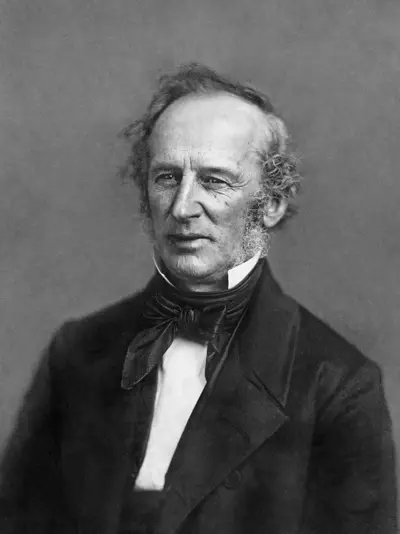
Cornelius Vanderbilt was an American business magnate who built his wealth in railroads and shipping. After working with his father's business, Vanderbilt worked his way into leadership positions in the inland water trade and invested in the rapidly growing railroad industry. Nicknamed "The Commodore", he is known for owning the New York Central Railroad. His biographer T. J. Stiles says, "He vastly improved and expanded the nation's transportation infrastructure, contributing to a transformation of the very geography of the United States. He embraced new technologies and new forms of business organization, and used them to compete....He helped to create the corporate economy that would define the United States into the 21st century."
