Norman H. Davis Quotes
The domestic policy of the Democratic Party is to do away with privilege as between individuals, and to secure the cooperation of all citizens for the common good; its standard of success is not the wealth of a few individuals, but the welfare of the people as a whole.
Essentially, this has not changed even into the 21st century.
Norman H. Davis, 1878–1944, Assistant Secretary of Treasury (Democrat), Undersecretary of State (Democrat), President of the Trust Company of Cuba, “American Foreign Policy: a Democratic View”, Foreign Affairs, September 1923
Sourced by: Eigen's Political and Historical Quotations


At the time of this quotation, the nation had gone through more than 3 decades of enormous increase in prosperity for the wealthy, and modest gains for the highly skilled, technically trained workers. However, correcting for inflation, average salaries did not increase at all. The middle class was particularly hard hit. Only 20 percent of the population benefitted from the growth at all; however, the 1 percent had rarely prospered more. Kenworthy’s principle did not apply for this period of American history.


Executed by the English for his part in the Easter Uprising.


Excesses that CEOs and other corporate executives were getting for remuneration became an issue of political controversy in the beginning of the 2nd Milleneum. However, this quotation shows that this was not a new problem and has been considered for a long time.


The only publication with a full time Poverty beat


The Projet was not published until after his death.

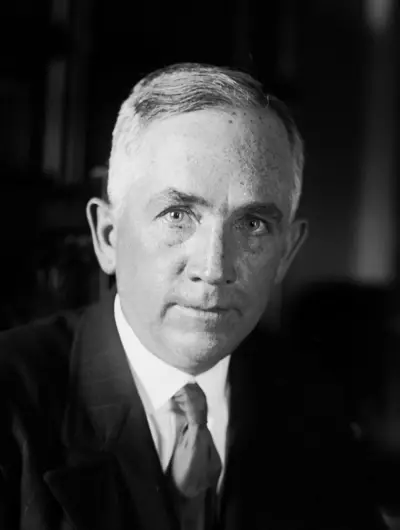
Norman Hezekiah Davis was a U.S. diplomat. He joined the Treasury Department in 1917, serving as President Wilson's chief financial advisor at the Paris Peace Conference. In 1919 he was appointed Assistant Secretary of the Treasury, and the following year became Under Secretary of State.
