Jean-Jacques Rousseau Quotes
It is important that there be a uniform, equal citizenry, evenly distributed over the various provinces of the island, and free from extremes in wealth and poverty. His intention, as he phrases it, is “not completely to destroy private property, since this is impossible, but to enclose it within more narrow boundaries, to give it a measure, a rule, a bridle which restrains it, which directs it, which subdues it, and always keeps it subordinate to the public good.
The Projet was not published until after his death.
Jean Jacques Rousseau, 1712-1778, French Philosopher, Notes for the Projet
Sourced by: Eigen's Political and Historical Quotations


The Prime Minister had begun his career as a proponent of apartheid, but by 1990 had reversed course.


Excesses that CEOs and other corporate executives were getting for remuneration became an issue of political controversy in the beginning of the 2nd Milleneum. However, this quotation shows that this was not a new problem and has been considered for a long time.


Worry about the disproportional power of the rich is not a modern concern, but was a concern from the very beginning of the nation. There was a belief that if there were a legislative body representing the entire population the rich would tend to dominate it. The solution that England had found was a bicameral Parliament—a House of Lords representing the wealthy and the powerful and the House of Commons, representing the bulk of the people. America followed suit but never did have the class distinction of England.

While Hoover was generally correct, he was also of the opinion that providing equal opportunity was all that the government needed to do. His lack of attention to other economic variables and potential problems made him totally unprepared for the Great Depression which would occur the following year and his narrow view of the role of government provided no relief or improvement as those of his successor FDR did.
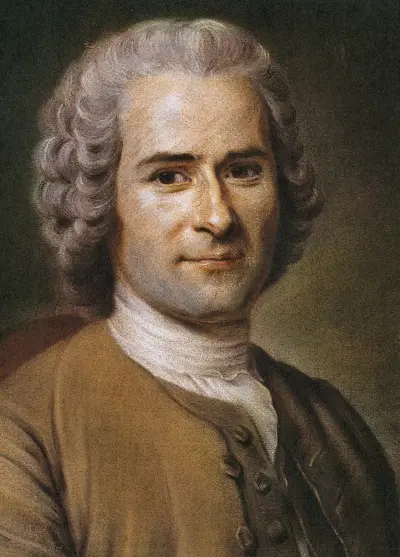
Jean-Jacques Rousseau was a Genevan philosopher, writer, and composer. His political philosophy influenced the progress of the Enlightenment throughout Europe, as well as aspects of the French Revolution and the development of modern political, economic and educational thought.
