Adam Clayton Powell Jr. Quotes
We don’t want any more than you have and we will not settle for anything less
This statement was made before there was a Civil Rights Act or a Voting Rights Act and racial discrimination was rampant in America.
Adam Clayton Powell Jr., 1908-1972, U. S. Congressman (Democrat, NY), Speech to a mostly white audience, Quoted on C-Span, Q&A, September 9, 2012
Sourced by: Eigen's Political and Historical Quotations


This was the first named Civil Rights Act passed in the United States. It was passed over the veto of President Andrew Johnson, a Southerner, who tried to thwart Congress’s efforts at Reconstruction.

This was the first major civil rights speech. He had previously in his political career tread carefully in the civil rights arena. The Southerners had disproportionate control over the Congressional committee chairmanships and they could hold up his entire legislative agenda. JFK’s father was a right wing fascist who supported Hitler earlier and always advised against pushing civil rights.


He would not allow himself to be buried in a cemetery that would not allow Blacks. He was laid to rest in Shreiner's Cemetery, one of the very few racially integrated cemeteries at the time.


This quotation is one of the inscriptions at the Robert F. Kennedy gravesite in Arlington National Cemetery.

Eight years and a Civil War later, he had changed his mind and was the sponsor of the Civil Rights Act of 1866—the first Federal civil rights law in America. See {587711}.


This proverb operates with the force of law and in a sense is the doctrine of contributory negligence. I have a right to compensation for damage you have done me unless I have done something which impinges on your rights. If your camel destroys my crops, my rights have been violated, but if had used your camel without your permission, and he got out of control. I right is cancelled out. In a larger sense, this principle is used globally in international disputes. The Israeli right to live in peace has been, in the view of some Arabs, “cancelled out” by the fact that the Israelis have taken others land.
At that time the law prohibited Negroes from sitting anywhere in a public bus except the rear. Blacks, if there were not enough rear seats had to stand in the back even if there were many vacant seats in the “white section” of the bus. This was typical of the racial discrimination that existed at that time. That is what all the civil rights demonstrations and boycotts of that era was all about—eliminating government discrimination against Blacks. The Federal Courts including the Supreme Court ruled that the bus segregation was unconstitutional, and the awful practice ended in Montgomery.


This was actually a very courageous statement for an American politician running for national office. As a result of the pressure of this statement President Franklin Roosevelt allowed Black enlistment in the Army Air Forces.
Southerners and some others wanted to discriminate and fought civil rights legislation. The excuse they gave for opposition was that the Federal Government was usurping the power of the states to determine what civil rights people of the state would have. Shellabarger made it clear that the civil rights bill would not require ANY rights to be given. It just required that if the states granted rights, they could not discriminate by race as to those rights. But the states were free to decide which rights all citizens of the state would have. See {623473} .


At the time, the Southern segregationists were all Democrats and they blocked any Democratic attempt to pass any Civil Rights legislation. When he could not get a Civil Rights commitment from his own party, Powell turned to the Republicans and the President wrote this letter. In return, in November, Powell endorsed and supported Eisenhower instead of Stevenson, his own party’s nominee. Eisenhower could not get any legislation on Civil Rights as the Southern Democrats would always block it. When President Lyndon Johnson finally forced the 1963 Civil Rights Act through the Congress, the racist Southern Democrats cut a deal with Goldwater and the conservative Republicans, and switched parties. Since then the Civil Rights stance of the two parties reversed. The Democrats were thereafter pro Civil Rights and the Republicans, the party of Lincoln and Reconstruction, thereafter reversed their Civil Rights position and opposed progress in this area.


She was one of the first prominent white southerners to denounce racial segregation. Also, she supported Martin Luther King’s protest organization in Montgomery long before most other whites.

In the early 20th century, Carver and Du Bois were the two most important Negro leaders in America. However, they disagreed over tactics. Carver tended to believe that if the Negro would be educated and trained for meaningful occupations, he would rise in the eyes of the whites and discrimination would diminish. Du Bois was more cynical as can be seen in this quotation as he looked back on history when he was 95 and close to death. He had the advantage at this time of seeing that Washington’s strategy had failed, but he opposed Washington on this from the beginning. Most whites preferred Washington’s view as whites were relived of immediate moral responsibility for racism and the burden was placed on Blacks to train, develop and display themselves as worthy. It was only when very large numbers of Blacks had done this and nothing much changed in terms of civil and economic rights, that it was clear that Washington’ view had been hopelessly naïve.


Before the civil rights act was passed, most labor unions will racist and discriminated against black workers. The United Auto Workers union was an exception and Reuther was a strong advocate of desegregation and equal rights.

Connor turned out to have been of great assistance to the Civil Rights Movements. His red-neck, ignorant, virulent, irrational hatred and his position made him an iconic, living, hyperbole of the American Southern Racist.
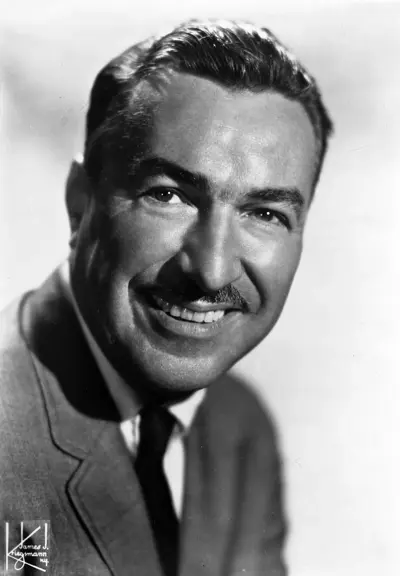
Adam Clayton Powell Jr. was an American Baptist pastor and politician who represented the Harlem neighborhood of New York City in the United States House of Representatives from 1945 until 1971. He was the first African-American to be elected from New York to Congress. Re-elected for nearly three decades, Powell became a powerful national politician of the Democratic Party, and served as a national spokesman on civil rights and social issues. He also urged United States presidents to support emerging nations in Africa and Asia as they gained independence after colonialism.
